
Leave a Message
We will call you back soon!
Your message must be between 20-3,000 characters!
Please check your E-mail!
More information facilitates better communication.
Submitted successfully!
We will call you back soon!
Leave a Message
We will call you back soon!
Your message must be between 20-3,000 characters!
Please check your E-mail!
| Place of Origin: | China |
|---|---|
| Brand Name: | WANSHIDA |
| Certification: | CE, ISO9001 |
| Model Number: | Y83-3150 |
| Minimum Order Quantity: | 1 set |
| Price: | Negotiation |
| Packaging Details: | Sea worthy |
| Delivery Time: | 35 days |
| Payment Terms: | T/T, L/C |
| Supply Ability: | 10 sets/month |
| Model: | Y83-3150 | Nominal Force: | 3150 KN |
|---|---|---|---|
| Capacity:: | 1500KG/h | Motor:: | 37kW |
| Briquette Size: | Φ150×(80-120)mm | Pressure On The Bale(kN): | 250 |
| Operation:: | Manual Or PLC Semi-automatic Operation | Service: | OEM/ODM |
| Highlight: | 315 Ton Metal Briquetting Press,Metal Briquetting Press 25MPa,25MPa Hydraulic Briquette Press Machine |
||
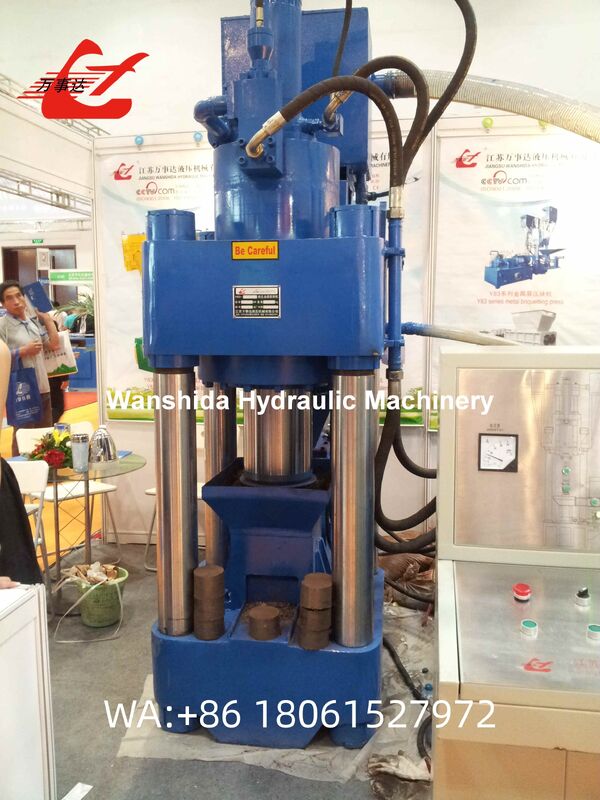
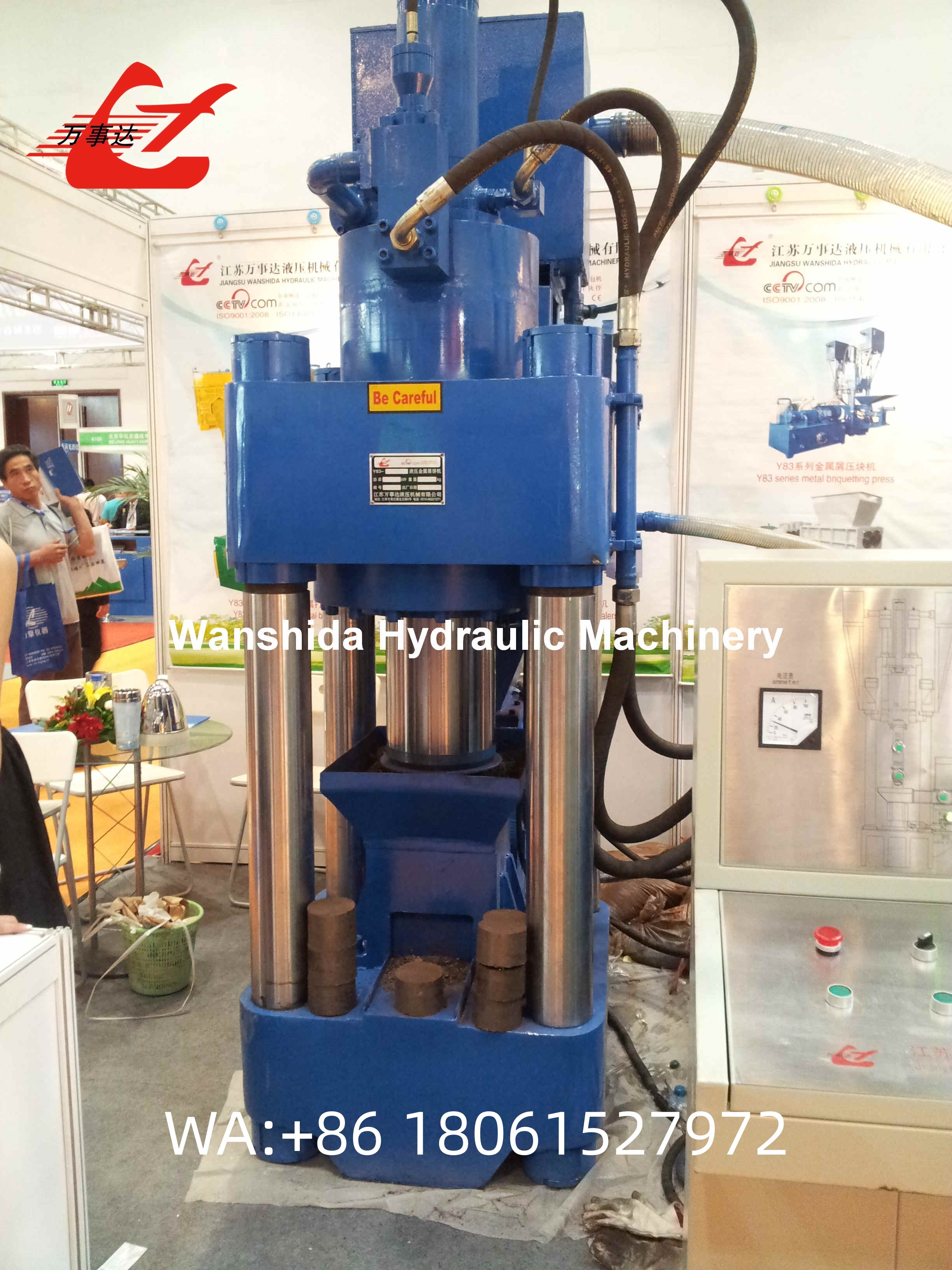
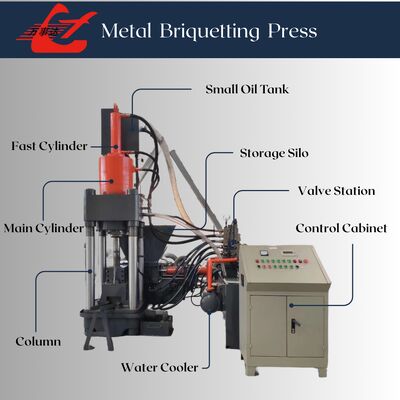
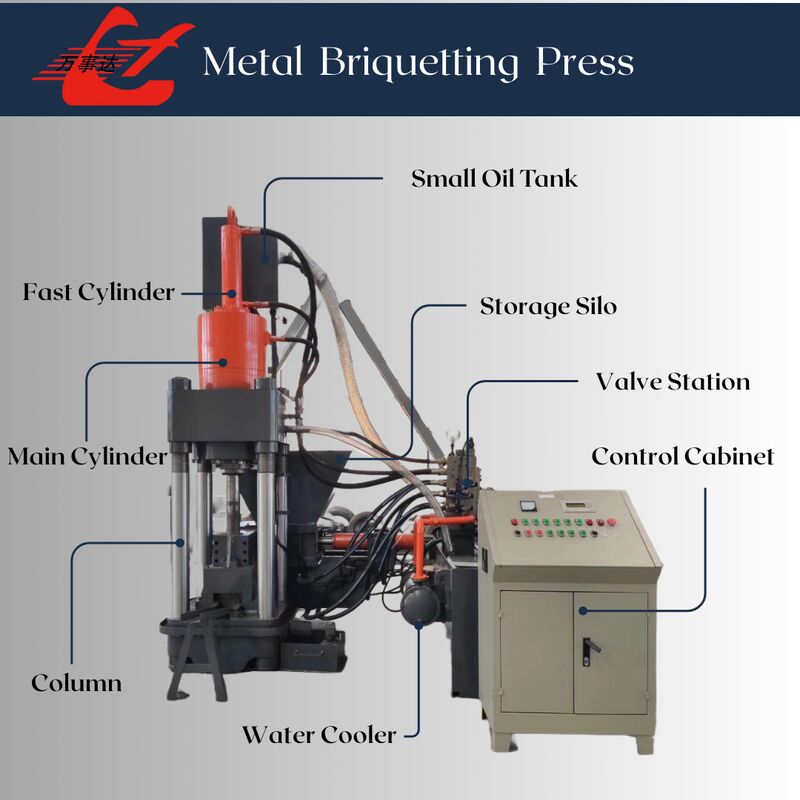
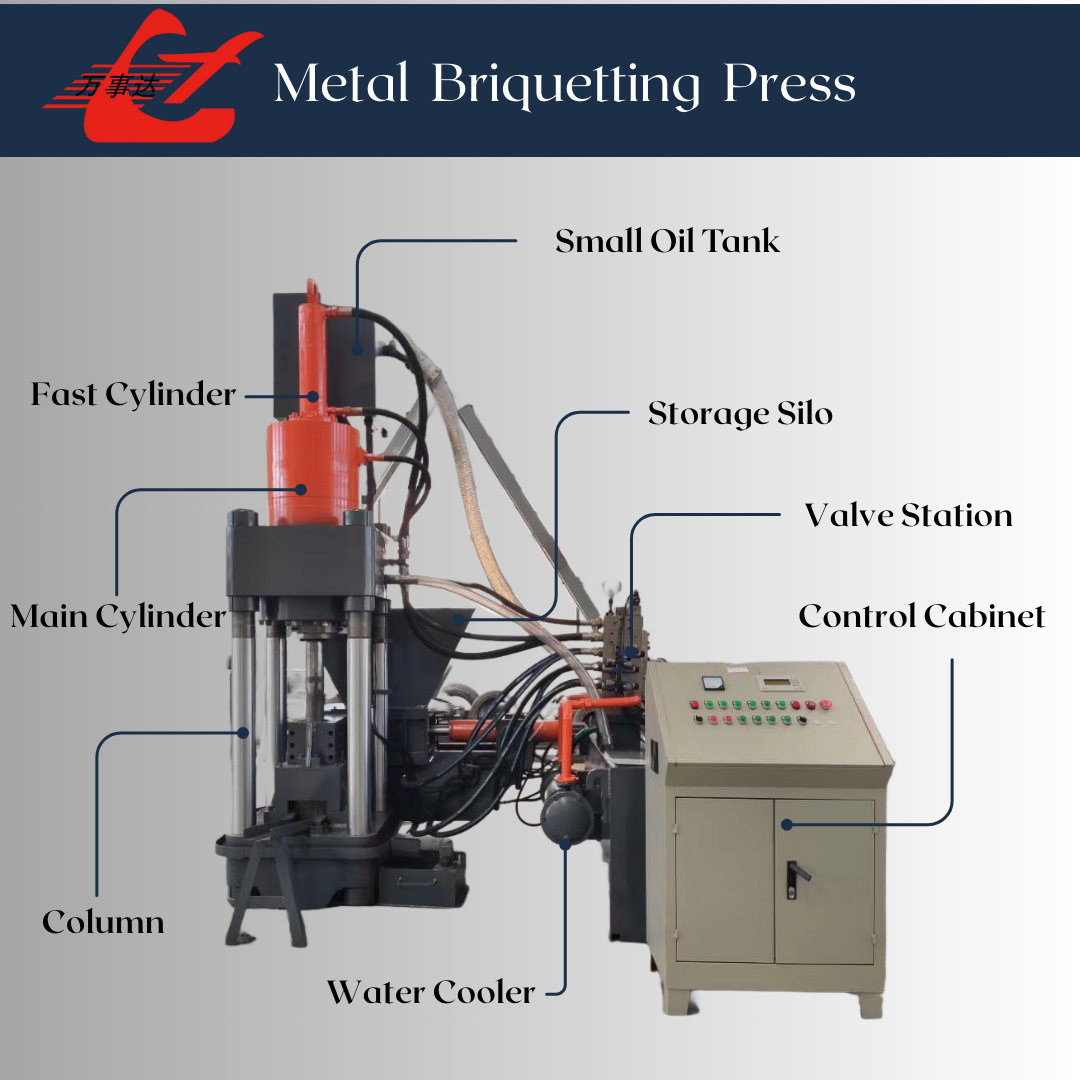
The Y83-3150 Scrap Briquetting Press is a heavy-duty hydraulic briquetting machine designed for compressing cast iron sawdust, steel chips, metal turnings, machining scraps, and other metal residues into high-density cylindrical briquettes. With a 3150kN nominal force, Φ150×80–120mm briquette size, 37kW motor power, and a reference capacity of around 1500kg/h for cast iron sawdust, this model is suitable for foundries, CNC machining workshops, metal recycling plants, steel processing factories, and industrial scrap recovery centers.
In metal processing industries, loose cast iron sawdust is often difficult to store, transport, and reuse efficiently. It has low bulk density, takes up large workshop space, and may cause material loss during handling. The Y83-3150 hydraulic scrap briquetting press solves this problem by compressing loose metal chips into compact, regular-shaped briquettes without adding adhesive. The finished briquettes are easier to stack, weigh, transport, sell, and return to the furnace for remelting.
For buyers, the most important concerns are usually briquette density, hourly capacity, equipment stability, operation safety, maintenance convenience, and installation cost. The Y83-3150 is designed to meet these practical needs. Its hydraulic drive system provides stable pressure output, smooth movement, no strong vibration, and safe, reliable operation. The machine can be equipped with manual operation or PLC semi-automatic operation, allowing customers to choose a cost-effective or more automated working mode according to their production requirements.
The Φ150mm briquette diameter is larger than many small briquetting models, making it suitable for customers who need bigger briquettes and higher single-piece weight. The briquette height of 80–120mm provides flexibility depending on material condition and compression result. With a capacity of around 1500kg/h for cast iron sawdust, this model is a practical choice for medium to large factories that generate a stable amount of metal chips every day.
Another advantage of the Y83-3150 is its simple installation requirement. The machine only needs a simple underground footing, helping customers reduce civil work preparation and shorten project setup time. For factories looking to improve scrap value, reduce storage pressure, and build a cleaner recycling process, the Y83-3150 Scrap Briquetting Press offers a reliable and efficient solution.
Loose cast iron sawdust and metal machining chips can create real operating problems for factories and recyclers.
First, loose metal chips occupy too much space. Even when the material weight is high, the scattered form makes storage inefficient and workshop management difficult.
Second, cast iron sawdust is easy to spill during collection, loading, and transportation. This leads to material loss, extra cleaning work, and lower recycling efficiency.
Third, loose chips are not always ideal for furnace feeding. Fine metal particles may oxidize more quickly during remelting, which can increase burning loss and reduce recovery value.
Fourth, many recycling buyers and foundries prefer compact briquettes because they are easier to handle, cleaner in appearance, more convenient to weigh, and more stable during melting.
Because of these challenges, converting loose cast iron sawdust into dense briquettes is an effective way to improve both operational efficiency and scrap metal value.
The Y83-3150 Scrap Briquetting Press uses strong hydraulic pressure to compress loose metal residues into dense cylindrical briquettes. It helps customers reduce volume, improve material recovery, and create a more organized recycling process.
Key advantages for buyers include:
High pressing force for dense briquettes
The 3150kN nominal force provides strong compression performance, helping form compact briquettes from cast iron sawdust and other metal chips.
Larger briquette size for easier furnace feeding
The machine produces briquettes of Φ150×80–120mm, which are convenient for stacking, transportation, and remelting applications.
Higher production capacity
With a reference output of around 1500kg/h for cast iron sawdust, this model is suitable for customers with medium to large daily recycling volumes.
Improved scrap value
Briquetted metal chips are cleaner, denser, and easier to handle than loose sawdust. This can help improve resale value and downstream acceptance.
Stable hydraulic drive
The hydraulic system ensures smooth operation, no strong vibration, safe performance, and reliable continuous working ability.
Flexible control options
Customers can choose manual operation for simple, economical use, or PLC semi-automatic operation for smoother production and lower labor intensity.
Simple foundation requirement
Only a simple underground footing is needed, making installation easier and more practical for different workshop conditions.
| Item | Specification |
|---|---|
| Model | Y83-3150 Scrap Briquetting Press |
| Nominal Force | 3150 kN |
| Briquette Size | Φ150 × 80–120 mm |
| Pressure on the Bale | 250 kN |
| Power | 37 kW |
| Capacity | 1500 kg/h for cast iron sawdust |
| Operation Mode | Manual or PLC semi-automatic operation |
| Drive System | Hydraulic drive |
| Machine Features | Stable operation, no vibration, safe and reliable |
| Foundation Requirement | Simple underground footing needed |
| Suitable Material | Cast iron sawdust, steel chips, metal turnings, machining scraps and other metal residues |
The Y83-3150 hydraulic scrap briquetting press is widely used in metal recycling and machining industries where large volumes of loose metal chips need to be compressed and recovered.
It is especially suitable for:
Foundries
Used for compressing cast iron sawdust and metal chips before returning them to the furnace for remelting.
CNC machining workshops
Suitable for factories generating continuous cast iron, steel, or alloy machining chips from turning, milling, drilling, and cutting processes.
Scrap metal recycling centers
Helps recyclers convert loose metal residues into compact briquettes for easier storage, transport, and resale.
Steel and machinery manufacturing plants
Suitable for handling production waste from metal parts manufacturing, equipment processing, and mechanical component production.
Automotive parts factories
Used for recycling cast iron and steel chips generated during engine parts, brake parts, gear parts, and other precision machining processes.
Metal processing plants
Ideal for improving workshop cleanliness, reducing scrap volume, and building a more efficient internal recycling system.
The Y83-3150 Scrap Briquetting Press works through a hydraulic compression process.
First, the operator feeds cast iron sawdust or metal chips into the compression chamber. After the chamber is filled, the hydraulic system drives the pressing cylinder to apply strong pressure to the loose material. Under the action of the main pressing force, the metal chips are compressed into a dense cylindrical briquette.
The final briquette size is Φ150mm in diameter and approximately 80–120mm in height, depending on material condition and compression performance. Normally, no adhesive is required. The machine relies on hydraulic pressure and material compaction to form solid briquettes.
After the briquette is formed, it is discharged from the machine and can be collected for stacking, packing, transportation, resale, or furnace remelting. If the material contains cutting oil or coolant, part of the liquid may be squeezed out during compression, making the material easier to handle.
The machine can be operated manually or configured with PLC semi-automatic control. Manual operation is simple and easy to maintain, while PLC semi-automatic operation helps improve working efficiency and reduce operator workload.
Choosing the right scrap briquetting press depends on the material, capacity requirement, briquette size, and working environment.
1. Confirm your material type
Cast iron sawdust, steel chips, aluminum chips, copper chips, and alloy scraps have different compression characteristics. For cast iron sawdust, the Y83-3150 is suitable for customers who need higher capacity and larger briquettes.
2. Check chip size and material condition
Fine sawdust and short chips are usually easier to briquette. Long curled turnings may require pre-processing or a different feeding solution.
3. Confirm the required output
This model has a reference capacity of around 1500kg/h for cast iron sawdust. If your factory produces large amounts of chips every day, this model can support stable industrial production.
4. Choose the right briquette size
The Φ150×80–120mm briquette size is suitable for customers who want larger, heavier briquettes for easier handling and furnace charging.
5. Decide the operation mode
Manual operation is suitable for simple production requirements and lower investment. PLC semi-automatic operation is better for customers who want more consistent output and reduced labor intensity.
6. Confirm power supply and installation space
Before ordering, buyers should confirm local voltage, frequency, workshop layout, feeding direction, and discharge direction. This helps ensure smooth installation and operation after delivery.
Q1: What materials can the Y83-3150 Scrap Briquetting Press process?
The Y83-3150 is mainly suitable for cast iron sawdust, steel chips, machining scraps, short metal turnings, and other metal residues. The actual briquetting performance depends on material type, chip size, oil content, and feeding condition.
Q2: What is the capacity of this machine?
The reference capacity is around 1500kg/h for cast iron sawdust. If the material is different, such as steel chips, aluminum chips, or mixed metal scraps, the actual capacity may vary.
Q3: Does the machine need adhesive to form briquettes?
No. The machine normally does not need adhesive. It uses hydraulic pressure to compress loose metal chips into dense cylindrical briquettes.
Q4: Can I choose PLC semi-automatic operation?
Yes. The Y83-3150 can be supplied with manual operation or PLC semi-automatic operation. PLC semi-automatic operation is recommended for customers who want smoother production, easier operation, and better consistency.
Q5: Is installation complicated?
No. The machine only needs a simple underground footing. We can provide installation guidance, operation support, and technical documents according to the customer’s workshop layout and production requirements.