
Leave a Message
We will call you back soon!
Your message must be between 20-3,000 characters!
Please check your E-mail!
More information facilitates better communication.
Submitted successfully!
We will call you back soon!
Leave a Message
We will call you back soon!
Your message must be between 20-3,000 characters!
Please check your E-mail!
| Place of Origin: | China |
|---|---|
| Brand Name: | Wanshida |
| Certification: | CE, ISO9001 |
| Model Number: | Q43W-4000 |
| Minimum Order Quantity: | 1 set |
| Price: | Contact us |
| Packaging Details: | Seaworthy packing |
| Delivery Time: | 45days |
| Payment Terms: | L/C,T/T |
| Supply Ability: | 10sets/month |
| Blade Length: | 1400 Mm | Control System: | PLC |
|---|---|---|---|
| Output Mouth: | 1400x450mm | Operation Mode: | Automatic |
| Cutting Speed: | 2-3times/minute | Hydraulic System Pressure: | 25MPa |
| Nominal Force: | 400Ton | Motor Power: | 74Kw |
| Highlight: | High Safety Automatic Baler,High Performance Automatic Baler,Electric Automatic Baler |
||
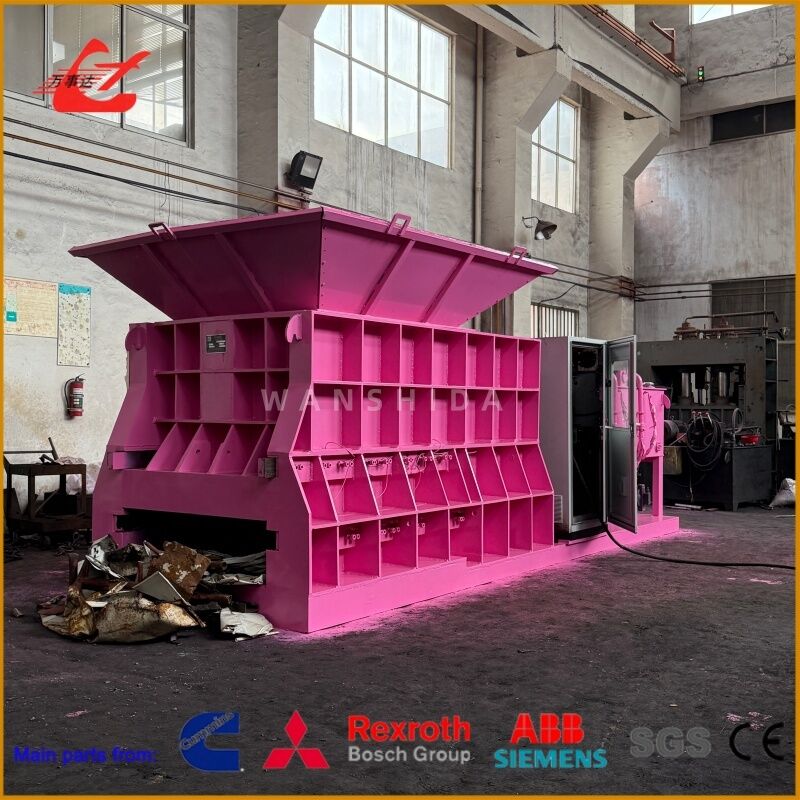
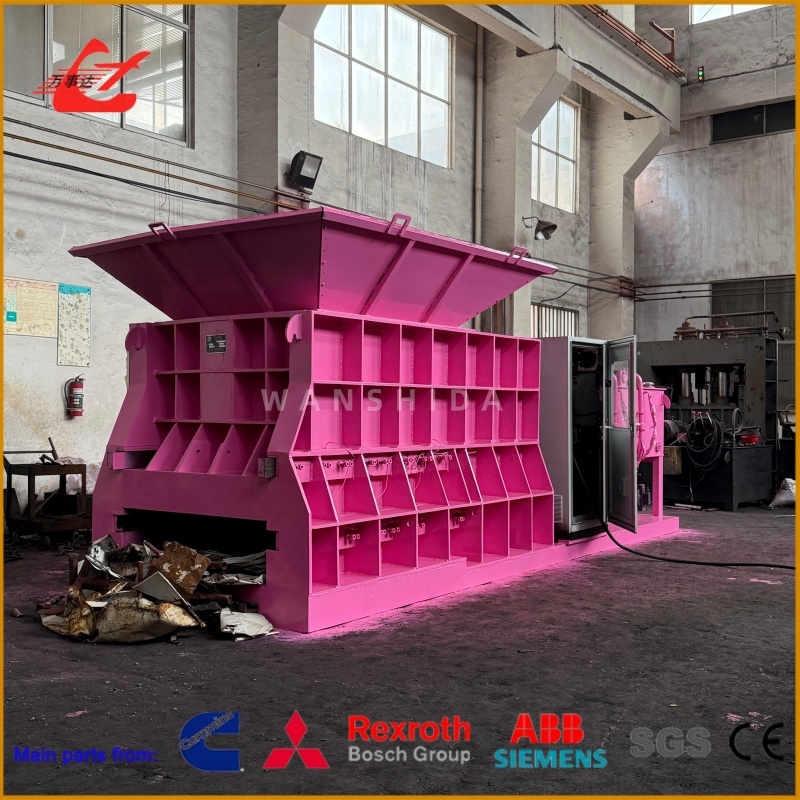
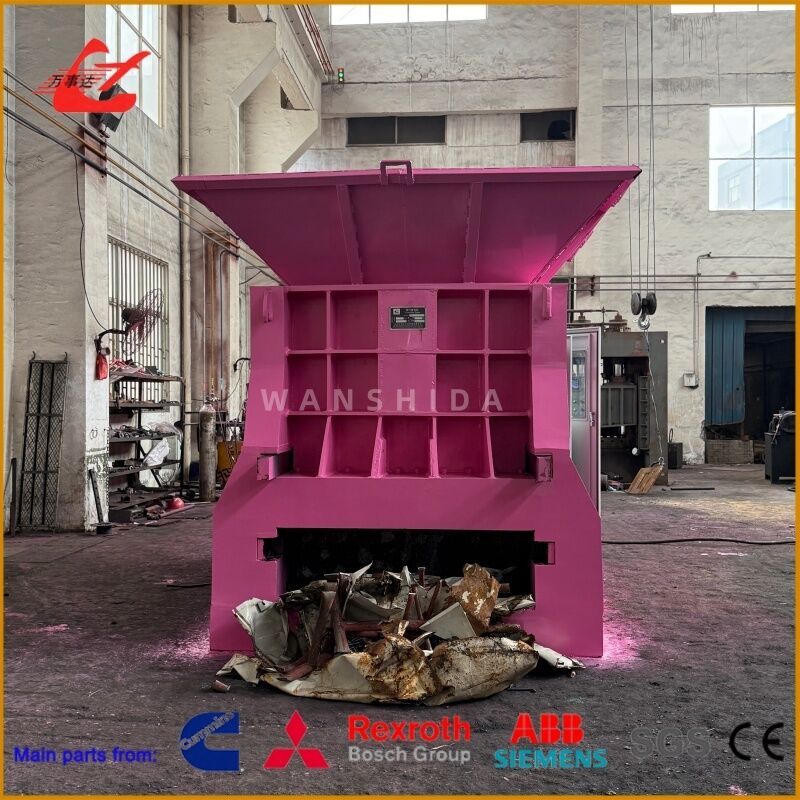
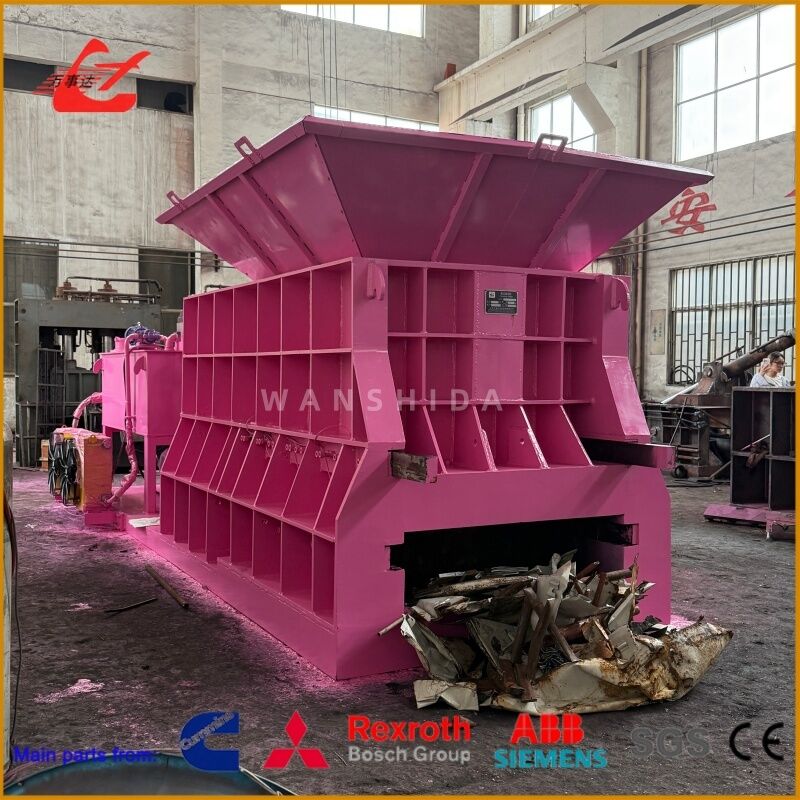
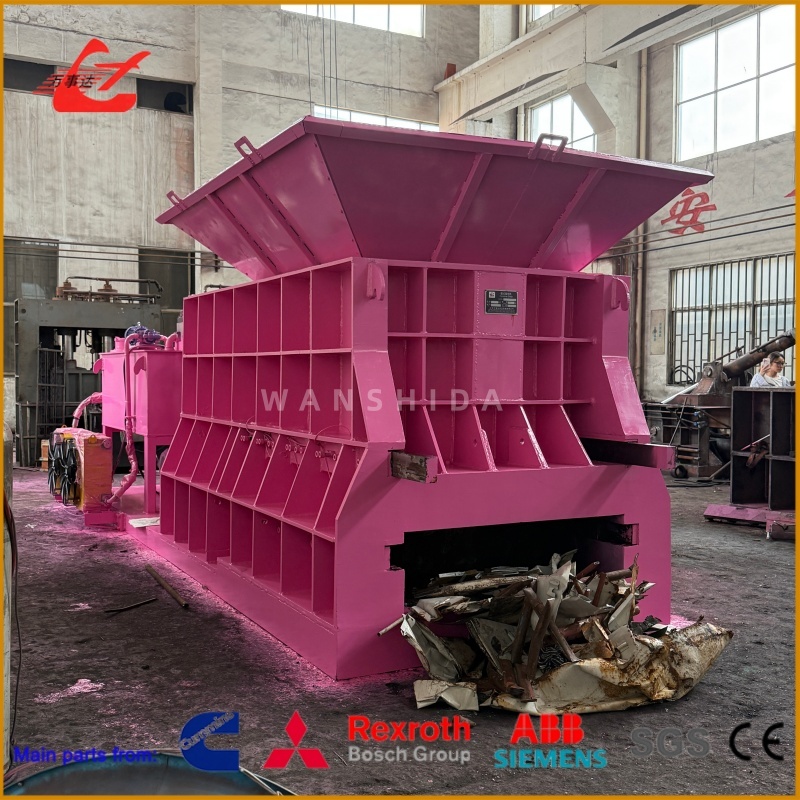
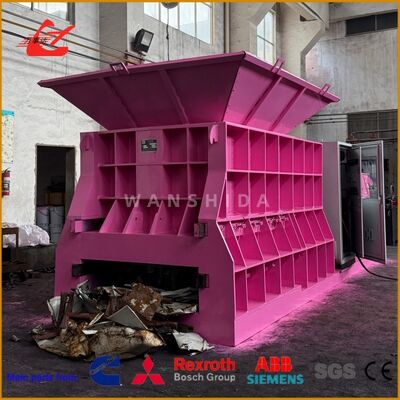
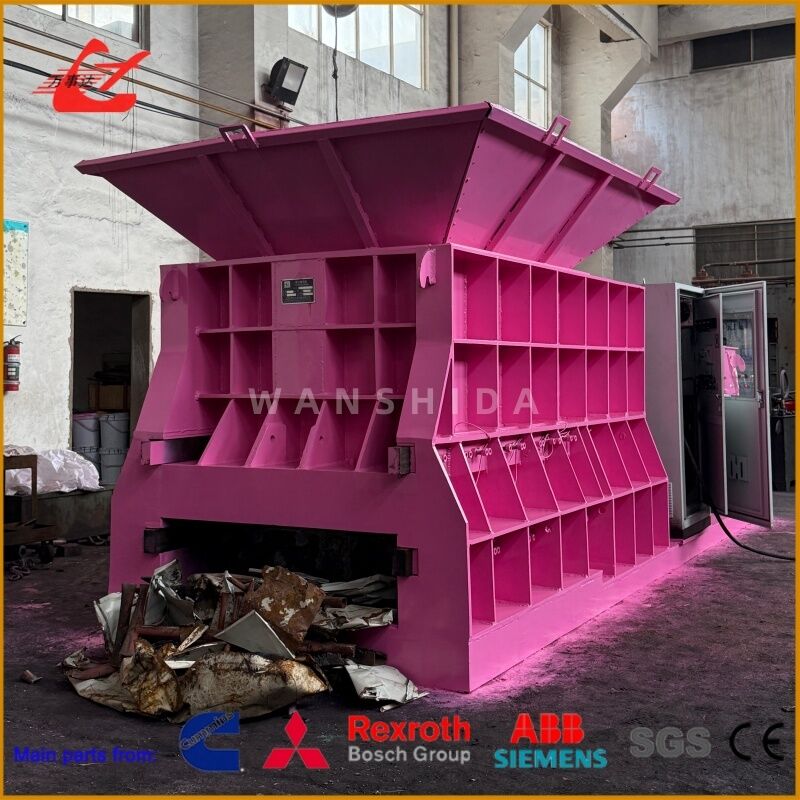
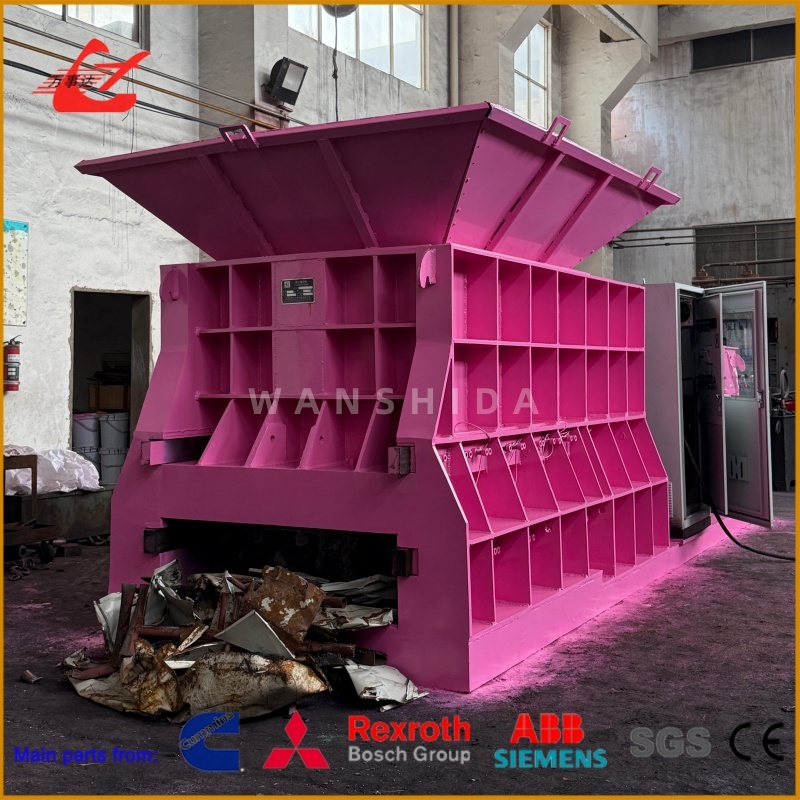
The Q43W-4000 container shear is an integrated hydraulic scrap processing machine developed for recycling yards that need high cutting force without building a large, permanently fixed processing line.
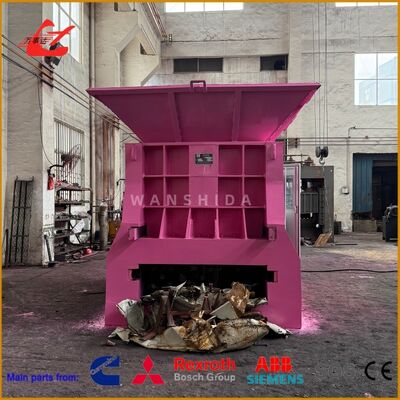
Its box-type structure combines scrap loading, material compression, hydraulic feeding and cutting within one machine. This reduces the need to move loose scrap between separate presses and shears, helping recycling companies create a more compact and organized working area.
With 4000 kN shearing force, a 1400 mm blade and an approximate cutting frequency of 2–3 times per minute, the Q43W-4000 can process mixed steel scrap, pipes, profiles, sheet-metal waste and dismantled structural components.
The machine can be customized with an enlarged loading box, remote control, centralized lubrication, hydraulic-oil cooling, protective covers, leveling devices and an optional towing system. These configurations allow the box shear to adapt to different scrap-yard layouts, operating climates and material-loading methods.
The source, shape and storage position of scrap metal can change frequently. A recycling yard may process demolition scrap in one period and production offcuts or automotive metal in another.
A permanently fixed cutting line can create several challenges:
These problems may reduce efficiency even when the cutting machine itself has sufficient force.
The Q43W-4000 box-type scrap shear places the main processing functions within one coordinated structure. Scrap is loaded directly into the box, compressed and pushed toward the cutting head without being transferred to another machine.
This integrated design offers several practical advantages:
The towing configuration is intended for controlled repositioning within an industrial site. It does not automatically make the machine suitable for public-road transport.
| Parameter | Q43W-4000 Technical Data |
|---|---|
| Model | Q43W-4000 |
| Product Type | Hydraulic Container Shear |
| Maximum Shearing Force | 4000 kN / 400 ton |
| Shearing Opening | Approximately 1400 × 450 mm |
| Blade Length | 1400 mm |
| Cutting Frequency | Approximately 2–3 times/min |
| Standard Motor Power | 74 kW / 2 × 37 kW |
| Heavy-Duty Power Option | 84 kW, depending on configuration |
| Control System | PLC control |
| Operation | Control panel and optional remote control |
| Scrap Feeding | Hydraulic pushing system |
| Compression Method | Hydraulic box compression |
| Standard Machine Weight | Approximately 21,500 kg |
| Heavy-Duty Configuration | Approximately 25,000 kg |
| Electrical Supply | Customized according to local requirements |
Final power, weight and structural configuration depend on the selected loading box, hydraulic system, mobility options and electrical components.
The machine can be installed close to the main scrap pile, reducing the distance traveled by excavators and material-handling equipment.
A box shear can support regional collection points that require independent scrap processing without installing a complete large-scale production line.
Pipes, profiles, sheet metal and appropriately prepared structural offcuts can be reduced to more manageable transport sizes.
The machine can prepare bulky scrap before loading it into trucks, containers or other transport systems.
Production waste can be processed near the scrap-storage area, reducing the volume of loose material waiting for collection.
Dismantled and drained vehicle-body metal can be compressed and cut before being transferred to a steel mill or shredder.
Confirm the loading area, excavator movement, discharge zone, maintenance access and electrical-cabinet position. The machine layout should not interfere with normal scrap-yard traffic.
A longer or enlarged box can accept bulkier material and reduce preparation work. However, it also increases machine size, weight and required operating space.
If the machine may be moved within the yard, optional rollers, a towing point and leveling screws should be included in the original design.
The standard model uses 74 kW installed power. A heavier structure or demanding operating condition may require an upgraded hydraulic and power configuration.
Hot climates and continuous operation may require an oil cooler or an upgraded hydraulic cooling system. Cold regions may require suitable hydraulic oil and low-temperature electrical components.
Centralized lubrication, accessible hydraulic components, replaceable wear plates and spare blade sets can reduce routine maintenance time.
It can be equipped with rollers, a towing point and leveling devices for repositioning inside an industrial yard. It is not a self-propelled machine and should not be moved while operating.
A flat and reinforced working surface is normally required. The exact foundation and anchoring method depend on the selected structure, machine weight and local ground conditions.
Yes. Its length, height and width can be adjusted according to the customer’s scrap dimensions, excavator size and available installation space.
Yes. The position of the electrical cabinet, hydraulic power unit and operator controls can be adjusted when the site layout is confirmed before production.
Yes. A centralized lubrication system can be supplied to simplify routine greasing and help ensure that key moving points receive regular lubrication.
The transportation method depends on the final machine dimensions and weight. Some components may be removed or packed separately to meet shipping and lifting requirements. A transport plan should be prepared after confirming the final configuration.
For a customized layout, provide the available installation area, maximum scrap dimensions, excavator model, local power supply and whether the machine needs to be repositioned within the yard.