Leave a Message
We will call you back soon!
Your message must be between 20-3,000 characters!
Please check your E-mail!
More information facilitates better communication.
Submitted successfully!
We will call you back soon!
Leave a Message
We will call you back soon!
Your message must be between 20-3,000 characters!
Please check your E-mail!
| Place of Origin: | Jiang su ,China |
|---|---|
| Brand Name: | Wanshida |
| Certification: | CE, ISO9001 |
| Model Number: | Q43W-4000A3 |
| Minimum Order Quantity: | 1 set |
| Price: | Contact us |
| Packaging Details: | Seaworthy packing |
| Delivery Time: | 60days |
| Payment Terms: | T/T,L/C |
| Supply Ability: | Depend on customer demand. |
| Motor Power: | About 85.5 KW | Warranty: | 1 Year |
|---|---|---|---|
| Blade Length: | 1400mm | Feeding Size: | 3200 × 2400 Mm |
| Discharging Size: | 1400x400mm | Cutting Speed: | 3–4 Cuts/minute |
| Nominal Force: | 400Tons (4000KN) | Cooling Method: | Air Cooling |
| Highlight: | Low Noise Scrap Shearing Machine,90 Degrees Scrap Shearing Machine,50Hz Scrap Shearing Machine |
||
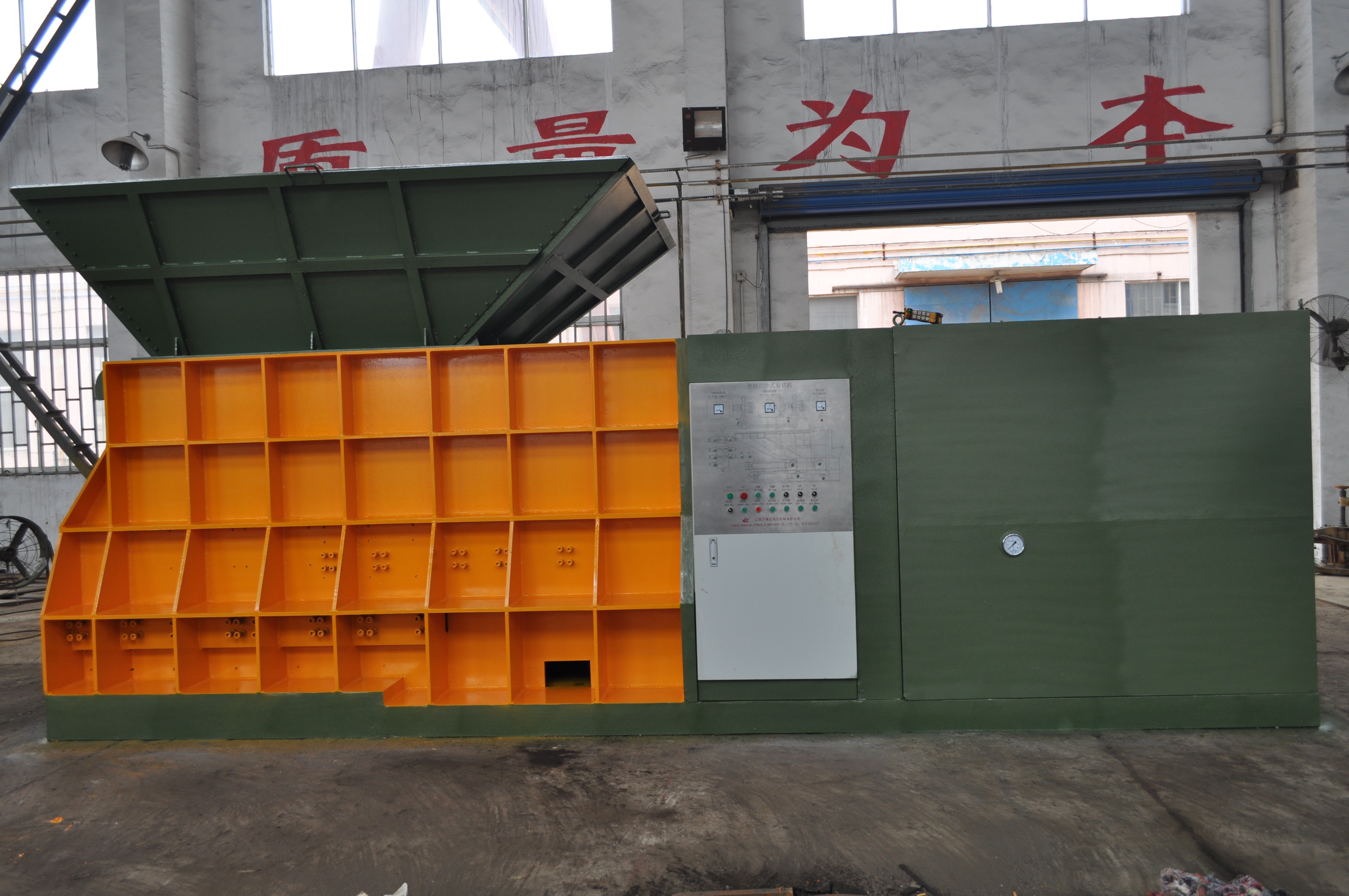
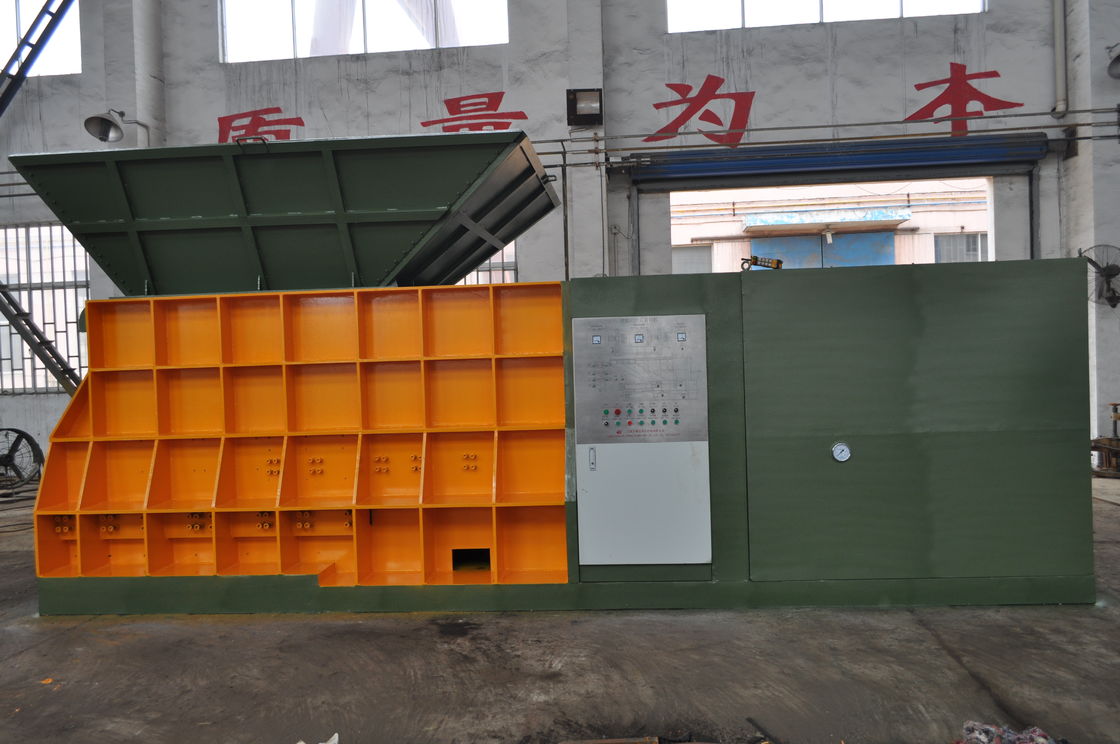
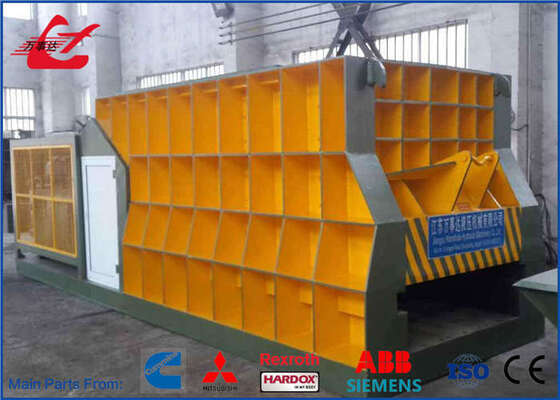
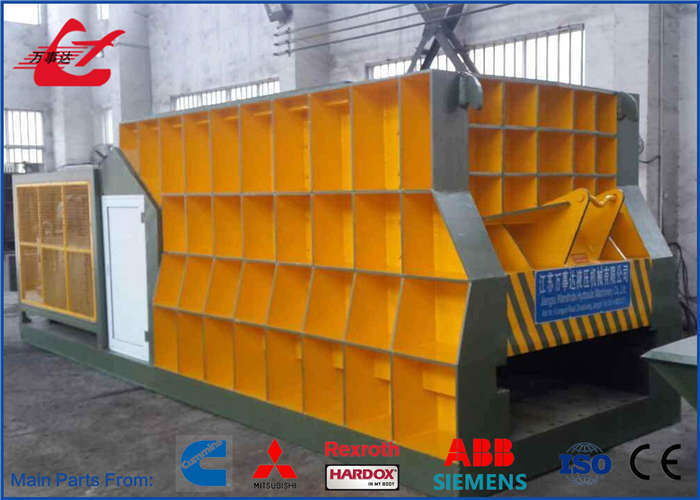
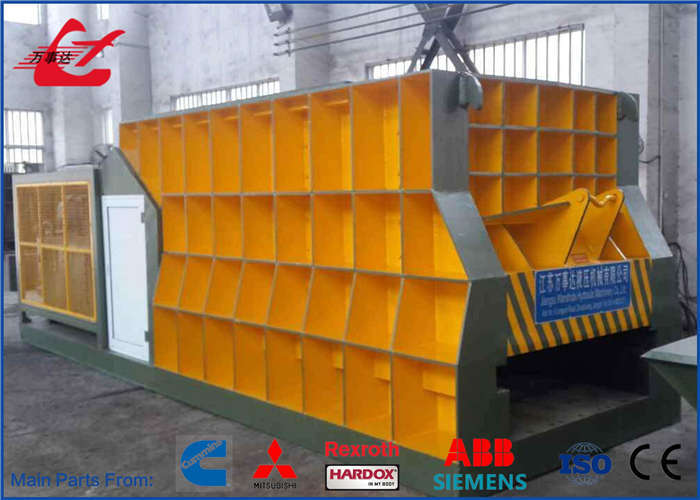
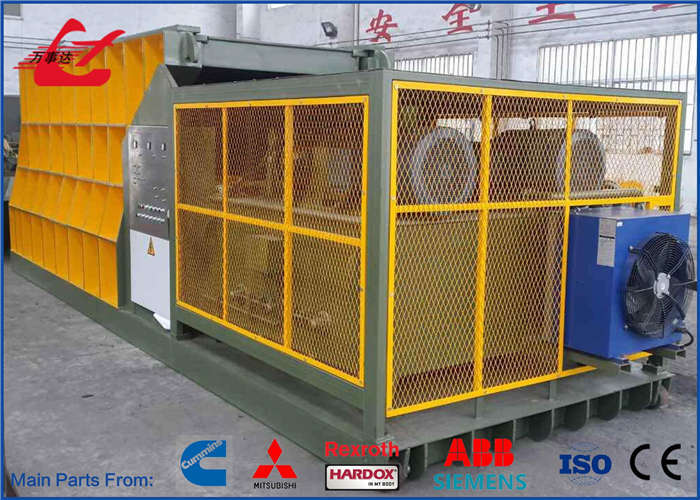
The Q43W-4000A3 Container Scrap Metal Shear is a heavy-duty hydraulic scrap cutting machine designed for recycling yards, steel processing centers, demolition contractors, and scrap traders handling bulky ferrous scrap. With a total cutting force of 4,000 kN, it is suitable for processing structural steel, thick steel plate, round bar, square steel, channel steel, angle steel, and selected I-beams into transportable and furnace-ready lengths.
Unlike a small alligator shear that relies heavily on manual feeding and is generally intended for lighter material, this 400-ton container shear provides a large 3200 × 2400 mm feeding opening, hydraulic material holding, and powerful twin cutting cylinders. Bulky scrap can be loaded directly by crane, grab, or forklift, reducing the need for extensive pre-cutting. The 1400 mm blade length and 1400 × 400 mm output opening help produce consistent cut pieces for downstream sorting, charging, transportation, or steel mill recycling.
For buyers seeking a reliable solution between a compact alligator shear and a much larger guillotine shear line, the Q43W-4000A3 offers a practical balance of cutting strength, loading convenience, capacity, and investment cost.
Many recycling operations face the same problem: incoming scrap is too large, too long, or too irregular for efficient storage, transport, or furnace charging.
Common challenges include:
If oversized material enters the next recycling stage without preparation, it can slow down handling, increase safety risks, and create extra transport cost.
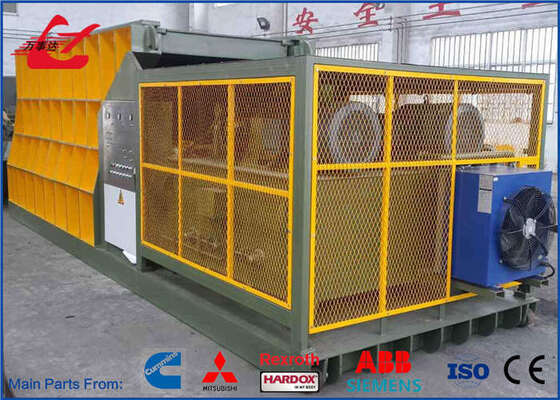
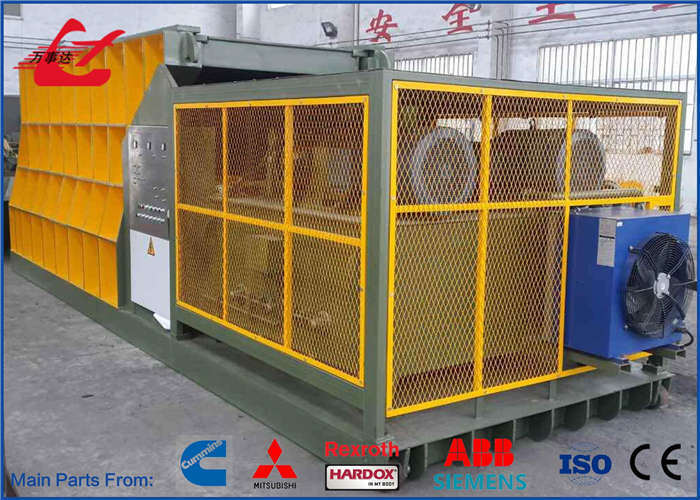
The Q43W-4000A3 hydraulic container scrap shear is built to turn oversized ferrous scrap into manageable pieces through controlled hydraulic cutting. Two 2000 kN cutting cylinders provide the main 4000 kN cutting force, while the holding cylinder helps stabilize the material during the cutting cycle.
Its wide feeding chamber is especially useful for mixed heavy scrap that does not arrive in uniform sizes. Operators can load material in batches instead of manually feeding one small piece at a time. With a cutting speed of 3–4 cuts per minute and an estimated capacity of 4–6 tons per hour, the machine can support continuous daily processing for recycling facilities handling normal carbon steel scrap.
The hydraulic system uses air cooling, helping maintain stable operation in regular working conditions. The electrical supply can also be customized according to the buyer’s local voltage and frequency requirements.
| Item | Key Specification |
|---|---|
| Model | Q43W-4000A3 Container Scrap Metal Shear |
| Total cutting force | 4000 kN |
| Main cutting cylinders | 2000 kN × 2 |
| Feeding opening | 3200 × 2400 mm |
| Output opening | 1400 × 400 mm |
| Blade length | 1400 mm |
| Cutting speed | 3–4 cuts/minute |
| Processing capacity | Approx. 4–6 t/h |
| Hydraulic system pressure | 25 MPa |
| Main motor power | 37 kW × 2 |
| Total installed power | Approx. 85.5 kW |
| Cooling method | Air cooling |
| Machine weight | Approx. 20.5 tons |
The Q43W-4000A3 is suitable for normal steel materials such as:
Actual cutting performance depends on material grade, wall thickness, shape, loading method, and the proportion of heavy scrap in the feedstock.
Scrap is loaded into the feeding chamber by grab crane, excavator grapple, or forklift. The hydraulic holding system secures the material to reduce movement during cutting. The twin cutting cylinders then drive the shear blade through the material with high hydraulic force. After each cut, the processed scrap exits through the output opening and can be collected for transport, further sorting, or furnace charging.
This working method makes the machine particularly suitable for operations that need to process irregular structural scrap efficiently without relying on gas cutting for every oversized piece.
Before selecting a container scrap shear, buyers should confirm:
The Q43W-4000A3 is a suitable option when your material is heavier than typical light scrap, but your required throughput does not yet justify investment in an ultra-large guillotine shear line.
Can this machine cut stainless steel or alloy steel?
The listed cutting capacity is based on normal carbon steel. Stainless steel and alloy steel may require a separate evaluation because their strength and cutting resistance can be higher.
What equipment is needed to feed the shear?
A grab crane, excavator with grapple, or forklift is recommended for loading bulky scrap into the feeding chamber efficiently.
Can the voltage be customized?
Yes. The standard configuration is 380V/50Hz, but the electrical system can be customized for different local power supplies.
Is this machine suitable for very thin light scrap?
It can process mixed scrap, but a large 400-ton shear is most economical when there is a sufficient proportion of heavy, long, or thick ferrous material. For mainly thin light scrap, a baler or smaller shear may be a better match.
What factors affect the actual capacity?
Capacity depends on scrap size, material type, operator loading speed, material arrangement, and how often the machine is stopped for material handling.