Leave a Message
We will call you back soon!
Your message must be between 20-3,000 characters!
Please check your E-mail!
More information facilitates better communication.
Submitted successfully!
We will call you back soon!
Leave a Message
We will call you back soon!
Your message must be between 20-3,000 characters!
Please check your E-mail!
| Place of Origin: | China |
|---|---|
| Brand Name: | Wanshida |
| Certification: | ISO9001,CE |
| Model Number: | Y83-160 |
| Minimum Order Quantity: | 1SET |
| Price: | Negotiation |
| Packaging Details: | Sea worthy |
| Delivery Time: | 30days |
| Payment Terms: | L/C,T/T |
| Supply Ability: | 30sets/month |
| Baling Force: | 160 Tons | Voltage: | 380V/50Hz Or Custom |
|---|---|---|---|
| Bale Size: | 400 × 400 Mm Or 350 × 350 Mm Or Custom | Compression Chamber Size: | 1600 × 1000 × 800 Mm |
| Bale Density: | More Than 1800 Kg/m³ | Main Motor Power: | 30 KW |
| Feeding Method: | Manual, Crane Or Material Grab | Control System: | PLC |
| Highlight: | Heavy Duty Hydraulic Steel Baling Machine,Hydraulic Steel Baling Machine,PLC Hydraulic Steel Baling Machine |
||
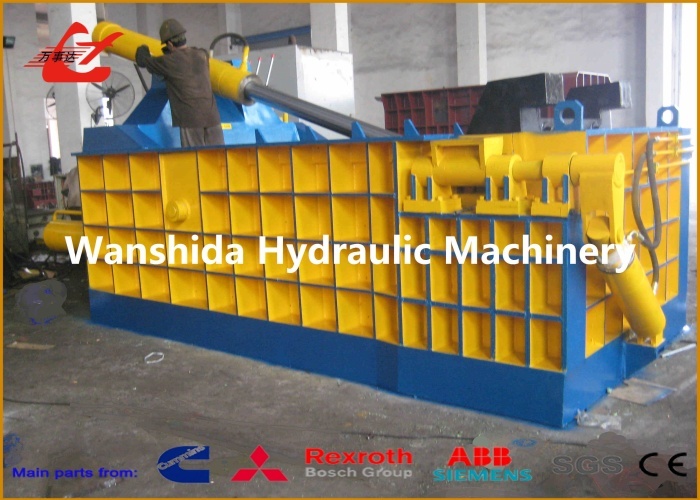
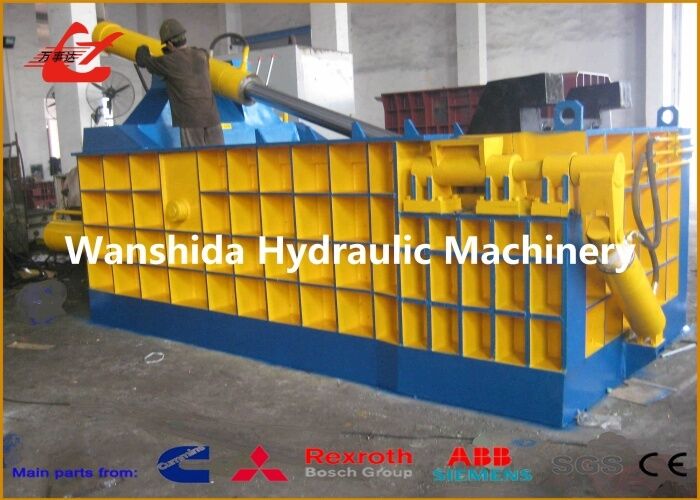
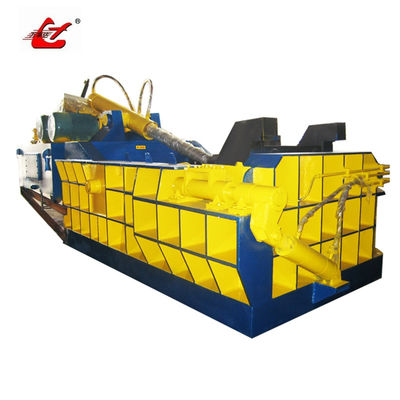
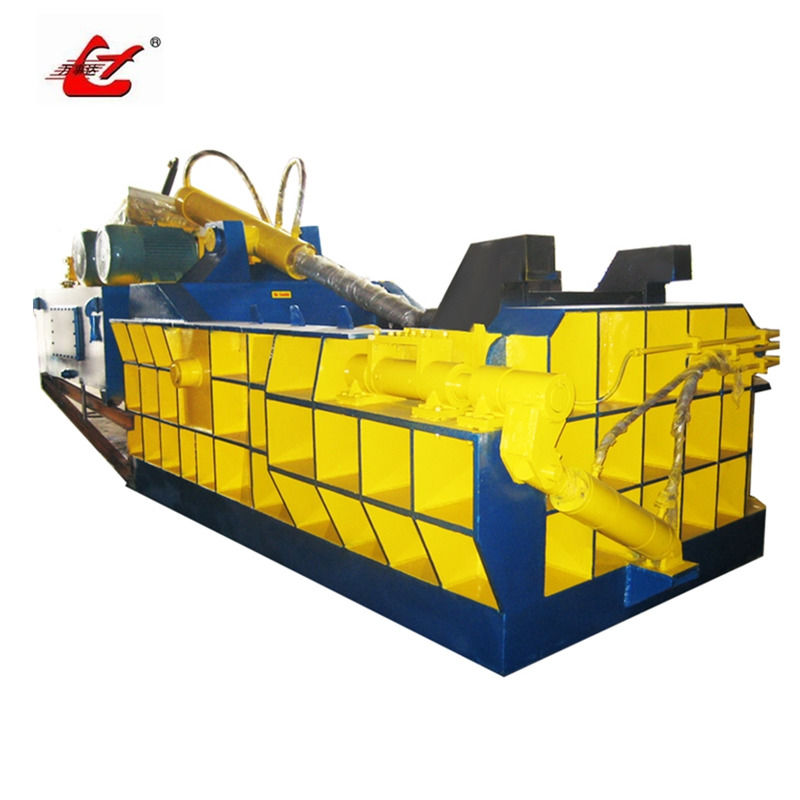
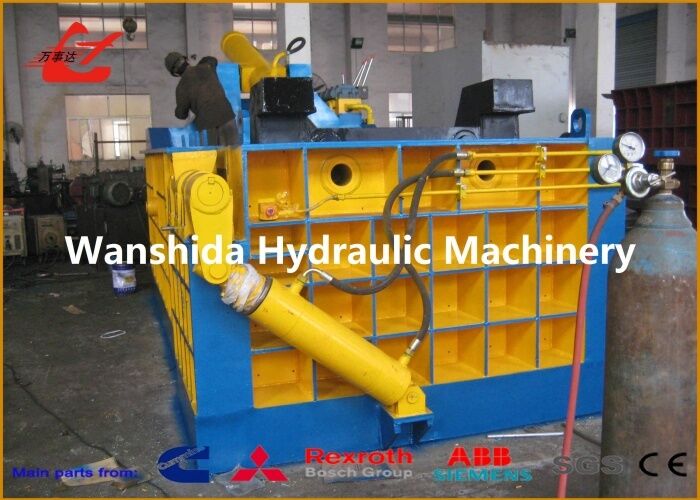
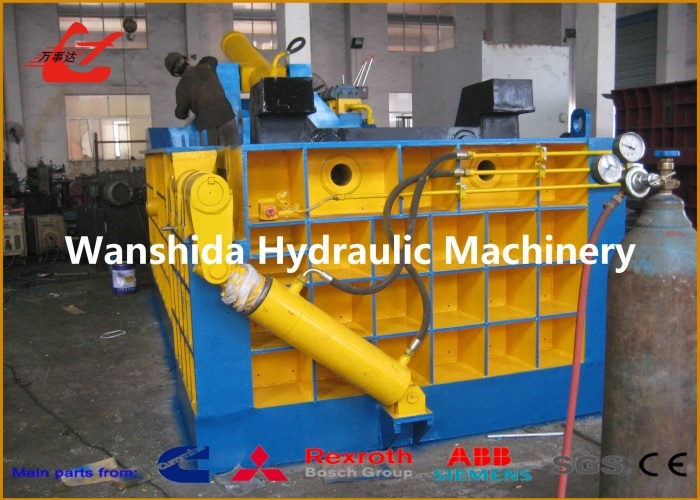
The Y83-160 hydraulic metal baler is a medium-capacity scrap compression machine designed for recycling yards, metal processing plants, foundries and waste collection centers. With a nominal pressing force of 1600 kN, it compresses loose and irregular metal scrap into compact, high-density bales that are easier to store, transport and feed into melting furnaces.
Its large 1600 × 1000 × 800 mm compression chamber provides enough loading space for steel offcuts, aluminum profiles, light sheet metal, cans, wires and other loose scrap. Depending on the selected configuration, the machine can produce 350 × 350 mm or 400 × 400 mm bales, making it suitable for different transportation and furnace-feeding requirements.
The Y83-160 uses a hydraulic turn-out bale discharge system. After compression is completed, the finished bale is automatically turned out from the chamber, reducing manual handling and improving daily operating efficiency.
Major advantages include:
• 1600 kN hydraulic compression force
• Approximately 2–3 tons per hour processing capacity
• Large loading chamber for mixed and bulky scrap
• High-density bales for economical transportation
• Turn-out discharge for convenient bale removal
• Compact structure suitable for medium-sized recycling yards
• Customizable voltage, bale size and control system
Loose scrap metal occupies a large amount of storage space and is expensive to transport. Irregular steel sheets, aluminum profiles, cans and production offcuts are also difficult to stack safely.
Without suitable baling equipment, recycling companies may face several problems:
• Low truck and container loading efficiency
• High transportation cost per ton
• Disorganized scrap storage areas
• Difficult furnace feeding
• Increased manual handling
• Slow material turnover
Small balers may not provide enough chamber volume or production capacity, while oversized industrial balers may require unnecessary investment, power consumption and installation space.
The Y83-160 scrap metal baler offers a balanced solution for businesses requiring dependable capacity without investing in an excessively large machine.
Loose scrap is placed into the compression chamber and pressed from multiple directions by hydraulic cylinders. The material is gradually compacted into a dense rectangular bale, reducing its original volume and improving handling efficiency.
With an output of approximately 2000–3000 kg per hour, the Y83-160 is suitable for continuous daily recycling operations. Its 30 kW motor provides stable hydraulic pressure while maintaining reasonable energy consumption.
The compact bales can be loaded more efficiently into trucks or shipping containers, helping recycling companies reduce logistics costs and improve the value of processed scrap.
| Item | Y83-160 Specification |
|---|---|
| Model | Y83-160 Metal Baler |
| Nominal Pressing Force | 1600 kN / 160 Tons |
| Compression Chamber Size | 1600 × 1000 × 800 mm |
| Bale Size | 400 × 400 mm or 350 × 350 mm |
| Bale Length | Adjustable According to Feeding Volume |
| Bale Density | More Than 1800 kg/m³ |
| Production Capacity | Approximately 2000–3000 kg/h |
| Main Motor Power | 30 kW |
| Bale Discharge Method | Turn-Out Discharge |
| Feeding Method | Manual, Crane or Material Grab |
| Operation Mode | Hand Valve or PLC Semi-Automatic Control |
| Applicable Materials | Steel, Aluminum, Copper and Mixed Metal Scrap |
| Voltage | Customized According to Local Power Supply |
Specifications may be adjusted according to the customer’s material, required bale size and operating conditions.
The Y83-160 hydraulic scrap baler is widely used in:
• Scrap metal recycling yards
• Steel and aluminum processing factories
• Foundries and metal smelting plants
• Automotive parts factories
• Metal fabrication workshops
• Waste collection and sorting centers
• Machinery manufacturing plants
• Non-ferrous metal recycling facilities
Suitable materials include light steel scrap, aluminum profiles, beverage cans, iron sheets, steel wires, copper scrap, metal shavings, household metal waste and industrial production offcuts.
First, the operator loads loose metal scrap into the compression chamber manually or with lifting equipment.
After the chamber cover is closed, the hydraulic cylinders press the material from different directions. Repeated compression removes empty spaces between the scrap pieces and forms a dense rectangular bale.
Once the preset compression pressure is reached, the chamber opens and the hydraulic discharge mechanism turns the completed bale out of the machine.
The operator can then remove the bale and begin the next loading cycle. PLC semi-automatic control is available to simplify the operating sequence and improve cycle consistency.
Before selecting the Y83-160, buyers should consider several practical factors.
Material type: Light steel sheets, aluminum profiles and mixed scrap have different compression characteristics.
Daily volume: The Y83-160 is generally suitable for buyers requiring approximately 2–3 tons of output per hour.
Bale dimensions: A 350 × 350 mm bale is more compact, while a 400 × 400 mm bale may be preferred for larger furnace-feeding systems.
Feeding method: Small scrap can be loaded manually, while bulky material is better handled by crane or grab.
Automation level: Hand-valve operation is economical and easy to maintain. PLC control is more suitable for buyers seeking simpler operation and consistent working cycles.
Future expansion: Buyers expecting a rapid increase in production should consider a larger chamber or higher-force model.
1. What materials can the Y83-160 metal baler process?
It can compress steel sheets, aluminum profiles, cans, wires, copper scrap, light structural metal and mixed industrial offcuts. Oversized or extremely thick materials may need to be cut before loading.
2. How much scrap can the machine process per hour?
The reference capacity is approximately 2000–3000 kg per hour. Actual output depends on material density, scrap size, feeding speed, operator experience and bale dimensions.
3. Does the machine produce the same bale weight every time?
Bale weight varies according to the material type and the amount loaded into the chamber. Bale dimensions remain relatively consistent, while denser materials normally create heavier bales.
4. Should I choose hand-valve or PLC control?
Hand-valve control is simple, economical and easy to maintain. PLC semi-automatic control reduces manual operating steps and provides a more consistent compression cycle.
5. What information is needed before quotation?
Buyers should provide material photos or videos, estimated daily processing volume, preferred bale size, local voltage and required feeding method. This information helps confirm whether the standard Y83-160 configuration is suitable.