Leave a Message
We will call you back soon!
Your message must be between 20-3,000 characters!
Please check your E-mail!
More information facilitates better communication.
Submitted successfully!
We will call you back soon!
Leave a Message
We will call you back soon!
Your message must be between 20-3,000 characters!
Please check your E-mail!
| Place of Origin: | China |
|---|---|
| Brand Name: | Wanshida |
| Certification: | CE, ISO9001 |
| Model Number: | Q43-2500 |
| Minimum Order Quantity: | 1 set |
| Price: | Contact us |
| Packaging Details: | Seaworthy packing |
| Delivery Time: | 25-35 days |
| Payment Terms: | Western Union,D/P,T/T |
| Supply Ability: | 20sets/month |
| Shear Force: | 2500KN/250 Ton | Max Cutting: | Steel Plate 70 × 70 Mm / Round Bar: Ø80 Mm |
|---|---|---|---|
| Motor: | 30KW | Largest Holding Force(ton): | 80KN |
| Blade Size: | 1000mm | Frequency: | 8~16 Times Per Minute |
| Max. Open: | 285mm | Stroke Of Hold Cylinder: | 60mm |
| Highlight: | heavy-duty hydraulic alligator shear,scrap metal shear for steel,hydraulic shear for metal recycling |
||
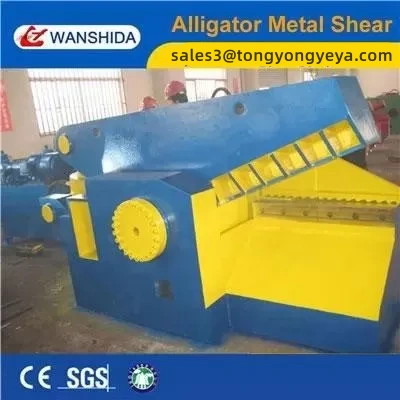
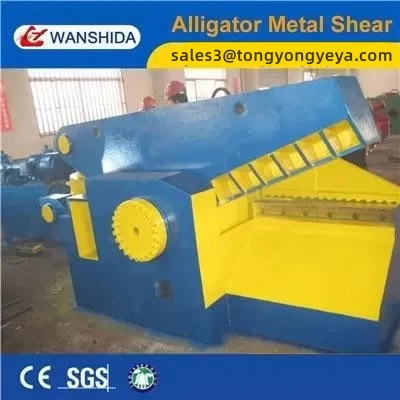
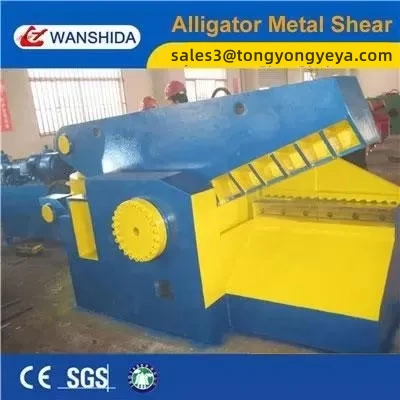
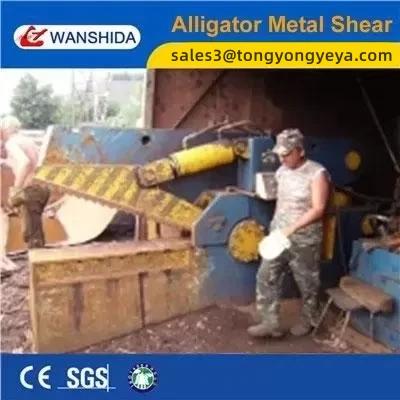
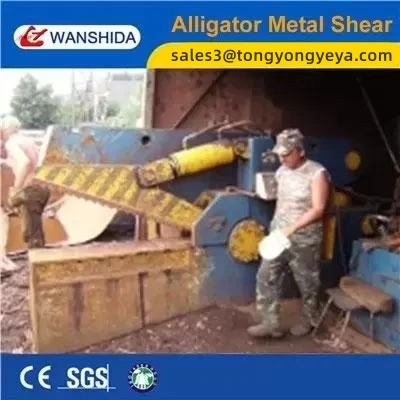
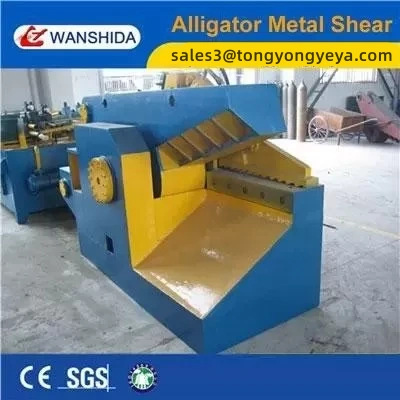
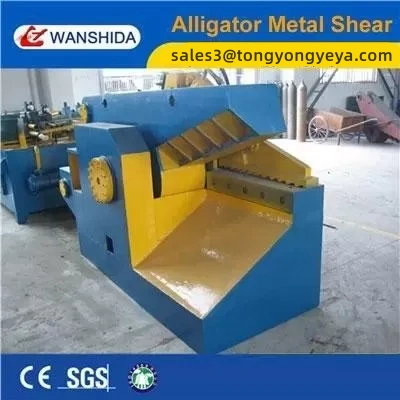
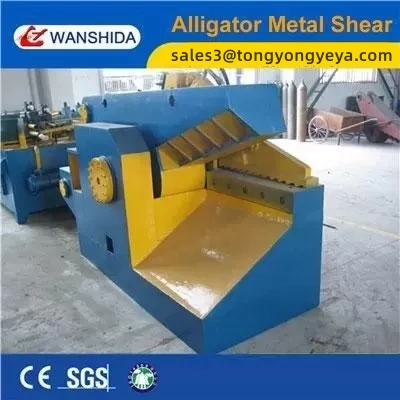
The WANSHIDA Q43-2500 alligator shear gives metal recyclers flexibility when incoming scrap varies in shape and length. With 2500 kN shearing force, a 1000 mm blade, and an independent hydraulic holding mechanism, it supports the sectioning of suitable bars, profiles, and irregular production offcuts.
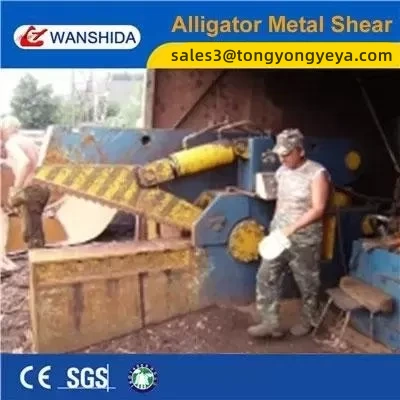
For businesses processing different scrap batches, material access matters alongside cutting force. The open-jaw configuration allows individual pieces to be positioned and repositioned for successive cuts, helping operators adapt to changing feedstock within the machine’s rated capacity.
Scrap deliveries rarely contain identical pieces. A batch may include solid bars, hollow profiles, and bent offcuts, each requiring different positioning and cutting assessment.
Selecting a shear by force alone can overlook practical limitations. Blade opening, material strength, cross-section, and feeding arrangements all influence whether a machine suits the daily workload.
Access for varied scrap shapes. The 285 mm maximum blade opening provides clearance for introducing suitable material. Together with the 1000 mm blade, it offers space for positioning workpieces without requiring every piece to have the same geometry.
Dedicated material restraint. The hydraulic holding mechanism delivers up to 80 kN holding force, helping stabilize the workpiece during shearing. This is particularly relevant when handling pieces that are awkward to position.
Successive cutting of longer pieces. Material can be advanced between cycles to create shorter sections. Operators can adapt the cut position to downstream handling requirements, subject to suitable support and operating procedures.
A defined basis for capacity assessment. Listed capacities of 70 × 70 mm square section or Ø80 mm round section provide a starting point for evaluation. Actual suitability must account for the metal grade and strength.
| Parameter | Q43-2500 |
|---|---|
| Maximum shearing force | 2500 kN |
| Blade length | 1000 mm |
| Maximum blade opening | 285 mm |
| Maximum holding force | 80 kN |
| Cutting frequency | 8–16 cycles/min |
| Listed cutting capacity* | 70 × 70 mm square section or Ø80 mm round section |
| Hydraulic working pressure | 21 MPa |
Confirm cutting capacity for the actual material before ordering.
The workpiece is positioned between the blades and restrained by the holding mechanism. Hydraulic pressure drives the moving blade toward the fixed blade, separating the material. The jaw then reopens so the remaining length can be repositioned.
Assess your typical scrap mix as well as the largest piece. Provide material grades, solid or hollow cross-sections, wall thicknesses, and representative photographs.
Also confirm required cut lengths, daily volume, and how long or heavy pieces will be supported during feeding.
Both can be assessed for suitability. Solid sections depend on cross-sectional area and strength; hollow profiles also require consideration of wall thickness, shape, and possible deformation.
Some flattening or distortion may occur during shearing. If the cut pieces must retain precise geometry for reuse, discuss the required finish before selecting the machine.
Do not assume the single-bar capacity applies to a bundle. Combined cross-section, positioning, and holding stability require separate assessment.
No. Blade length does not establish plate thickness capacity. Plate width, thickness, material strength, and cutting position must be evaluated together.
Send the new material specifications for assessment before processing it. Similar-looking scrap can have substantially different strength and cutting requirements.