Leave a Message
We will call you back soon!
Your message must be between 20-3,000 characters!
Please check your E-mail!
More information facilitates better communication.
Submitted successfully!
We will call you back soon!
Leave a Message
We will call you back soon!
Your message must be between 20-3,000 characters!
Please check your E-mail!
| Place of Origin: | China |
|---|---|
| Brand Name: | Wanshida |
| Certification: | CE, ISO9001 |
| Model Number: | Y82-100 |
| Minimum Order Quantity: | 1 set |
| Price: | Contact us |
| Packaging Details: | Seaworthy packing |
| Delivery Time: | 25 days |
| Payment Terms: | T/T,L/C |
| Supply Ability: | 30 sets/month |
| Machine Dimensions: | 1470 × 1200 × 3600 Mm | Press Force: | 100Tons |
|---|---|---|---|
| Efficiency: | 4bales Per Hour | Motor Power: | 15 KW |
| Bale Size: | 1100 × 750 × (700–900) Mm | Bale Weight: | 350–500 Kg |
| Voltage: | 380V/220V | Cycle Time: | 80 Seconds |
| Highlight: | 8 Tons Vertical Baler Machine,Vertical Baler Machine 141.7inch,141.7inch Horizontal Cardboard Baler |
||
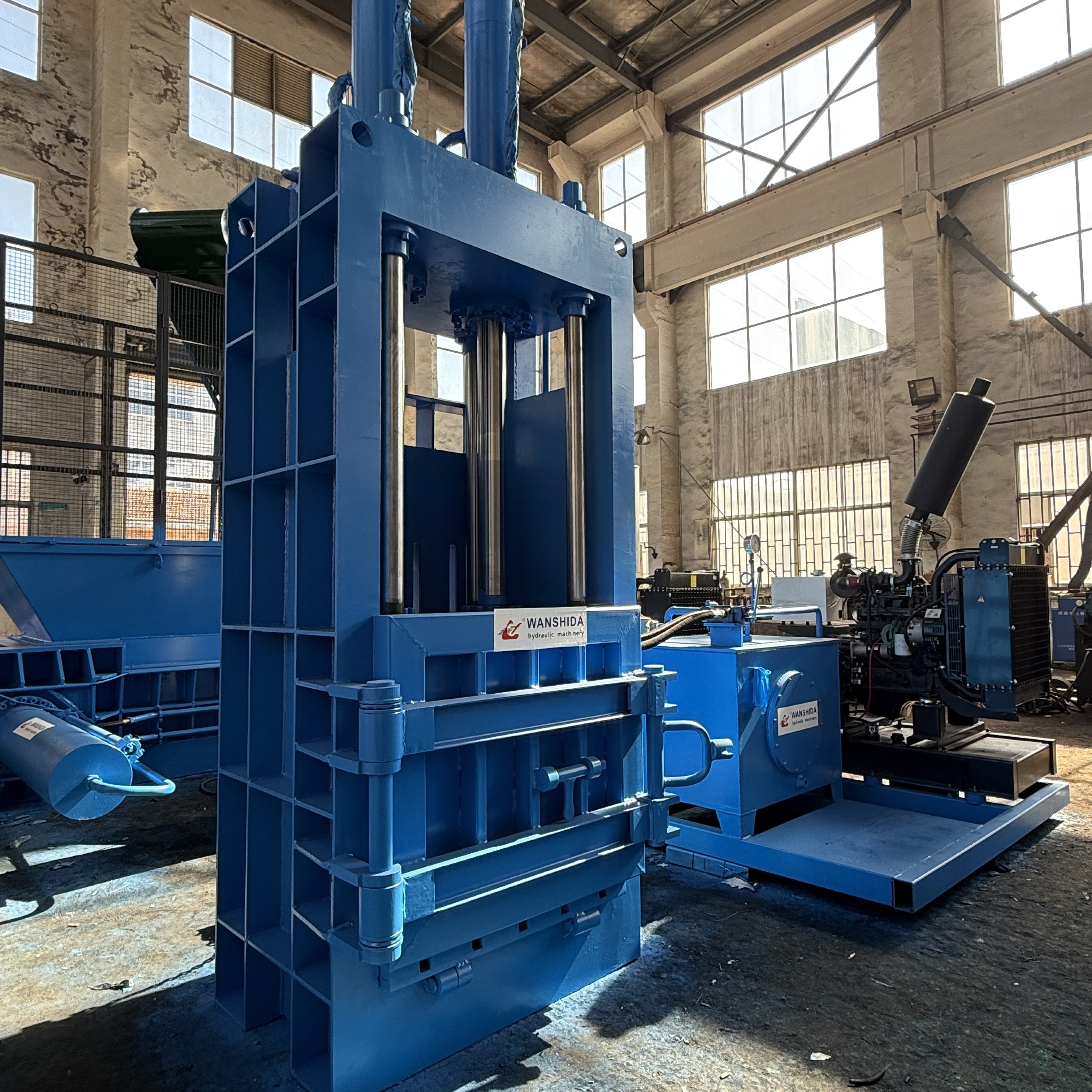
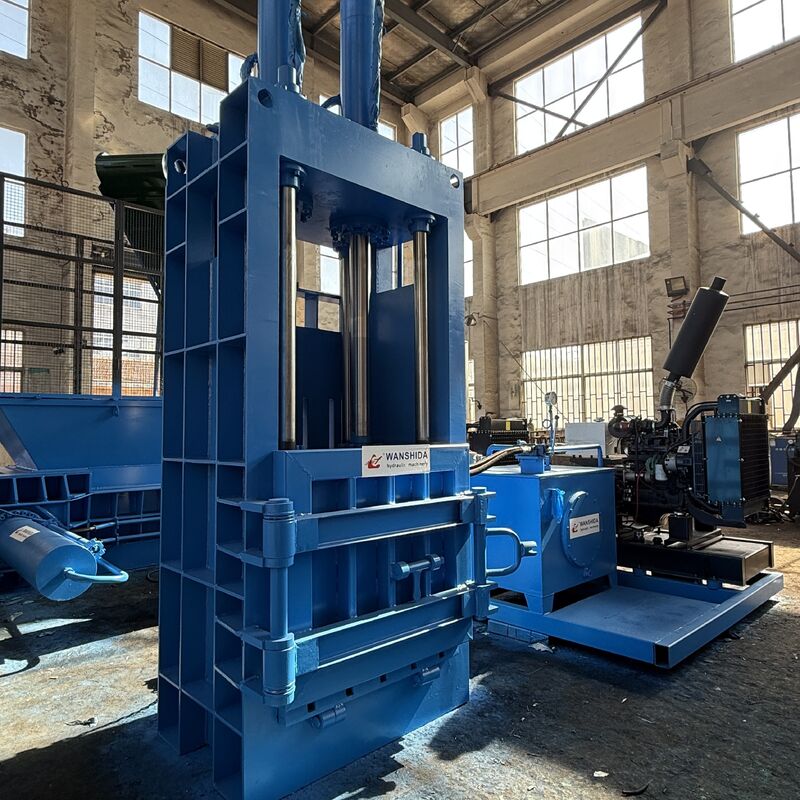
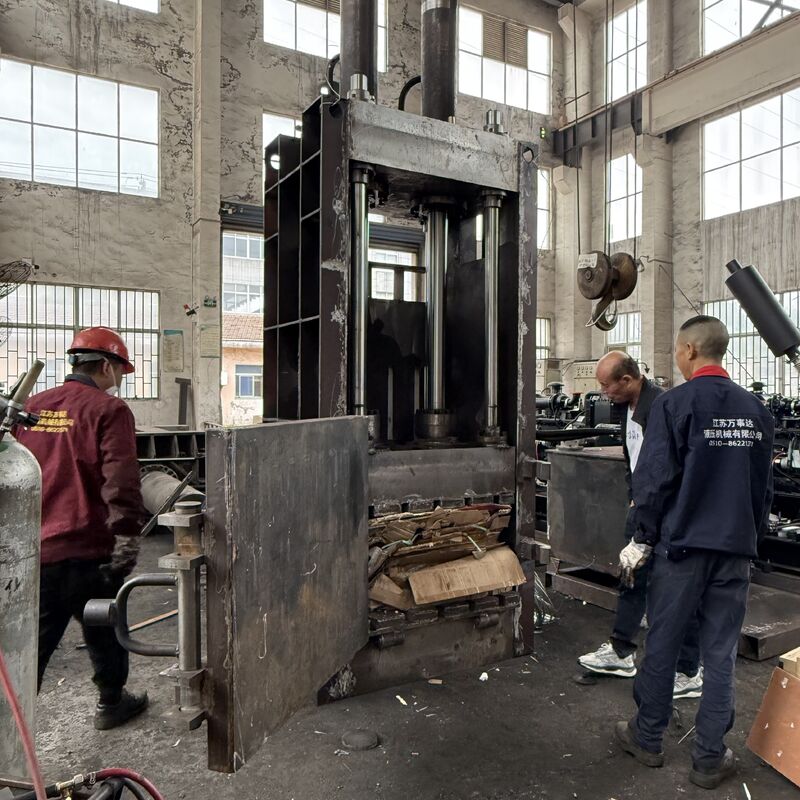
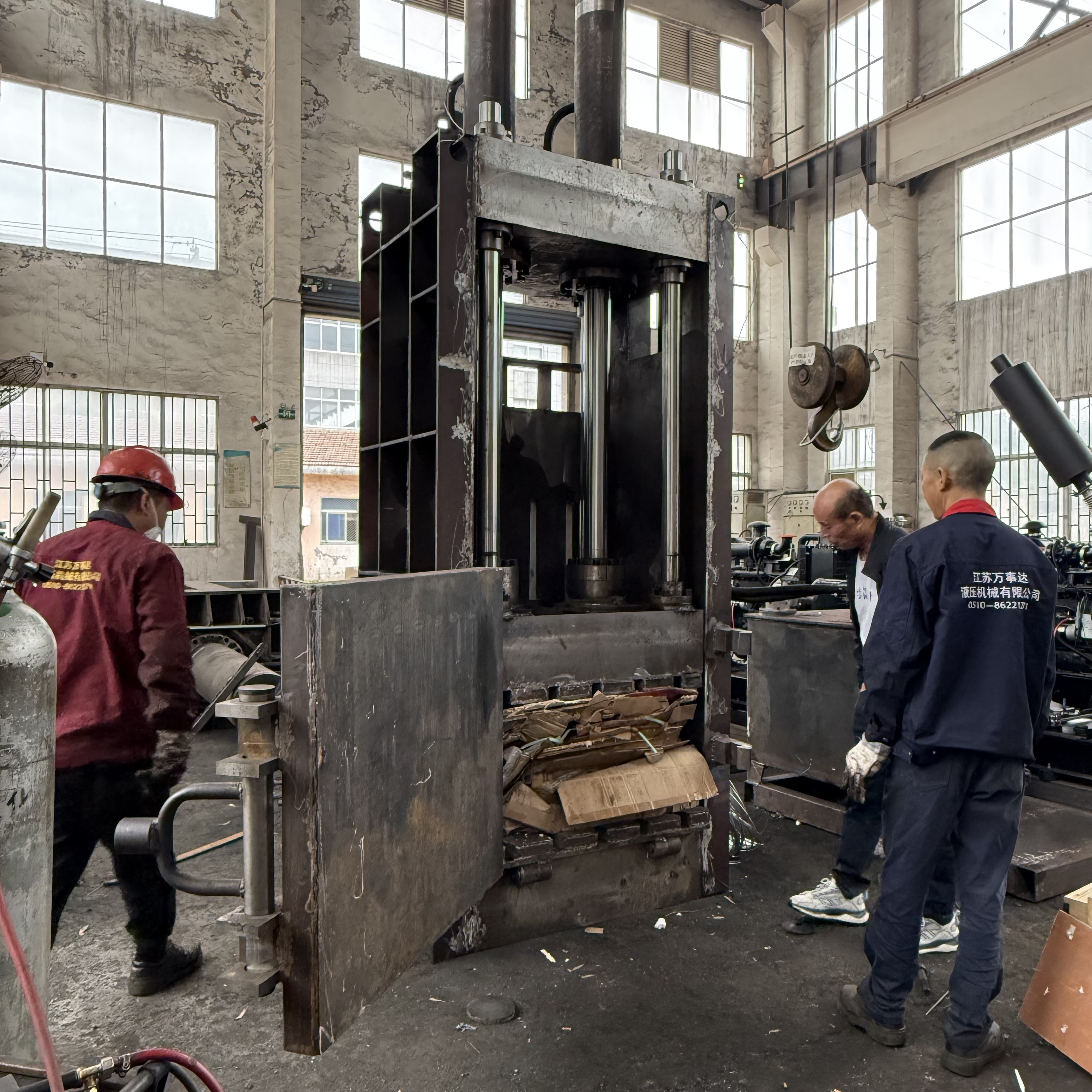
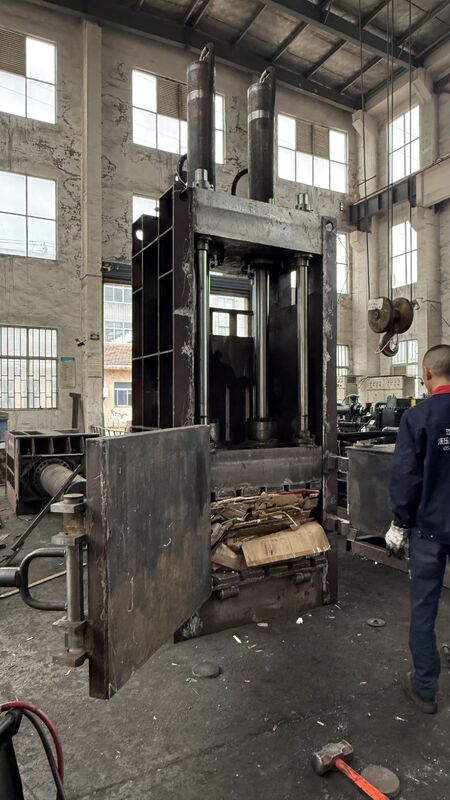
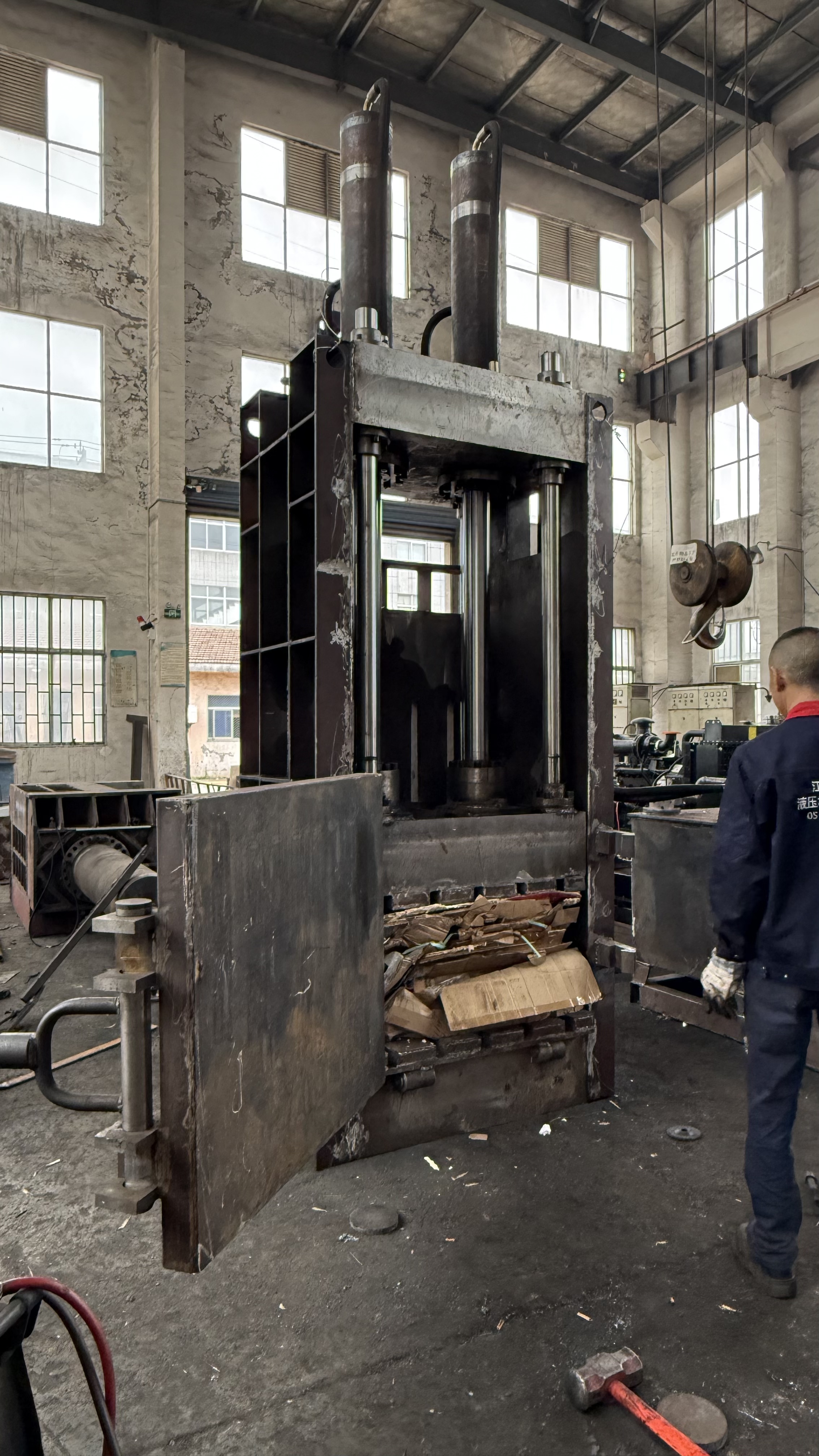
The Y82-100 vertical waste baler is a heavy-duty hydraulic compression machine designed for recycling centers, warehouses, textile factories, packaging plants, and waste-management facilities. With a powerful 100-ton pressing force, it compresses loose and bulky recyclable materials into dense, stackable bales weighing approximately 350–500 kg.
The finished bale measures 1100 × 750 × 700–900 mm. Its adjustable bale height allows operators to control bale weight according to the material type, storage requirements, and transportation limits. The machine can produce approximately four bales per hour, making it suitable for facilities that need reliable daily processing capacity without installing a large horizontal automatic baling line.
Powered by a 15kW motor, the Y82-100 balances strong compression performance with practical energy consumption. Its vertical structure requires less floor space than many horizontal balers, making it particularly suitable for factories and warehouses where working space is limited.
The machine can process cardboard, waste paper, plastic film, woven bags, textile waste, cotton, fibers, foam, packaging materials, and other compressible non-metallic waste. By converting loose material into uniform bales, it helps businesses improve storage efficiency, simplify transportation, and increase the commercial value of recyclable materials.
Loose recyclable waste creates operational and financial problems for many factories and recycling businesses. Cardboard, plastic film, textile offcuts, and packaging materials have low bulk density and occupy considerable storage space.
Common challenges include:
Without proper compression, businesses may spend more on labor, storage, and transportation than necessary.
The Y82-100 hydraulic vertical baler applies up to 100 tons of pressure to reduce the volume of loose recyclable materials. It produces dense rectangular bales that are easier to stack, weigh, move, and transport.
A single bale can weigh between 350 and 500 kg, depending on material density, moisture, feeding quantity, and compression settings. The consistent bale size helps recycling companies calculate transportation capacity more accurately and load trucks or containers efficiently.
Key advantages include:
| Item | Y82-100 Vertical Waste Baler |
|---|---|
| Model | Y82-100 |
| Pressing Force | 100 tons |
| Bale Weight | 350–500 kg |
| Bale Size | 1100 × 750 × (700–900) mm |
| Production Efficiency | Approximately 4 bales/hour |
| Motor Power | 15 kW |
| Cycle Time | 80 seconds |
| Machine Dimensions | 1470 × 1200 × 3600 mm |
| Machine Weight | Approximately 8000 kg |
| Machine Structure | Vertical hydraulic baler |
| Typical Materials | Cardboard, plastic film, textiles, fibers and packaging waste |
Actual bale weight and production efficiency depend on material density, moisture content, feeding speed, operator experience, and the required bale height.
The Y82-100 vertical hydraulic baler is suitable for:
Typical materials include waste cardboard, cartons, paper, plastic film, woven bags, textile offcuts, fabric, cotton, fibers, foam, and other compressible packaging waste.
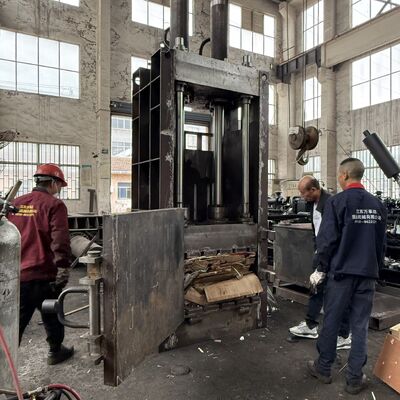
Loose material is loaded into the vertical compression chamber. After the loading door is securely closed, the hydraulic system drives the pressing plate downward.
The pressing plate applies up to 100 tons of force, reducing the material volume and forming a dense rectangular bale. Additional material can be loaded and compressed when necessary until the required bale height and weight are reached.
After compression, the bale is secured with suitable strapping or wire. The finished bale is then removed from the chamber using the machine’s bale-ejection arrangement and transferred by forklift or pallet-handling equipment.
The reference hydraulic cycle takes approximately 80 seconds, while actual bale production time also includes feeding, repeated compression, strapping, and bale removal.
The Y82-100 is recommended for buyers who need medium-capacity waste compression and do not require a fully automatic horizontal baling system.
This model may be suitable when:
Before selecting the machine, buyers should provide material photos, daily processing volume, material density, local voltage, preferred strapping method, and required bale weight. Materials with high elasticity or unusual moisture content may require a different chamber or hydraulic configuration.
It can compress cardboard, waste paper, plastic film, woven bags, textile offcuts, cotton, fibers, foam, and similar compressible materials. Buyers should provide material photos to confirm compatibility before ordering.
No. Bale weight varies according to the material type, initial density, moisture content, feeding quantity, and selected bale height. Dense cardboard generally produces a different bale weight from plastic film or textile waste.
No. The 80-second figure refers to the hydraulic working cycle. Producing a complete bale also requires material feeding, repeated compression, strapping, and bale removal. The practical reference output is approximately four bales per hour.
After compression and strapping, the finished bale is discharged using the machine’s bale-ejection system. Because each bale can weigh up to 500 kg, a forklift or suitable material-handling equipment is recommended.
Please provide the material type, photos or videos, daily capacity, expected bale weight, local voltage and frequency, available installation height, and preferred strapping material. This information helps confirm whether the standard Y82-100 configuration is suitable.