
Leave a Message
We will call you back soon!
Your message must be between 20-3,000 characters!
Please check your E-mail!
More information facilitates better communication.
Submitted successfully!
We will call you back soon!
Leave a Message
We will call you back soon!
Your message must be between 20-3,000 characters!
Please check your E-mail!
| Place of Origin: | china |
|---|---|
| Brand Name: | Horizontal Container Shear |
| Certification: | CE and ISO9001 |
| Model Number: | Q43W-4000B |
| Minimum Order Quantity: | 1 set |
| Price: | Negotiable |
| Packaging Details: | Seaworthy Packing |
| Delivery Time: | 45days |
| Payment Terms: | T/T |
| Supply Ability: | 10 sets/month |
| Model: | Q43W-4000B | Output Mouth(mm): | 1400x450 |
|---|---|---|---|
| Blade Length(mm): | 1400 | Hydraulic System Pressure: | 25MPa |
| Oil Cooling System: | Air Cooling System | Motor Power: | About84KW |
| Operation: | Button Control | Cutting Speed: | 2-3times/min |
| Highlight: | Perfect Cuts Box Shear,15mm Cutting Capacity Box Shear,90 Degrees Cutting Angle Box Shear |
||
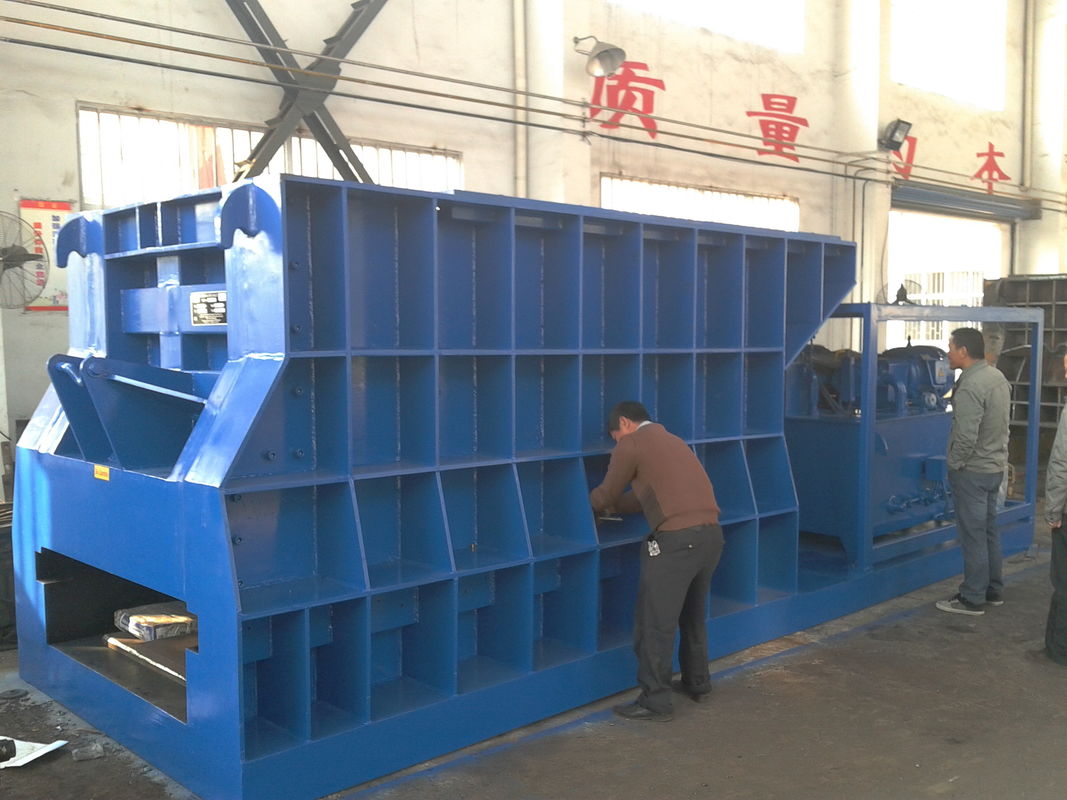
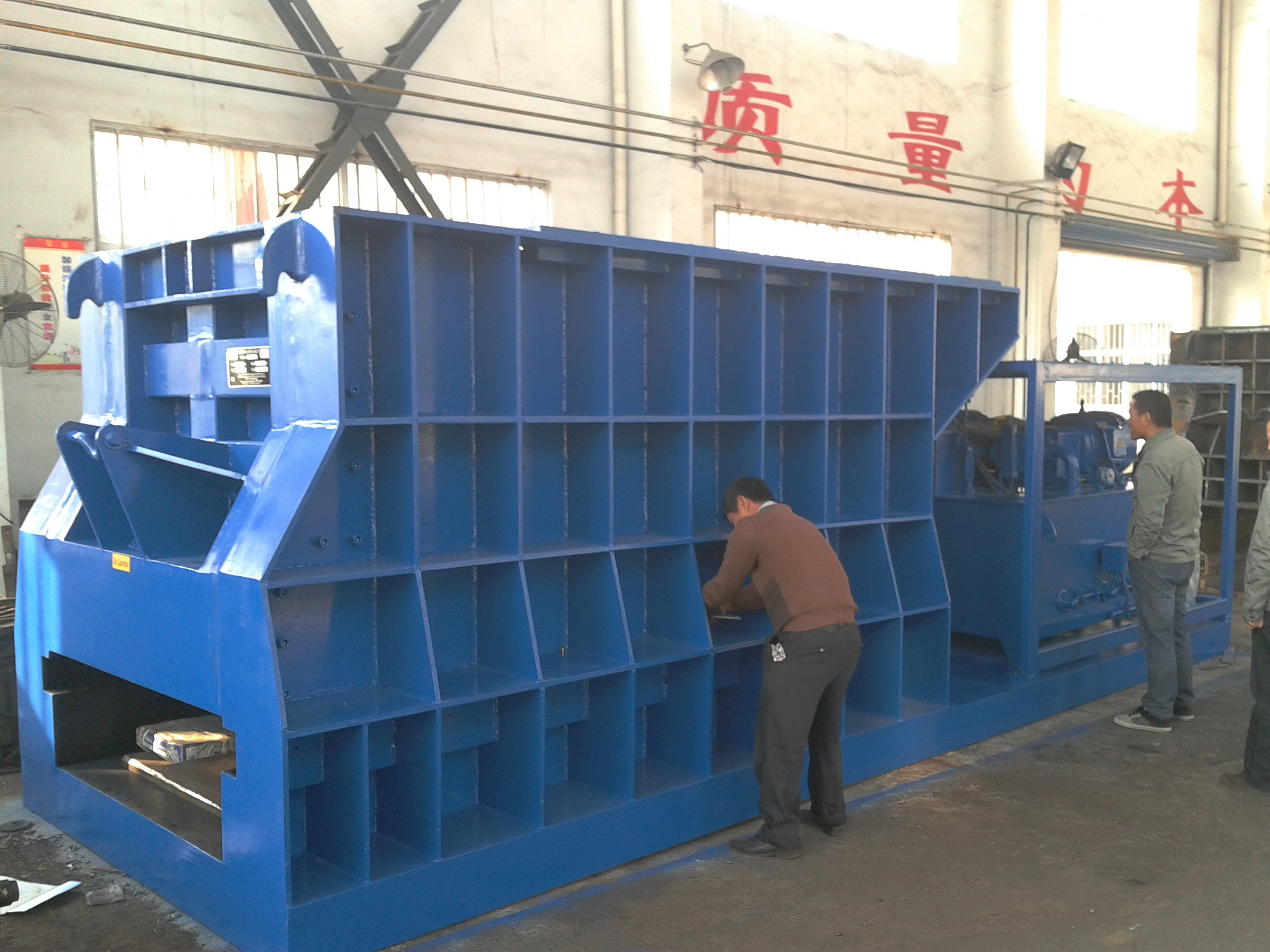
The Q43W-4000B Horizontal Scrap Shear is a heavy-duty hydraulic cutting machine developed for scrap metal recycling yards, steel recycling facilities, metal processing companies and industrial waste recovery operations that need to reduce oversized scrap into more manageable dimensions.
With a nominal cutting force of 4000kN, approximately 400 tons, a 1400mm blade, a 1400×450mm output mouth, and a hydraulic system operating at 25MPa, this Container Scrap Shear provides strong cutting capability for processing mixed metallic scrap before transportation, sorting, melting or further recycling.
Unlike conventional manually fed small shears, the horizontal structure is designed to handle larger quantities of scrap in a more organized processing flow. Material can be loaded into the machine, compressed and guided toward the cutting area, where the hydraulic cutting system reduces the scrap into shorter and easier-to-handle sections.
The Q43W-4000B is equipped with an air cooling system for hydraulic oil temperature management and uses button control in its standard configuration. Its reference cutting frequency is 2–3 times per minute, depending on the actual material, loading condition and operating method.
For recyclers handling bulky steel scrap, structural offcuts, profiles and other irregular metal materials, a Hydraulic Scrap Shear can help create a more controlled processing workflow between scrap collection and downstream recycling.
Key SEO terms for this machine include Horizontal Scrap Shear, Container Scrap Shear, Hydraulic Scrap Shear, Metal Shear, Scrap Metal Shearing Machine and Hydraulic Metal Cutting Machine.
One of the main problems in scrap recycling is not simply the weight of the material, but its shape and dimensions.
Long, irregular or bulky scrap can create several practical problems.
Large pieces occupy more yard space and can be difficult to stack efficiently. Long structural sections may also interfere with forklift, crane or material-handler operation.
Oversized scrap can require repeated repositioning before it can be loaded into trucks, containers or downstream processing equipment.
Some scrap may also be unsuitable for direct charging into furnaces or other recycling equipment because its dimensions are too large.
Manual cutting methods can become inefficient when the daily volume increases. Operators may spend excessive time moving, positioning and cutting individual pieces.
Another issue is production consistency. A recycling yard may have enough cutting capacity on paper, but if every piece needs to be positioned separately, actual daily throughput can remain low.
This is why many medium and large recycling operations use a Horizontal Scrap Metal Shear as a centralized size-reduction machine.
The Q43W-4000B provides a hydraulic solution for reducing bulky scrap into more manageable sizes.
Its 4000kN cutting force supplies the force required for heavy scrap processing, while the 1400mm blade lengthprovides a wide cutting area for handling different shapes of recyclable metal.
The hydraulic system works at a rated pressure of 25MPa, allowing the machine to produce powerful and stable cutting action.
Instead of relying entirely on individual manual cutting, scrap can be processed in batches through the machine. This can help simplify material flow inside the yard.
After cutting, shorter scrap pieces are generally easier to:
The machine therefore works not only as a cutting unit but also as part of a broader scrap preparation and recycling system.
For customers with specific raw materials, production targets or yard layouts, the machine configuration can also be evaluated according to the actual project requirements.
| Item | Specification |
|---|---|
| Product Name | Horizontal Scrap Shear / Container Scrap Shear |
| Model | Q43W-4000B |
| Nominal Cutting Force | 4000 kN / Approx. 400 Tons |
| Output Mouth | 1400 × 450 mm |
| Blade Length | 1400 mm |
| Hydraulic System Pressure | 25 MPa |
| Cutting Frequency | 2–3 Times/Minute |
| Oil Cooling System | Air Cooling System |
| Motor Power | 84 kW |
| Standard Operation | Button Control |
| Machine Weight | Approx. 25,000 kg |
| Drive Type | Hydraulic |
| Main Application | Scrap Metal Size Reduction and Recycling |
Note: Actual cutting performance and production capacity depend on scrap material, section size, material strength, loading efficiency and operating conditions.
The Q43W-4000B Hydraulic Scrap Shear is mainly intended for recycling and metal-processing operations where oversized scrap needs to be cut into smaller sections.
Typical application locations include:
Recycling yards frequently receive mixed scrap in different lengths and shapes. The machine can be used as a centralized processing unit before sorting, transportation or resale.
Scrap intended for remelting may require size reduction before entering subsequent material-handling or furnace-charging processes.
Factories producing steel offcuts, profiles and production scrap can use a Scrap Metal Shearing Machine to reduce accumulated oversized waste.
Certain recyclable metal from industrial dismantling and demolition projects can be cut into more manageable sections before further handling.
Facilities receiving material from several collection points can centralize cutting operations instead of relying entirely on small individual shears.
Depending on the dimensions, material grade and strength, the machine can be evaluated for processing materials such as:
For thick, high-strength or special-alloy material, customers should provide actual dimensions and material information before model selection.
The Q43W-4000B uses a hydraulic system to perform the cutting operation.
Scrap is loaded into the machine's material-handling area using suitable feeding equipment according to the customer's operating conditions.
The material is guided toward the shear section so that the part to be cut reaches the blade area.
Proper feeding and positioning are important because real production capacity depends not only on cutting speed but also on how quickly material can be supplied to the machine.
The hydraulic pump system supplies oil to the cylinders. Hydraulic pressure is converted into mechanical cutting force.
The machine's rated hydraulic system pressure is 25MPa.
The cutting cylinder drives the blade through the scrap.
With a nominal cutting force of 4000kN, the machine is designed for heavy-duty scrap size-reduction applications.
After each cutting cycle, the processed material moves away from the cutting zone and the next section can be prepared for cutting.
The reference cutting frequency is approximately 2–3 cuts per minute.
Actual cycle performance varies according to the material and feeding condition.
For efficient operation, loading equipment, machine cycle time and downstream material handling should be coordinated.
This is particularly important for recycling yards that want to improve overall tons-per-hour production rather than simply increase the number of cuts per minute.
Choosing a Hydraulic Scrap Shear only by cutting force is not recommended.
Before selecting a machine, buyers should evaluate several factors.
Provide the actual material type, for example:
Different materials with the same dimensions can require very different cutting forces.
Customers should provide:
Photos and videos of actual scrap are especially useful.
Daily tonnage alone is not enough.
For example, a customer processing 40 tons per day during one 8-hour shift requires a different production rate from a facility processing the same tonnage over 16 hours.
A useful calculation is:
Required hourly capacity = Daily scrap volume ÷ Available operating hours
Additional capacity allowance should then be considered for loading time, operator breaks and material variation.
Consider whether material will be loaded by:
A powerful shear can still have low actual output if the feeding system cannot keep up with the machine cycle.
The downstream requirement matters.
Scrap prepared for transportation may have different dimensional requirements from scrap prepared for furnace charging.
For this Q43W-4000B configuration, the listed power is 84kW.
Customers should provide local voltage, frequency and phase information before order confirmation.
For example:
380V / 50Hz / 3 Phase
or other local industrial power standards.
The best machine is not necessarily the largest shear.
A suitable configuration should balance:
Material size + Material strength + Required tons/hour + Feeding efficiency + Yard layout + Downstream requirement
WANSHIDA can evaluate these factors before recommending the machine configuration.
The nominal cutting force is 4000kN, approximately 400 tons. However, whether a specific scrap piece can be processed should also be evaluated according to its material, thickness, cross-section and strength.
The machine uses a 1400mm blade with a 1400×450mm output mouth.
If you have a particular scrap profile or maximum material dimension, send us photos and dimensions so our technical team can evaluate the application.
The reference cutting frequency is approximately 2–3 times per minute.
Actual operating efficiency depends on feeding speed, scrap shape, material condition and operator workflow.
No scrap shear should be selected solely according to tonnage.
Different materials have different tensile and shear strengths. High-strength alloy steel, very thick sections or unusually large solid materials should be evaluated separately.
We recommend providing the material type, maximum thickness or diameter and actual scrap photos before final model confirmation.
The Q43W series is commonly used as a horizontal/container-type scrap shearing solution. The standard configuration provided here is listed as button control.
If you require a specific PLC, remote-control or automated operating sequence, please provide your requirements so the configuration can be evaluated separately before quotation.
WANSHIDA provides technical support throughout the equipment lifecycle.
Standard service includes:
Before production, our team can confirm electrical requirements, operating mode and machine configuration with the customer.
Before shipment, the equipment is tested and inspected, and relevant operating documentation can be prepared according to the confirmed order configuration.
![]()