Leave a Message
We will call you back soon!
Your message must be between 20-3,000 characters!
Please check your E-mail!
More information facilitates better communication.
Submitted successfully!
We will call you back soon!
Leave a Message
We will call you back soon!
Your message must be between 20-3,000 characters!
Please check your E-mail!
| Place of Origin: | China |
|---|---|
| Brand Name: | Wanshida |
| Certification: | ISO9001,CE |
| Model Number: | Y83-160 |
| Minimum Order Quantity: | 1SET |
| Price: | Negotiation |
| Packaging Details: | Seaworthy packing |
| Delivery Time: | 25-35 days |
| Payment Terms: | T/T,L/C |
| Supply Ability: | 30sets/month |
| Safety Features: | Emergency Stop Button, Safety Door Switch | Control System: | PLC |
|---|---|---|---|
| Bale Density: | >1800kg/m3 | Capacity: | 2000-3000 Kg/h |
| Cycle Time: | <150 Seconds | Voltage: | 380V/50Hz |
| Bale Discharge Method: | Hydraulic Turn-Out | Bale Size: | (400-600)*350*350 Or (400-600)*400*400 |
| Highlight: | 100 Tons compactors and balers,Metal Material compactors and balers |
||
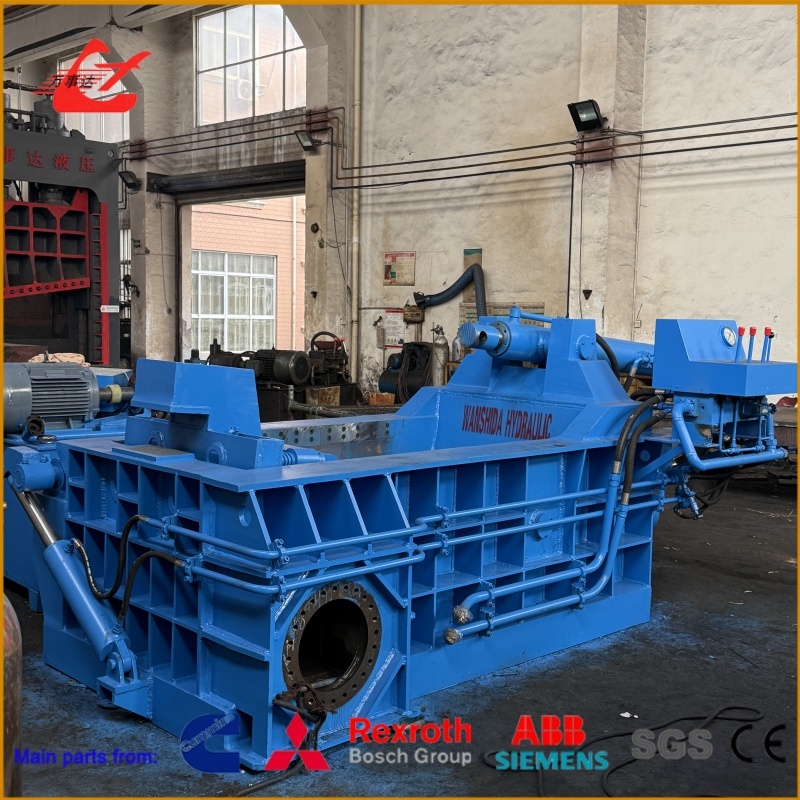
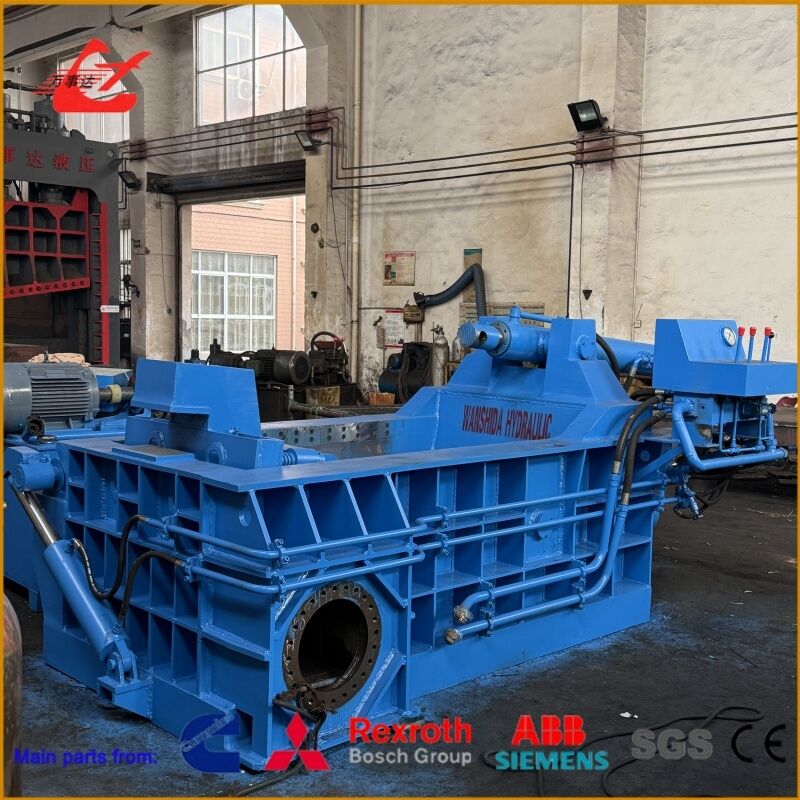
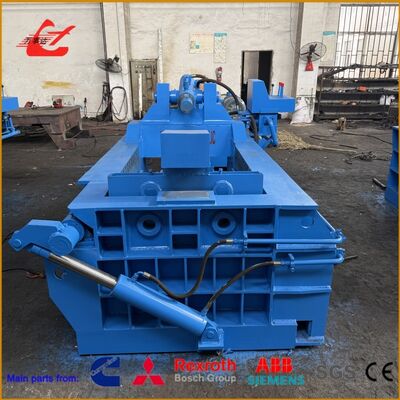
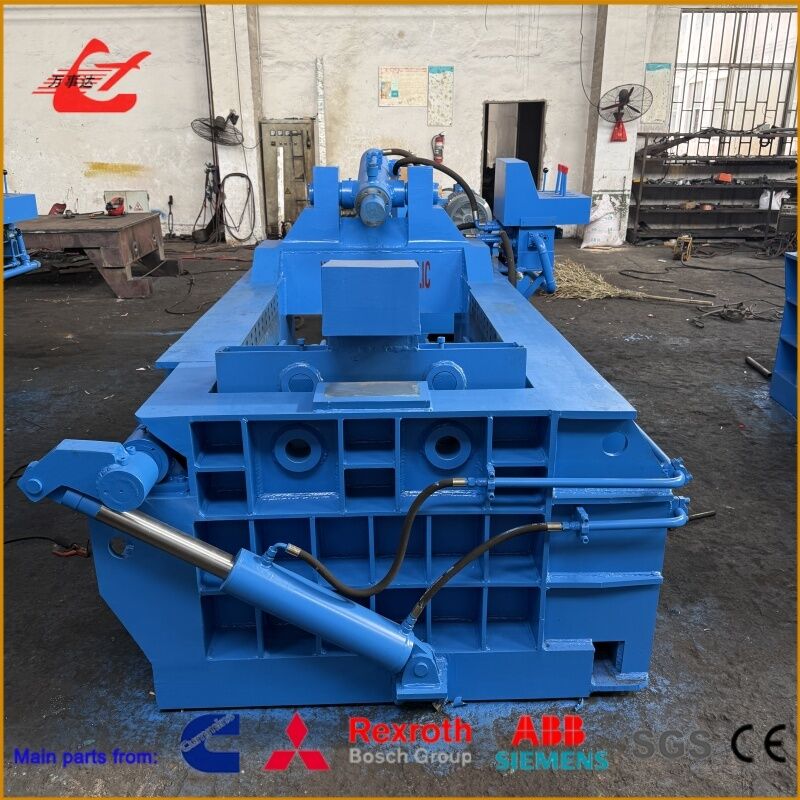
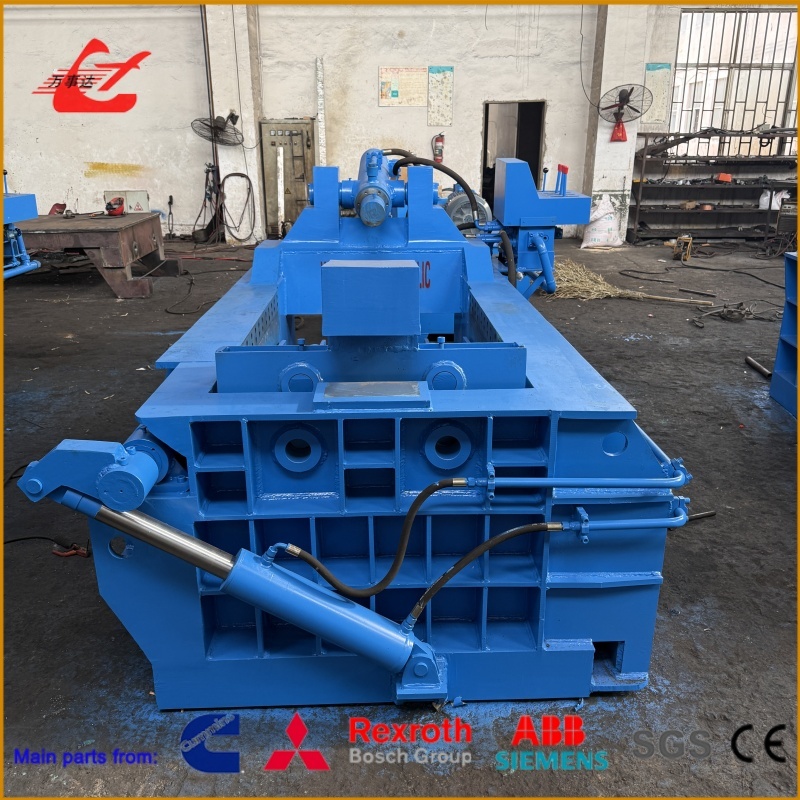
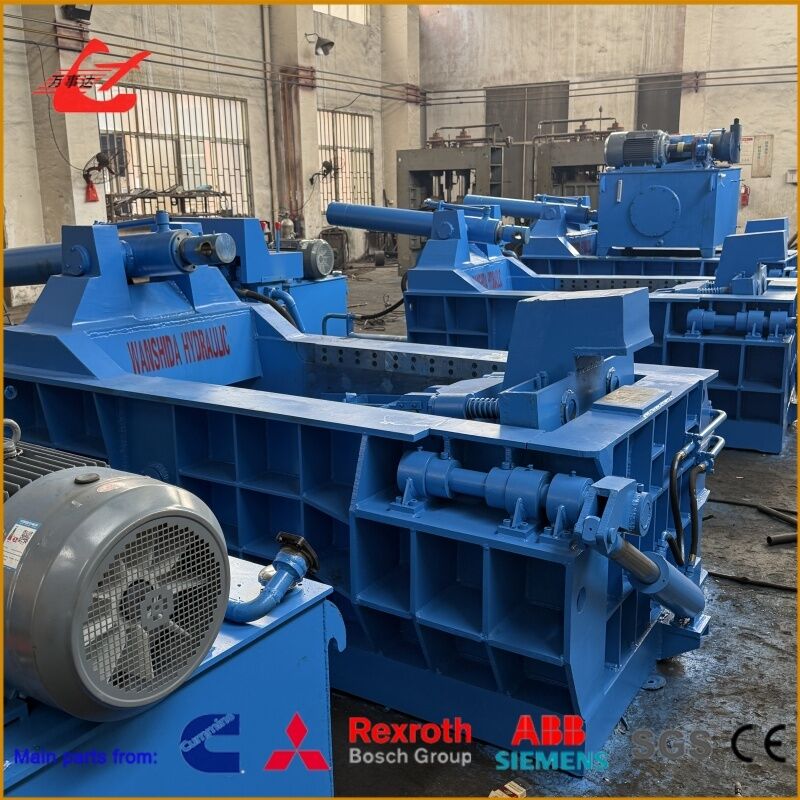
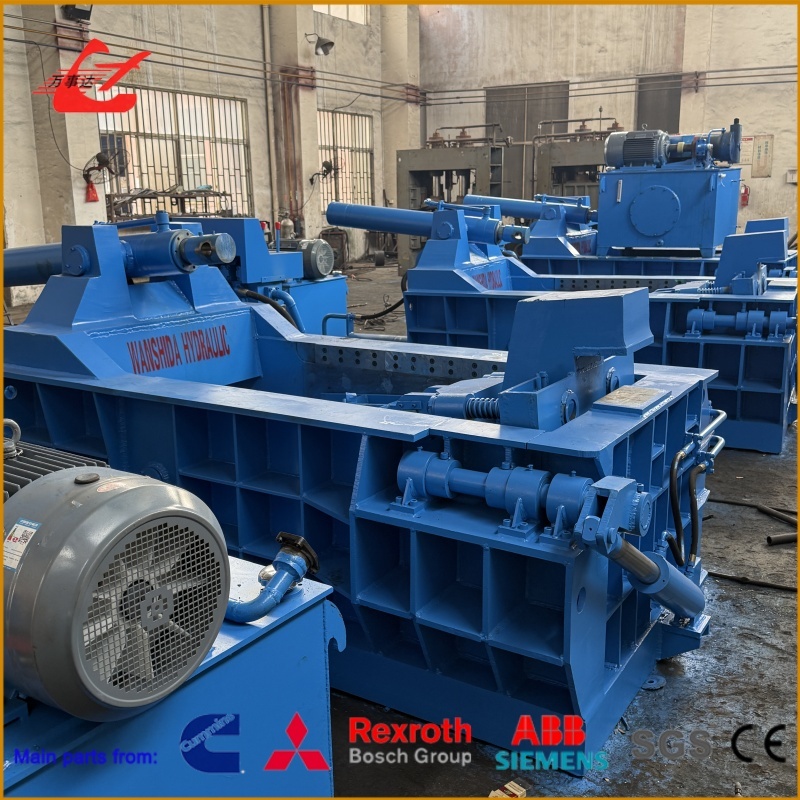
The Y83-160 metal baler is a 160-ton hydraulic scrap baling machine developed for recycling companies that need higher productivity than a small baler but do not require the investment and power consumption of a large-capacity system.
Powered by 1600 kN nominal compression force, the machine compresses loose steel, aluminum, copper and mixed metal waste into dense rectangular bales. Its 1600 × 1000 × 800 mm compression chamber provides sufficient loading space for light sheet metal, production offcuts, cans, wires, aluminum profiles and other irregular scrap.
The Y83-160 can produce 350 × 350 mm or 400 × 400 mm bales, allowing the output dimensions to be matched with the buyer’s transport, storage and furnace-feeding requirements. A hydraulic turn-out mechanism discharges the finished bale directly from the chamber, reducing manual handling and shortening the preparation time between working cycles.
With a reference capacity of 2000–3000 kg per hour, the Y83-160 hydraulic metal baler is particularly suitable for medium-sized scrap yards, metal fabrication plants and foundries seeking stable daily output.
Key benefits include:
• 1600 kN hydraulic compression force
• Large chamber for mixed and irregular metal scrap
• Two selectable bale cross-section sizes
• High bale density for efficient transportation
• Hydraulic turn-out discharge
• Simple operation and convenient maintenance
• Customizable voltage and control system
Uncompressed scrap metal contains large empty spaces and occupies valuable storage area. Loose sheets, profiles, cans and wires are also difficult to stack, move and load safely.
For many recycling companies, using an undersized baler creates additional difficulties. Operators must load the chamber more frequently, production is interrupted by repeated working cycles, and oversized materials may require excessive preparation.
Common challenges include:
• High transportation cost per ton
• Poor truck and container space utilization
• Disorganized scrap storage
• Slow material handling
• Inconsistent furnace-feeding sizes
• Increased dependence on manual labor
The Y83-160 scrap metal baler reduces the volume of loose scrap by applying controlled hydraulic pressure from multiple directions.
The large compression chamber accepts a practical quantity of material during each loading cycle. As the hydraulic cylinders move, loose scrap is gradually folded and compacted into a dense bale with a regular external shape.
The finished bales are easier to stack and can improve truck or shipping-container loading efficiency. Uniform bale dimensions also simplify material handling at steel mills and foundries.
Compared with a smaller baler, the Y83-160 offers greater chamber volume and higher hourly output. Compared with a heavy industrial model, it requires less installation space, electrical power and initial investment.
| Item | Y83-160 Metal Baler Specification |
|---|---|
| Model | Y83-160 |
| Nominal Pressing Force | 1600 kN / 160 Tons |
| Compression Chamber Size | 1600 × 1000 × 800 mm |
| Bale Size | 400 × 400 mm or 350 × 350 mm |
| Bale Length | Adjustable According to Loading Volume |
| Bale Density | More Than 1800 kg/m³ |
| Processing Capacity | Approximately 2000–3000 kg/h |
| Single Cycle Time | Less Than 150 Seconds |
| Main Motor Power | 30 kW |
| Bale Discharge Method | Hydraulic Turn-Out |
| Feeding Method | Manual, Crane or Mechanical Grab |
| Control Method | Hand Valve or PLC Semi-Automatic Control |
| Applicable Materials | Steel, Aluminum, Copper and Mixed Metal Scrap |
| Voltage | Customized for Local Power Supply |
Actual capacity and bale weight vary according to material density, loading efficiency and operating conditions.
The Y83-160 hydraulic scrap baler is suitable for:
• Scrap metal recycling yards
• Steel processing workshops
• Aluminum profile factories
• Automotive component plants
• Foundries and smelting facilities
• Metal fabrication companies
• Waste collection centers
• Copper and non-ferrous recycling businesses
Typical materials include steel sheets, light iron scrap, aluminum profiles, beverage cans, metal wires, copper offcuts, machine-shop waste, household metal and manufacturing leftovers.
First, the operator loads loose scrap into the compression chamber manually or with lifting equipment.
After the chamber is filled, the cover cylinder presses the material downward. The side and main compression cylinders then compact the scrap from different directions until the required bale shape and density are achieved.
When the compression cycle is complete, the chamber opens and the hydraulic turn-out device rotates the finished bale out of the machine. The bale can then be removed by forklift, crane or material handler.
A hand-valve system provides direct and straightforward control. Buyers requiring easier operation and more consistent cycles can select PLC semi-automatic control.
Choose the Y83-160 when the expected processing requirement is approximately 2–3 tons per hour and the material consists mainly of light or medium-density metal scrap.
Before ordering, buyers should evaluate:
Scrap type: Steel, aluminum and copper require different compression conditions.
Maximum material size: Oversized or thick scrap may need to be cut before loading.
Preferred bale dimensions: Smaller bales are easier to handle, while larger bales may reduce the number of finished units.
Available loading equipment: Manual feeding is suitable for small pieces, while crane or grab feeding improves productivity.
Automation requirements: Hand-valve control is economical, while PLC control reduces operating steps.
1. What is the approximate weight of each Y83-160 bale?
Bale weight is not fixed. It depends on the material type, bale dimensions, bale length and loading quantity. Steel bales are normally heavier than aluminum bales of the same size.
2. Can the machine compress aluminum and copper scrap?
Yes. The Y83-160 can process aluminum profiles, cans, copper offcuts and other non-ferrous metals. The hydraulic pressure and bale dimensions can be configured according to the material.
3. Is pre-shredding or pre-cutting required?
Small and medium-sized scrap can normally be loaded directly. Long, thick or oversized materials may need to be cut so they fit safely inside the chamber.
4. How much electricity does the machine consume?
The standard motor power is approximately 30 kW. Actual electricity consumption depends on working time, loading efficiency, scrap properties and the number of cycles completed.
5. What information is required for an accurate quotation?
Buyers should provide material photos or videos, maximum scrap dimensions, estimated hourly or daily volume, preferred bale size, destination voltage and required control method.