
Leave a Message
We will call you back soon!
Your message must be between 20-3,000 characters!
Please check your E-mail!
More information facilitates better communication.
Submitted successfully!
We will call you back soon!
Leave a Message
We will call you back soon!
Your message must be between 20-3,000 characters!
Please check your E-mail!
| Place of Origin: | China |
|---|---|
| Brand Name: | WANSHIDA |
| Certification: | CE and ISO9001 |
| Model Number: | Y83/T-125 |
| Minimum Order Quantity: | 1 set |
| Price: | Negotiable |
| Packaging Details: | Seaworthy Packing |
| Delivery Time: | 45days |
| Payment Terms: | T/T |
| Supply Ability: | 10 sets/month |
| Machine Type: | Y83/T-125 | Nominal Force: | 1250KN |
|---|---|---|---|
| Press Box Size: | 1200×700×600 Mm | Bale Size: | 300×300( W×H) |
| Cycle Length: | App.100Sec | Hydraulic Pump: | Model 80YCY14-1B |
| Nominal Power: | 18.5 KW | Hydraulic System Pressure: | 25MPa |
For scrap recycling yards, collection centers and metalworking companies in Russia, selecting a hydraulic metal baler does not always mean choosing the largest machine or the highest possible pressing force.
A more practical purchasing question is:
How can loose metal scrap be compressed into a compact and manageable form while keeping equipment investment, available space and electrical requirements within a reasonable range?
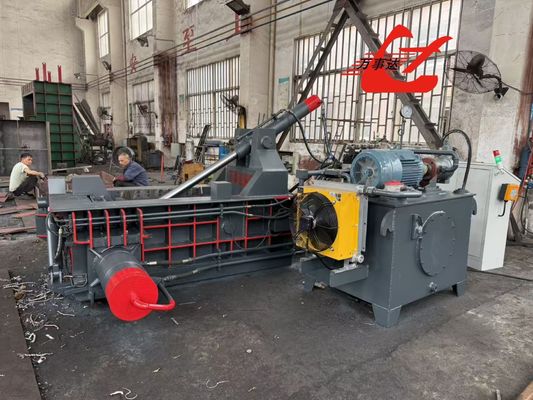
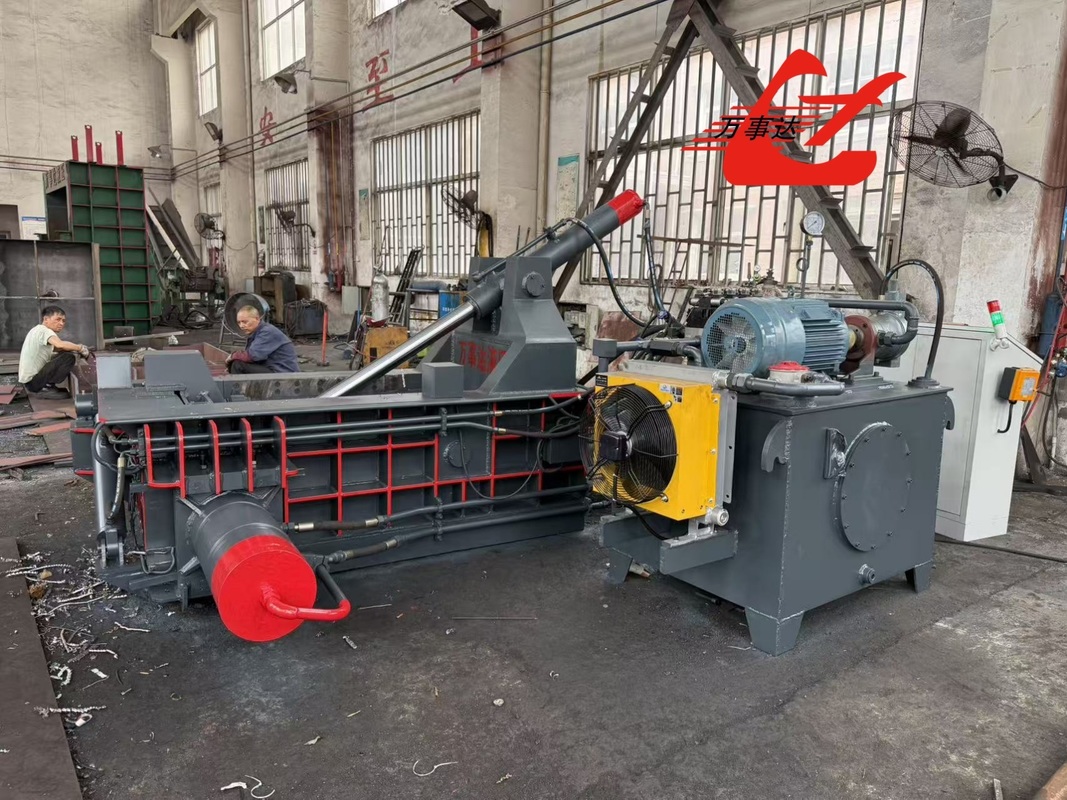
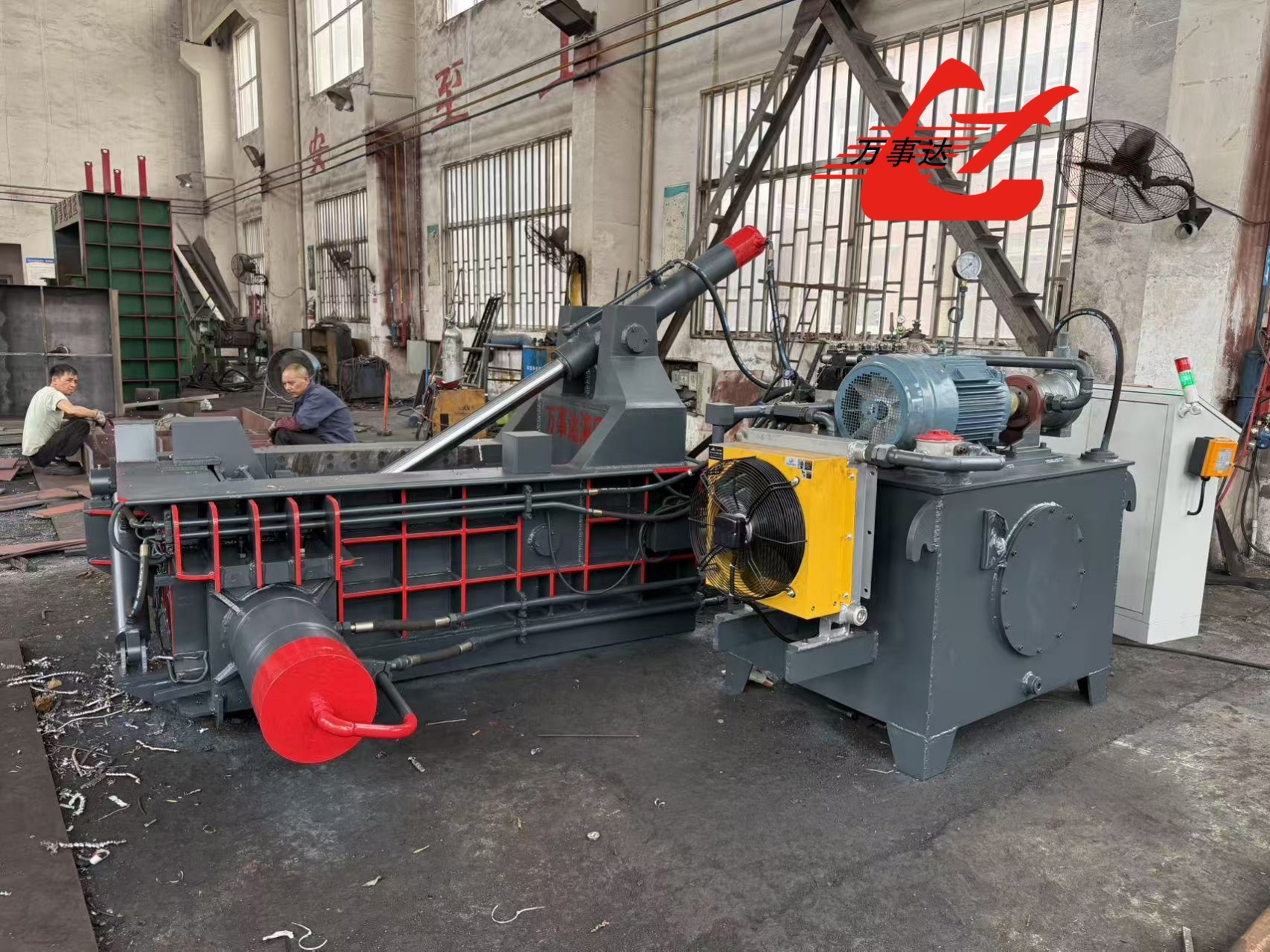
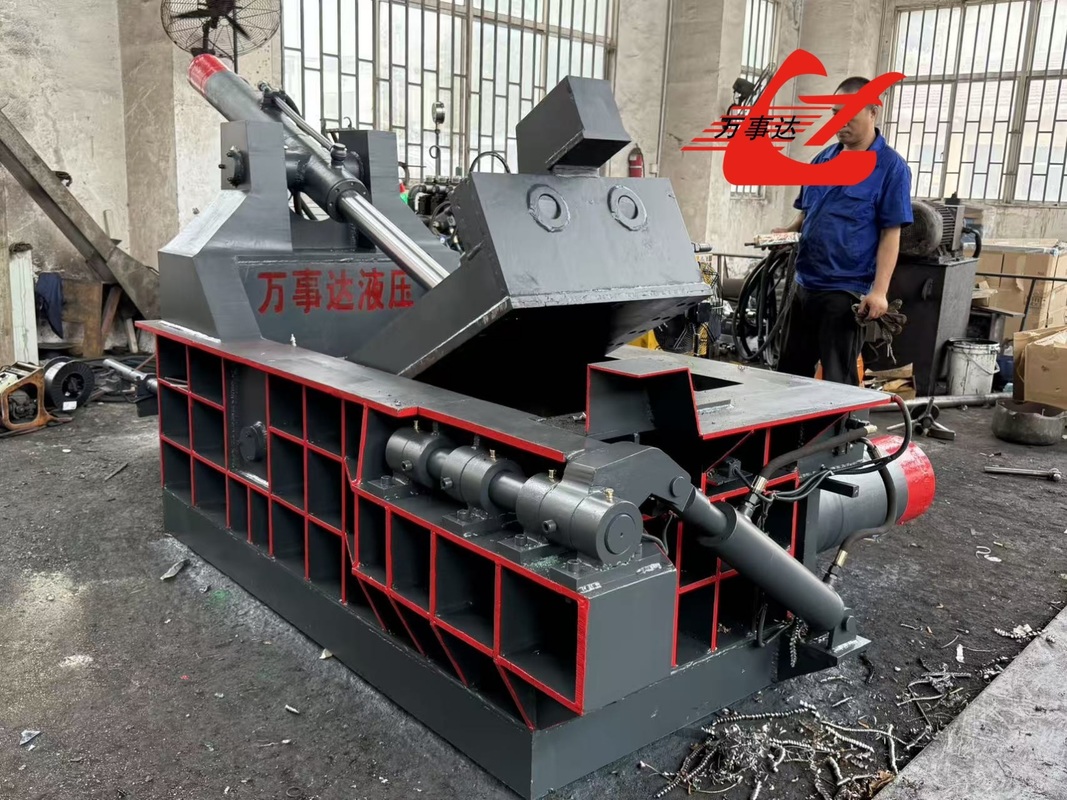
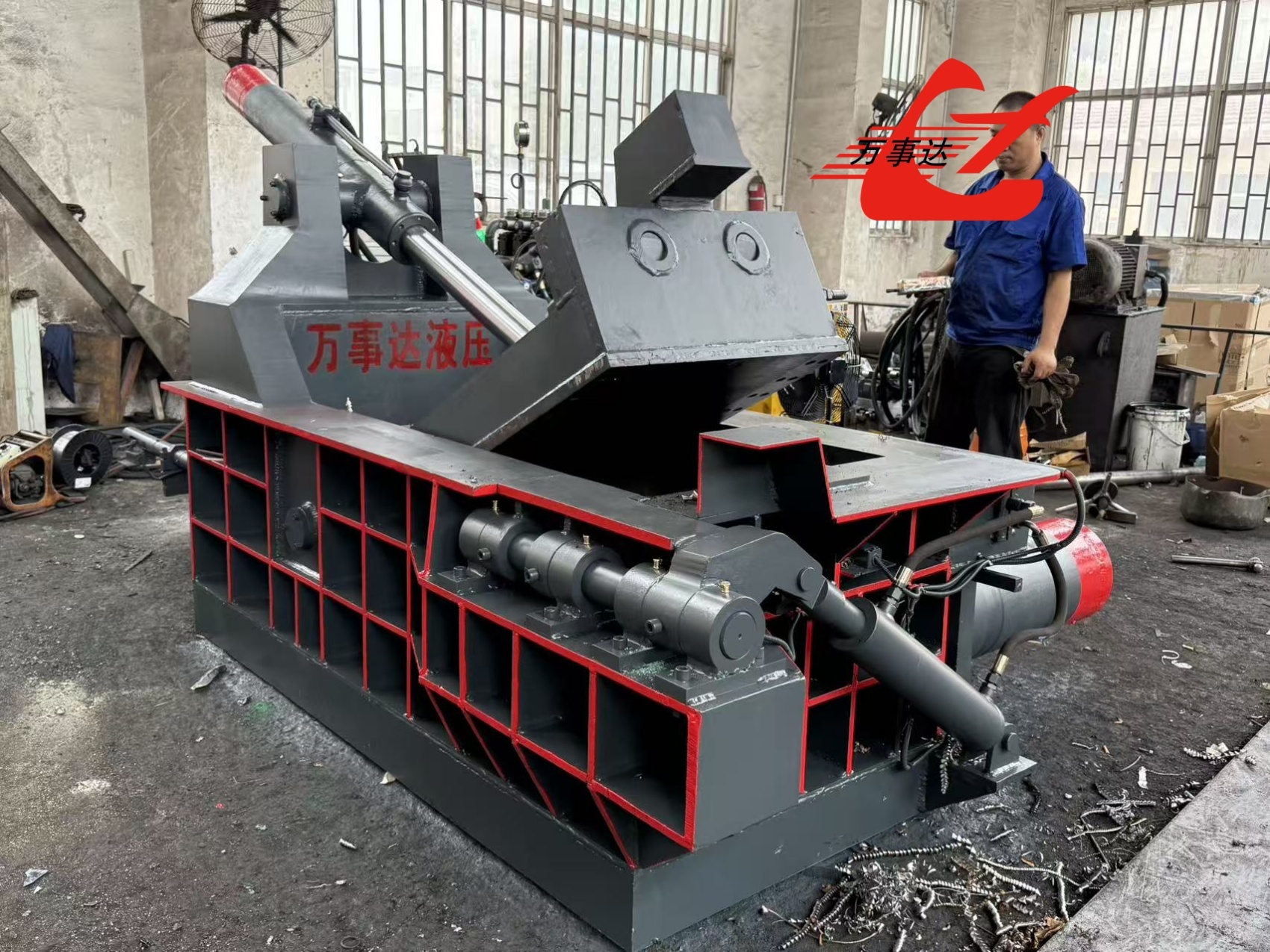
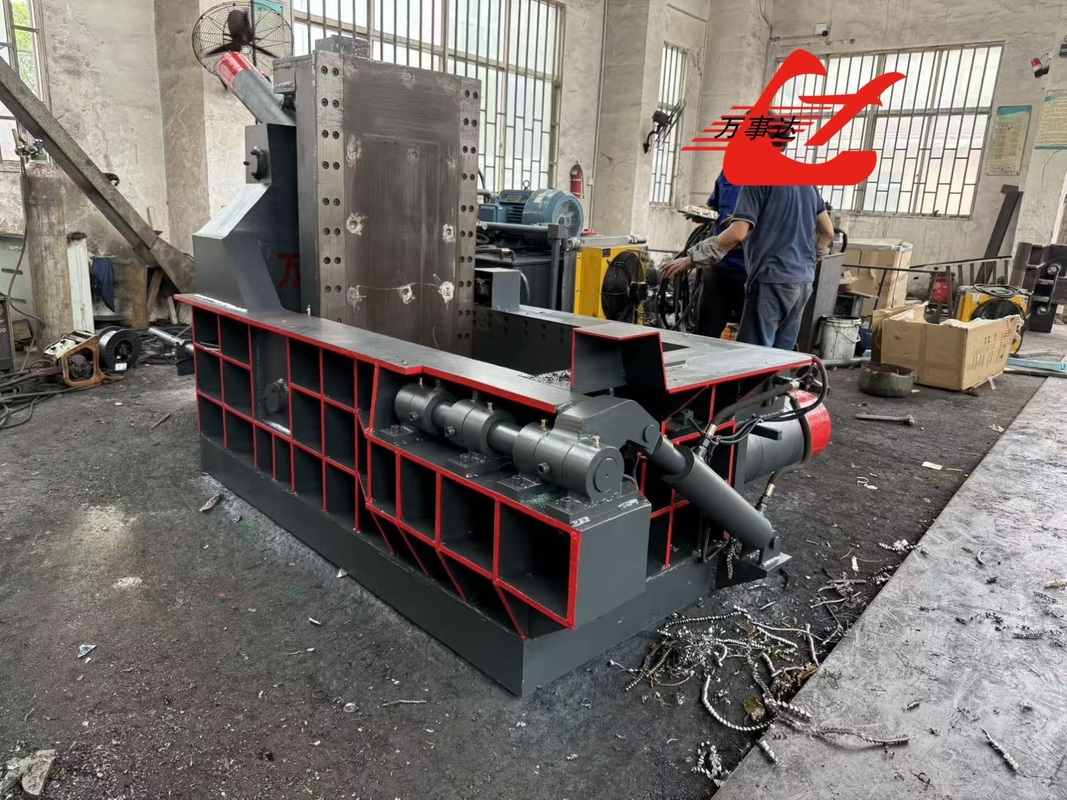
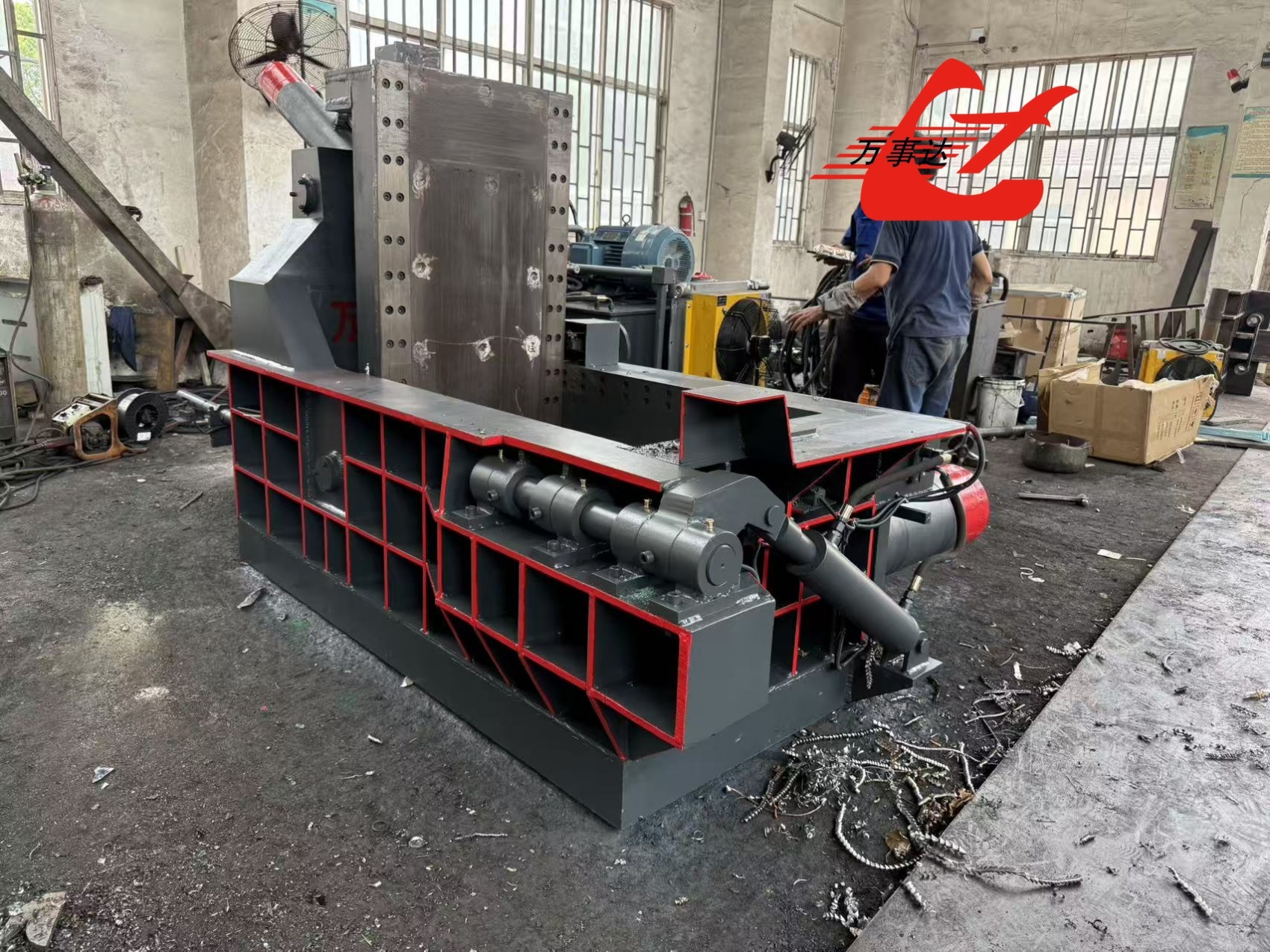
The Y83/T-125 Hydraulic Metal Baler is a 125-ton class push-out scrap baling machine featuring a 1250 kN main cylinder, a 1200*700*600 mm press box and a 300*300 mm bale section.
The hydraulic system operates at 25 MPa, while the motor has a rated power of 18.5 kW. The supplied technical specification states an approximate cycle length of 100 seconds.
For small and medium-scale recycling operations handling suitable compressible ferrous scrap, sheet-metal offcuts and metalworking waste, this Scrap Metal Baler Machine provides a compact hydraulic solution without automatically moving into a much larger equipment category.
The approximate 100-second cycle should not be interpreted as a guaranteed hourly capacity. Actual throughput depends on material type, dimensions, thickness, loose bulk density, loading quantity and feeding efficiency.
Russian scrap recycling companies operate under very different material and production conditions.
For small and medium-sized yards and metalworking facilities, common challenges include:
loose scrap occupying excessive storage space, irregular production offcuts being difficult to handle, inefficient truck loading, repeated material handling, limited available power and unnecessary investment in equipment larger than the actual project requires.
For these applications, the objective is not simply to purchase a machine with the highest tonnage.
A properly selected 125 Ton Hydraulic Scrap Metal Baler can provide a more practical balance between compression capability, equipment size and power requirements.
The Y83/T-125 has a:
1200*700*600 mm (L*W*H) press box.
This dimension is confirmed in the supplied technical specification.
For loose scrap, daily tonnage alone does not describe the complete loading requirement.
Low-density material occupies more volume at the same weight and may require additional loading and compression cycles.
When evaluating a Metal Baler Machine, buyers should therefore consider material weight, dimensions and loose condition together.
The main cylinder provides:
1250 kN nominal force.
The technical specification also identifies:
1000 kN side-cylinder force;
550 kN top-cover cylinder force;
320 kN bale push-out cylinder force.
Different cylinders perform different compression and discharge functions rather than relying on one hydraulic cylinder for the complete process.
The Y83/T-125 uses a hydraulic Push-Out Discharge system.
After compression, the finished bale is discharged by a dedicated 320 kN push-out cylinder.
For recycling yards that prefer a defined discharge direction, this design can make it easier to plan the bale collection and downstream handling area.
The supplied technical specification does not identify a particular cooling system as standard equipment.
Therefore, air cooling or water cooling should not automatically be advertised as standard.
Cooling requirements should be evaluated according to ambient temperature, continuous operating hours and machine workload.
For Russian customers, winter operating conditions deserve additional attention.
Low ambient temperatures can affect hydraulic oil viscosity and cold starting. Projects in colder regions should therefore provide the minimum expected temperature, indoor or outdoor installation conditions and winter operating requirements before final configuration.
The Y83/T-125 uses multiple hydraulic movements to contain, compress and discharge loose scrap.
Material is first loaded into the 1200*700*600 mm compression chamber.
The top-cover and side compression movements help contain and compress the material before the main hydraulic compression stage.
The main cylinder provides 1250 kN nominal force.
After the bale is formed, the dedicated 320 kN push-out cylinder discharges it from the chamber.
The specified finished bale section is:
300*300 mm.
This creates a clear operating sequence:
Loading → Compression → Bale Formation → Hydraulic Push-Out
For suitable scrap, this process converts loose and irregular material into a more compact form for storage and downstream handling.
The Y83/T-125 Steel Scrap Baler can be evaluated for applications involving:
metalworking offcuts, sheet-metal scrap, compressible ferrous scrap, production waste and other loose metal materials that fall within the practical loading and compression range of the machine.
Typical users may include Russian metalworking plants, manufacturing companies, scrap collection centers and small to medium-sized recycling yards.
Actual suitability should be confirmed according to:
material photos, videos, dimensions, maximum thickness, material type and required throughput.
| Parameter | Y83/T-125 |
|---|---|
| Machine Type | Push-Out Hydraulic Metal Baler |
| Main Cylinder Model | YG240/160-1035 |
| Main Cylinder Quantity | 1 PCS |
| Main Cylinder Nominal Force | 1250 kN |
| Main Cylinder Stroke | 1035 mm |
| Side Cylinder Model | YG220/160-905 |
| Side Cylinder Quantity | 1 PCS |
| Side Cylinder Nominal Force | 1000 kN |
| Side Cylinder Stroke | 905 mm |
| Top Cover Cylinder Model | YG160/100-1160 |
| Top Cover Cylinder Quantity | 1 PCS |
| Top Cover Cylinder Force | 550 kN |
| Top Cover Cylinder Stroke | 1160 mm |
| Bale Push-Out Cylinder Model | YG125/75-340 |
| Push-Out Cylinder Quantity | 1 PCS |
| Push-Out Cylinder Force | 320 kN |
| Push-Out Cylinder Stroke | 340 mm |
| Hydraulic System Pressure | 25 MPa |
| Press Box Size | 1200*700*600 mm |
| Bale Section | 300*300 mm |
| Cycle Length | Approx. 100 sec |
| Hydraulic Pump Model | 80YCY14-1B |
| Pump Nominal Pressure | 31.5 MPa |
| Pump Nominal Outflow | 80 ml/r |
| Hydraulic Pump Quantity | 1 SET |
| Motor Model | Y180M-4 |
| Motor Rated Speed | 1440 rpm |
| Motor Rated Power | 18.5 kW |
| Motor Quantity | 1 SET |
| Bale Discharge | Hydraulic Push-Out |
The above technical specifications are based on the supplied Y83/T-125 technical document.
To avoid confusion between general website information and the final contracted machine, confirmed technical specifications and project-dependent configurations should be clearly separated.
Final standard and optional equipment should follow the approved quotation, technical agreement, PI and contract.
The supplied technical document confirms an:
Approx. 100 Sec Cycle Length
However, it does not specify a guaranteed T/H capacity, fixed bale weight or bale density.
For this reason, these values should not be presented as fixed performance guarantees without actual material testing.
Real throughput can be affected by:
If a Russian customer has a specific hourly capacity requirement, representative scrap photos or videos should be provided together with expected operating hours.
This provides a more reliable basis for machine selection than nominal pressing force alone.
The Y83/T-125 is a hydraulic scrap baling machine and should not be treated as a universal solution for every category of heavy steel scrap.
Technical evaluation is recommended before attempting to process:
When heavy or oversized scrap dominates the feedstock, simply increasing baler pressure may not be the most efficient solution.
Depending on the material, pre-cutting, a scrap shear, gantry shear or a higher-force Scrap Metal Baler Machine may be more appropriate.
Provides a defined 125-ton class compression level for suitable small and medium-scale scrap recycling applications.
The specified chamber dimensions allow buyers to compare their actual scrap size with the machine loading space before purchasing.
Loose and irregular scrap can be compressed into a more compact form for storage and material handling.
A dedicated push-out cylinder provides a defined bale discharge direction.
For Russian projects where available electrical capacity must be considered carefully, the rated motor power provides an important reference for electrical planning.
The main, side, top-cover and push-out cylinders perform different stages of the baling process, creating a defined operating sequence.
After production, the machine can undergo factory testing according to the agreed technical requirements.
During FAT, key checks can include:
If actual material testing is required, representative scrap information should be provided in advance so that the test conditions can be discussed before FAT.
After testing, the packaging and shipment plan should be determined according to the final machine dimensions, weight and transportation method.
For Russian projects, buyers should prepare and confirm before installation:
Final packaging, installation guidance, commissioning and on-site service scope should follow the contract.
It can be evaluated for suitable compressible ferrous scrap, metalworking offcuts and sheet-metal waste.
Actual material photos or videos are recommended before final machine selection.
Pressing force alone cannot determine this.
Material thickness, dimensions, strength, geometry and whether the material is solid must also be evaluated.
The current technical specification does not provide a fixed T/H capacity.
Actual throughput depends strongly on feedstock and loading conditions, so an unsupported hourly figure should not be guaranteed.
No.
The approximate 100-second figure is a machine cycle parameter. Actual production also includes loading, material arrangement, operating delays and variations between different types of scrap.
Not necessarily.
18.5 kW is the rated motor power. Actual electricity consumption depends on machine load, hydraulic duty cycle and idle periods.
The final electrical specification should be confirmed before ordering.
Customers should provide local voltage, frequency and three-phase power conditions so that the correct configuration can be determined.
Low temperatures can affect hydraulic oil viscosity and cold-start performance.
Customers in colder regions should provide the minimum expected ambient temperature, indoor/outdoor installation conditions and winter operating requirements before final configuration.
This depends on ambient temperature, continuous operating time and workload.
The current technical specification does not identify one particular cooling configuration as standard, so the requirement should be evaluated for each project.
Spare parts should be matched to the final machine configuration.
Common seals and maintenance parts can be discussed during the order stage, with the final spare-parts list prepared according to the actual machine BOM.
Routine checks should include:
Hydraulic oil and filter maintenance intervals should be determined according to actual operating conditions.
After delivery, operating documentation, maintenance guidance, remote technical support and troubleshooting assistance can be provided according to the final order scope.
When technical support is required, customers should provide the machine model, fault photos or videos and operating information to help technicians identify the issue efficiently.
Replacement parts can be matched according to the actual machine configuration and component information.
For customers in Russia, requirements for installation guidance, commissioning assistance, spare-parts packages or other special overseas services should be confirmed during the quotation and contract stage.