
Leave a Message
We will call you back soon!
Your message must be between 20-3,000 characters!
Please check your E-mail!
More information facilitates better communication.
Submitted successfully!
We will call you back soon!
Leave a Message
We will call you back soon!
Your message must be between 20-3,000 characters!
Please check your E-mail!
| Place of Origin: | China |
|---|---|
| Brand Name: | WANSHIDA |
| Certification: | CE and ISO9001 |
| Model Number: | Q43-800 |
| Minimum Order Quantity: | 1 set |
| Price: | Negotiable |
| Packaging Details: | Seaworthy Packing |
| Delivery Time: | 45days |
| Payment Terms: | T/T |
| Supply Ability: | 10 sets/month |
| Model: | Q43-800 | Largest Shear Force (kN): | 800 |
|---|---|---|---|
| Blade Length(mm): | 800 | Frequency Per Minute(times): | 9-20 |
| Scrap Size(mm): | 35*35 Φ40 | Power (kW): | 7.5 |
| Operation: | Manual Feeding, Manual Or PLC Semi-automatic Operation | Name: | Scrap Metal Alligator Shear |
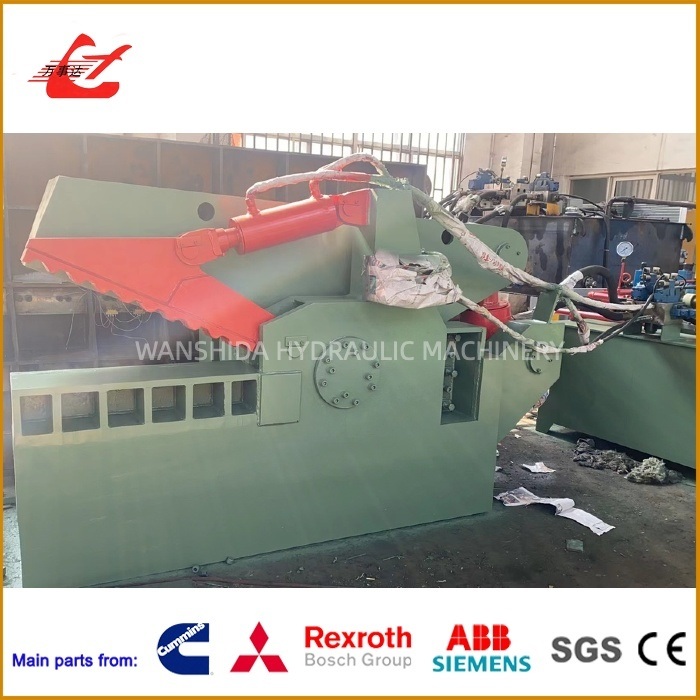
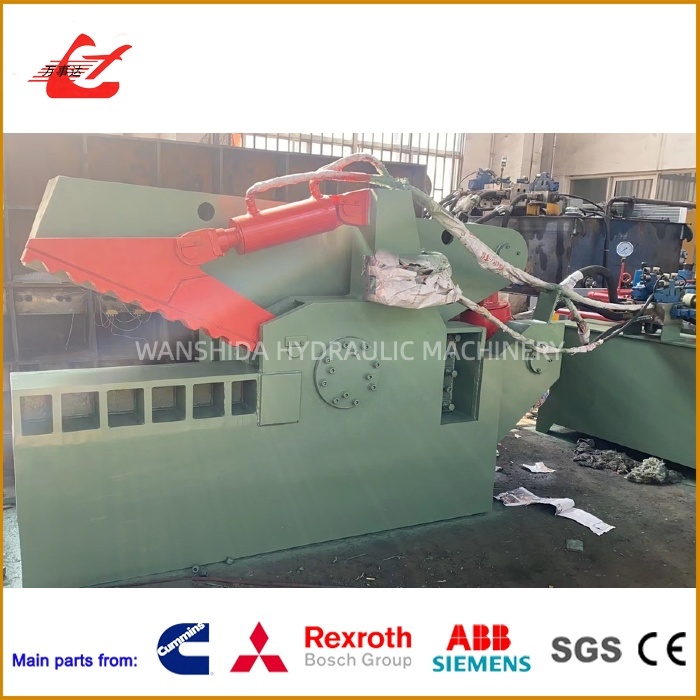
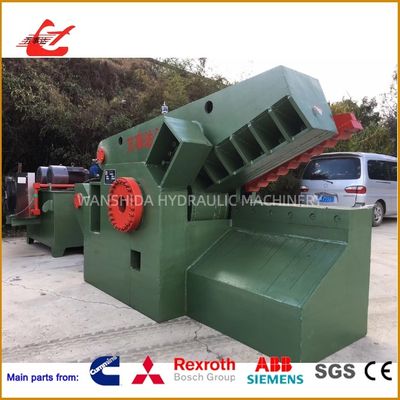
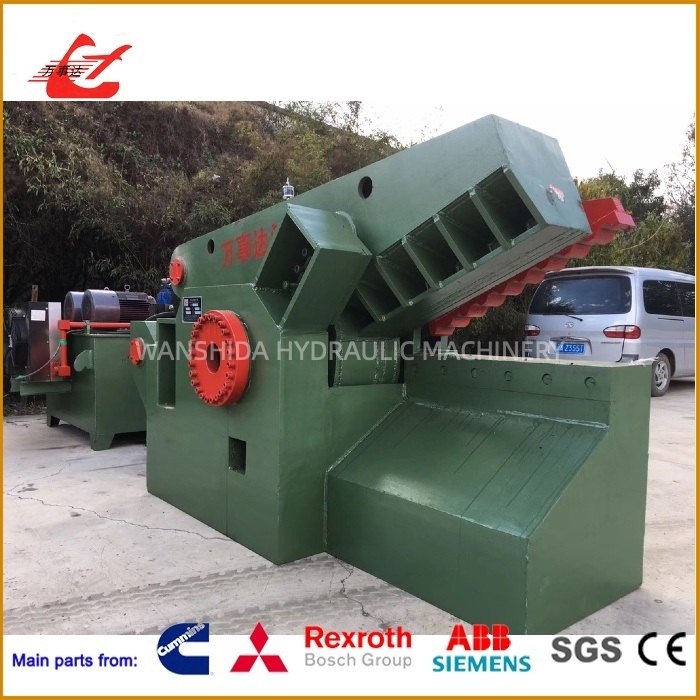
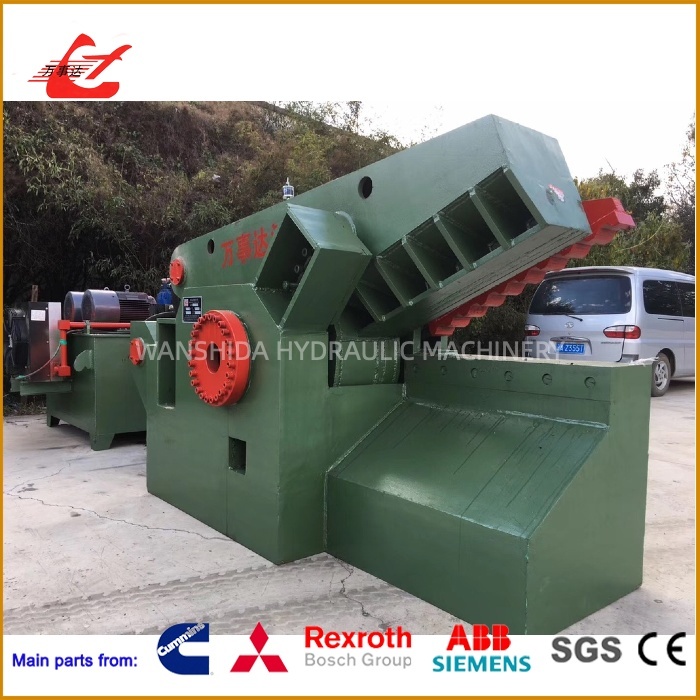
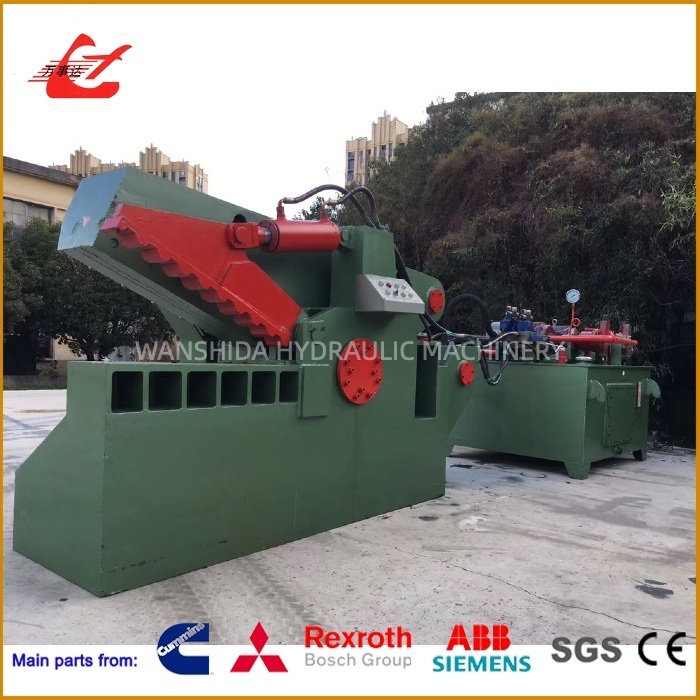
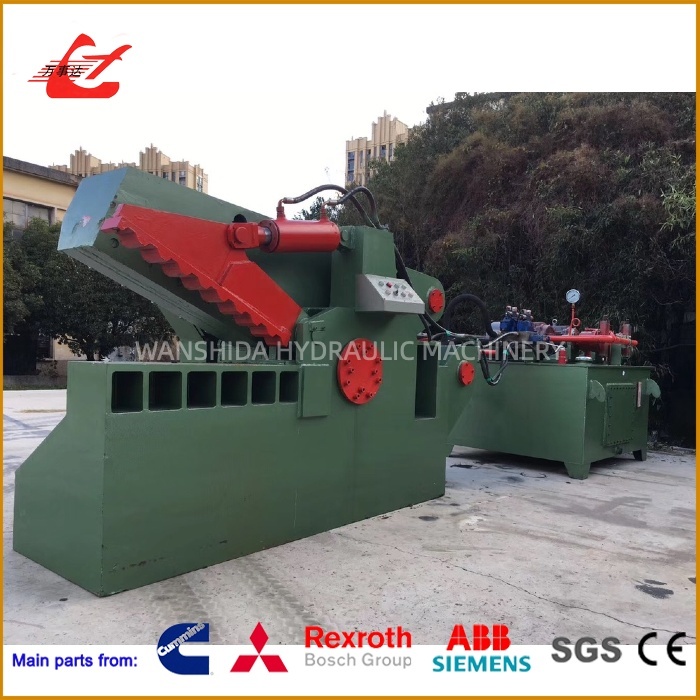
The Q43-800 Hydraulic Alligator Shear is designed for recycling facilities, metal fabrication workshops, and scrap processing businesses that need a practical solution for cutting long or irregular metal waste.
With 800 kN shearing force, an 800 mm cutting blade, and a 7.5 kW motor, this machine can process common steel scrap, including reinforcing bars, round steel, square bars, and production offcuts.
Its hydraulic cutting system provides controlled cutting force without requiring the installation space or power capacity of a large industrial shearing line.
For businesses handling relatively small quantities of steel scrap or preparing materials before baling and melting, the Q43-800 offers a practical balance of cutting capability, equipment size, and operating requirements.
| Parameter | Specification |
|---|---|
| Model | Q43-800 |
| Equipment Type | Hydraulic Alligator Shear |
| Maximum Shearing Force | 800 kN / Approx. 80 Tons |
| Blade Length | 800 mm |
| Cutting Frequency | 9–20 Cuts/Min |
| Square Steel Cutting Capacity | 35 × 35 mm |
| Round Steel Cutting Capacity | Ø40 mm |
| Motor Power | 7.5 kW |
| Feeding Method | Manual Feeding |
| Control System | Manual or PLC Semi-Automatic |
| Drive Type | Hydraulic |
| Main Applications | Rebar, Steel Bars, Metal Offcuts |
| Electrical Configuration | Customizable |
| Warranty | 12 Months |
| Technical Support | Long-Term Technical Assistance |
Important: The cutting capacities shown above are reference values for ordinary low-carbon steel. Actual cutting limits depend on material hardness, tensile strength, cross-sectional dimensions, and cutting conditions.
Scrap metal often arrives in different lengths and shapes. Long steel bars, rejected construction materials, and manufacturing offcuts can be difficult to store, transport, or feed into downstream processing equipment.
The Q43-800 hydraulic scrap shear helps address these challenges in several ways.
Long rebar and steel sections are difficult to stack or load efficiently.
Cutting them into shorter pieces simplifies sorting, storage, and material handling.
Some recycling operations require metal scrap to be reduced to manageable lengths before compression or furnace charging.
The Q43-800 can serve as a pre-processing machine, helping operators prepare suitable scrap dimensions for the next production stage.
For suitable materials within the machine's rated capacity, hydraulic shearing can reduce the need for manual torch cutting.
This may help lower cutting-related consumable costs and reduce the amount of hot work required in the processing area.
Not every scrap recycling business needs a large gantry shear or container shear.
For smaller bars, rebar, and regular production offcuts, the Q43-800 provides a more compact alternative with relatively modest installed motor power.
The machine delivers approximately 80 tons of shearing force through its hydraulic cutting mechanism.
This makes it suitable for processing selected small and medium-sized steel scrap within its specified cutting range.
Material strength and cross-sectional dimensions should always be considered when evaluating cutting suitability.
The 800 mm blade provides working space for positioning different metal sections and irregular offcuts.
Operators can adjust material placement according to the required finished scrap length.
However, blade length should not be confused with the maximum cutting capacity. The actual cuttable cross-section depends on material characteristics and loading conditions.
The Q43-800 uses a 7.5 kW motor to power its hydraulic system.
Compared with larger scrap shearing equipment, its relatively low installed power makes it a practical option for facilities with limited electrical capacity.
Actual electricity consumption depends on operating time, cutting load, and production conditions.
Customers can choose between:
Manual Control: Suitable for mixed scrap materials where operators frequently adjust feeding positions and cutting lengths.
PLC Semi-Automatic Control: Suitable for operations requiring more consistent cutting cycles and reduced repetitive control actions.
Both configurations use manual material feeding.
The machine uses a hydraulic pump, control valves, cutting cylinder, and moving blade assembly to perform the shearing process.
Its straightforward structure supports routine inspection and maintenance of hydraulic components and cutting tools.
Electrical configurations can be adapted to the power supply requirements of different countries.
Voltage, frequency, and phase requirements should be confirmed before production.
| Application | Typical Materials | Main Purpose |
|---|---|---|
| Scrap Recycling Yards | Rebar, Steel Bars, Mixed Steel Offcuts | Scrap Size Reduction |
| Metal Fabrication Workshops | Production Offcuts, Rejected Sections | Waste Material Processing |
| Steel Warehouses | Bar Ends, Short Steel Sections | Scrap Recovery |
| Foundries | Selected Steel Scrap | Furnace Charge Preparation |
| Metal Baling Operations | Long and Irregular Scrap | Pre-Cutting Before Compression |
| Machinery Dismantling | Selected Light Steel Components | Material Separation and Cutting |
The Q43-800 is intended primarily for suitable steel scrap of relatively small cross-sections.
Thick steel plate, large structural beams, hardened alloy steel, and high-volume heavy scrap may require equipment with greater cutting force.
The machine uses hydraulic pressure to drive the moving blade against a fixed lower blade.
The general operating process is straightforward:
Material Loading: The operator places steel scrap into the cutting area.
Position Adjustment: The material is positioned according to the required cutting length.
Hydraulic Activation: The electric motor drives the hydraulic pump, supplying pressurized oil to the cutting cylinder.
Shearing Operation: The moving blade descends and cuts the material against the lower blade.
Blade Return: The hydraulic system returns the moving blade to its starting position.
Next Cutting Cycle: The operator repositions the scrap or feeds the next piece.
The specified cutting frequency is 9–20 cuts per minute under reference operating conditions.
Actual productivity depends on material dimensions, operator feeding speed, control settings, and required finished lengths.
Choosing a scrap metal shear based only on its nominal cutting force can lead to incorrect equipment selection.
Before ordering, buyers should consider the following factors.
Material Type
Ordinary carbon steel, reinforcing steel, stainless steel, and alloy steel have different mechanical properties.
Higher-strength materials may require smaller cutting dimensions or greater machine force.
Maximum Material Dimensions
The maximum diameter, thickness, width, and cross-sectional shape should be checked.
For reference, the Q43-800 is rated for approximately Ø40 mm round steel and 35 × 35 mm square steel under suitable material conditions.
Single-Piece or Multiple-Piece Cutting
Cutting several steel bars simultaneously increases cutting resistance.
The quantity and dimensions of bundled materials should be evaluated before confirming machine suitability.
Daily Processing Requirements
Cutting frequency does not directly equal hourly tonnage.
Actual production capacity depends on scrap weight, feeding efficiency, cutting length, and operator workflow.
Working Environment
Buyers should consider available installation space, electrical supply, loading arrangements, and maintenance access.
Providing material photographs and dimensions can help determine whether the Q43-800 or a higher-capacity model is more appropriate.
Routine maintenance is important for maintaining stable cutting performance and reducing unexpected downtime.
Recommended inspection areas include:
Cutting Blades: Inspect cutting edges, blade clearance, and signs of excessive wear.
Hydraulic Oil: Monitor oil cleanliness, temperature, and operating condition.
Hydraulic Seals: Check for oil leakage or deterioration.
Motor and Pump: Monitor unusual noise, vibration, or changes in operating performance.
Hydraulic Hoses: Inspect connections and hoses for damage or leakage.
Electrical Components: Check switches, wiring, and control-system operation.
Blade service life varies according to material hardness, cutting frequency, working conditions, and maintenance practices.
Depending on blade design and wear condition, servicing may involve regrinding, repositioning, or replacement.
The reference maximum diameter is Ø40 mm for ordinary low-carbon round steel under suitable cutting conditions.
For stainless steel, high-strength alloy steel, or hardened materials, the allowable cutting diameter may be smaller. Material grade and dimensions should be confirmed before ordering.
Yes, it can process suitable reinforcing steel within its cutting capacity.
Actual performance depends on the rebar diameter, steel grade, and number of bars being cut together.
No. The Q43-800 uses manual feeding.
Customers can select manual control or PLC semi-automatic operation for the cutting cycle, but PLC control does not make material feeding fully automatic.
Hourly output depends on the type, size, and weight of the scrap, as well as the feeding method and required cutting length.
The reference cutting frequency is 9–20 cuts per minute, but this should not be interpreted as a guaranteed tonnage capacity.
Yes. The Q43-800 can be used to shorten long metal scrap before it enters a hydraulic metal baler.
This is particularly useful when oversized bars or sections cannot be loaded efficiently into the baler's compression chamber.
Yes. Electrical configurations can be prepared according to the destination country's power supply requirements.
Customers should confirm the required voltage, frequency, and phase before production.
For an accurate technical assessment, buyers should provide the scrap material type, maximum dimensions, desired finished length, and estimated processing volume.
Photographs or videos of the materials are also helpful.
The Q43-800 is supplied with a one-year warranty under the agreed warranty terms.
Long-term technical assistance, troubleshooting guidance, and spare-parts support are also available.
Reliable after-sales service is important for recycling equipment operating in demanding industrial environments.
Our support covers several areas:
Warranty Service
A 12-month warranty is provided according to the agreed equipment warranty conditions.
Technical Assistance
Remote technical guidance is available for hydraulic pressure, cutting performance, electrical controls, and routine maintenance issues.
Spare Parts
Replacement cutting blades, hydraulic seals, filters, hoses, and electrical components can be supplied according to machine specifications.
Operation Guidance
Operating instructions and maintenance recommendations can be provided to assist customers with equipment operation and servicing.
The Q43-800 Hydraulic Alligator Shear is particularly suitable for businesses that regularly process rebar, steel bars, and metal production offcuts but do not require a large industrial shearing line.
Its combination of 800 kN cutting force, an 800 mm blade, 7.5 kW motor power, and optional PLC semi-automatic control provides a practical solution for everyday scrap size reduction.
For buyers evaluating a hydraulic scrap shear, the most important consideration is matching the machine's actual cutting capacity to the material being processed. Correct equipment selection can improve workflow efficiency, reduce unnecessary operating costs, and support more consistent scrap preparation.
![]()