
Leave a Message
We will call you back soon!
Your message must be between 20-3,000 characters!
Please check your E-mail!
More information facilitates better communication.
Submitted successfully!
We will call you back soon!
Leave a Message
We will call you back soon!
Your message must be between 20-3,000 characters!
Please check your E-mail!
| Place of Origin: | China |
|---|---|
| Brand Name: | WANSHIDA |
| Certification: | CE, ISO9001 |
| Model Number: | Y83-5000 |
| Minimum Order Quantity: | 1 set |
| Price: | Negotiation |
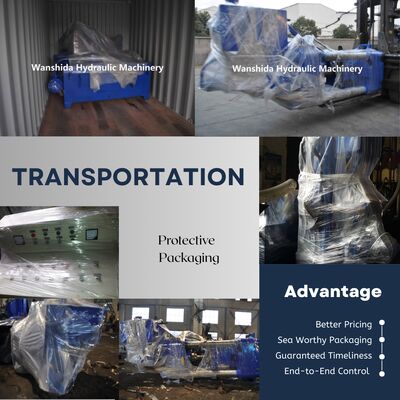
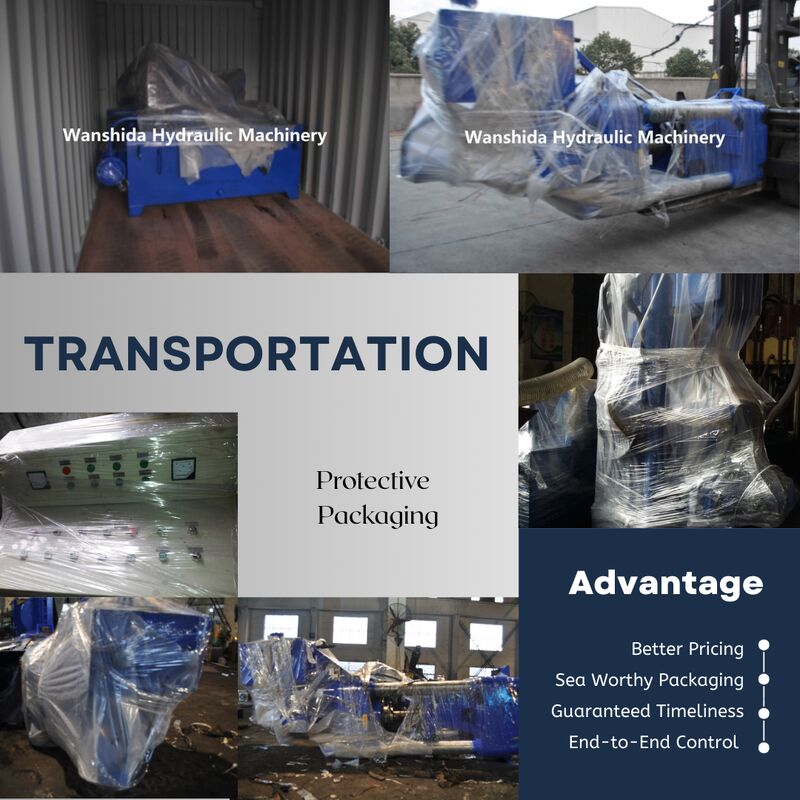
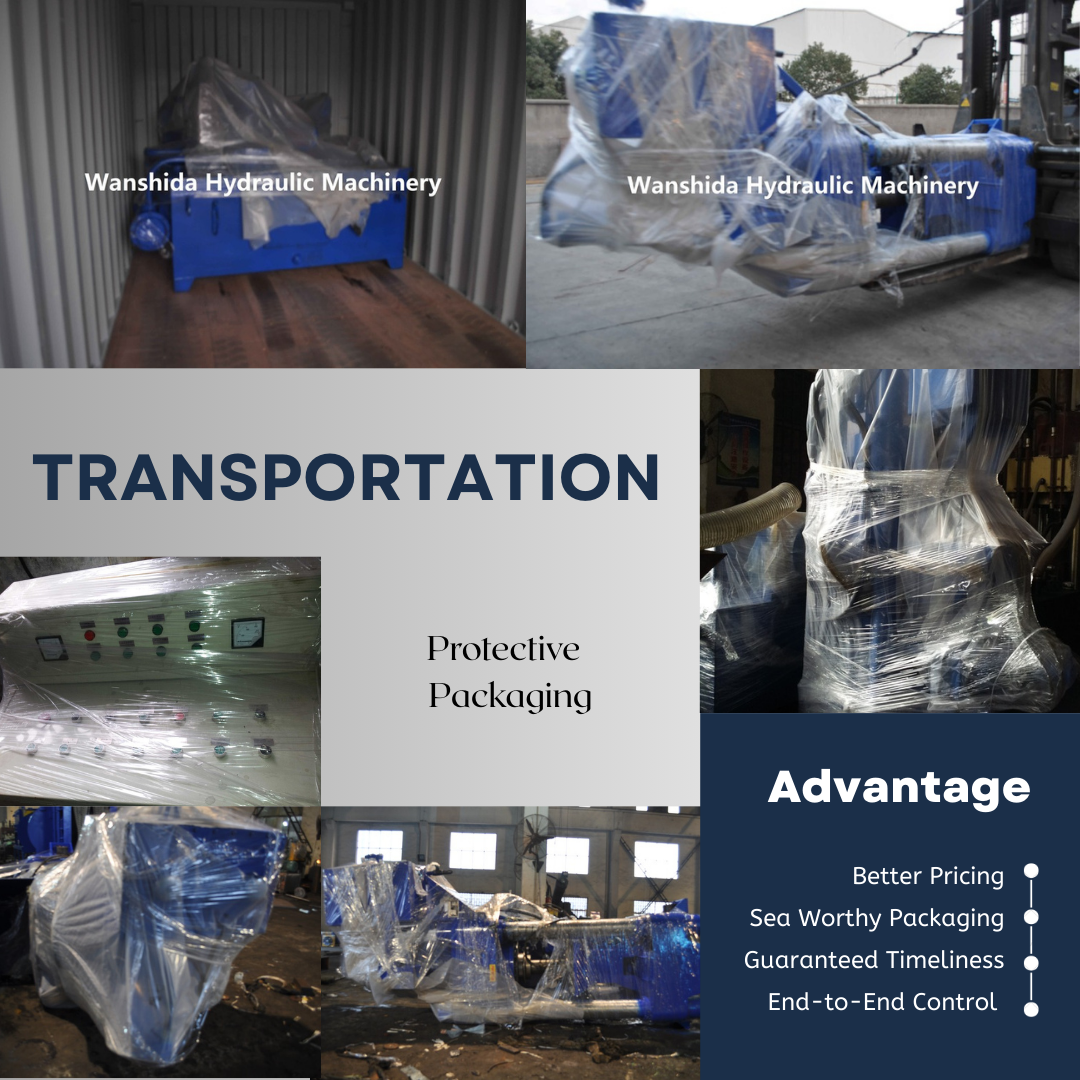
| Packaging Details: | Sea worthy |
| Delivery Time: | 35 days |
| Payment Terms: | T/T, L/C |
| Supply Ability: | 10sets/month |
| Model: | Y83-5000 | Operation: | Manual Or PLC Semi-automatic Operation |
|---|---|---|---|
| Motor: | 30Kw | Shearing Force: | 5000KN |
| Maximum Working Pressure: | 25MPa | Capacity(kg/h): | 1200kg/h |
| Drive System: | Hydraulic Drive | Machine Features: | Stable Operation, No Vibration, Safe And Reliable |
| Highlight: | 500 Ton Hydraulic Sawdust Briquette Press,Hydraulic Sawdust Briquette Press 30kW,30kW Metal Briquetting Press |
||
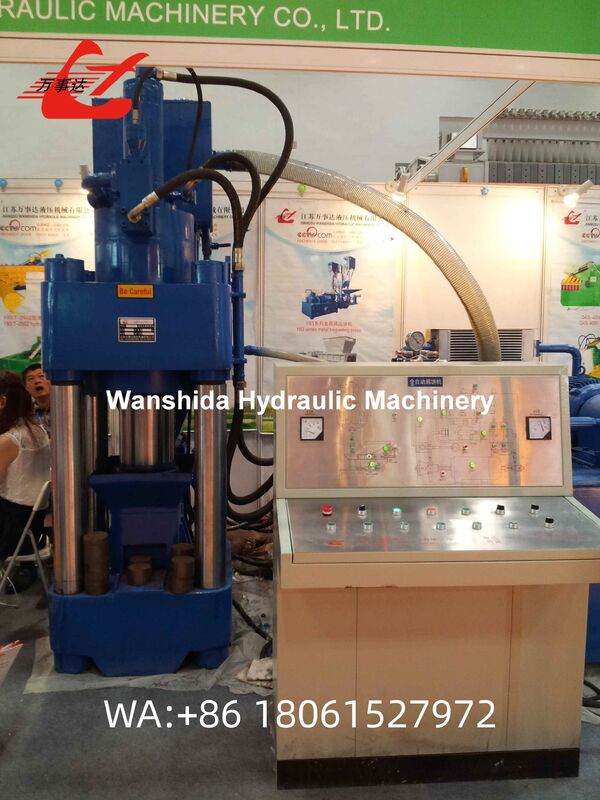
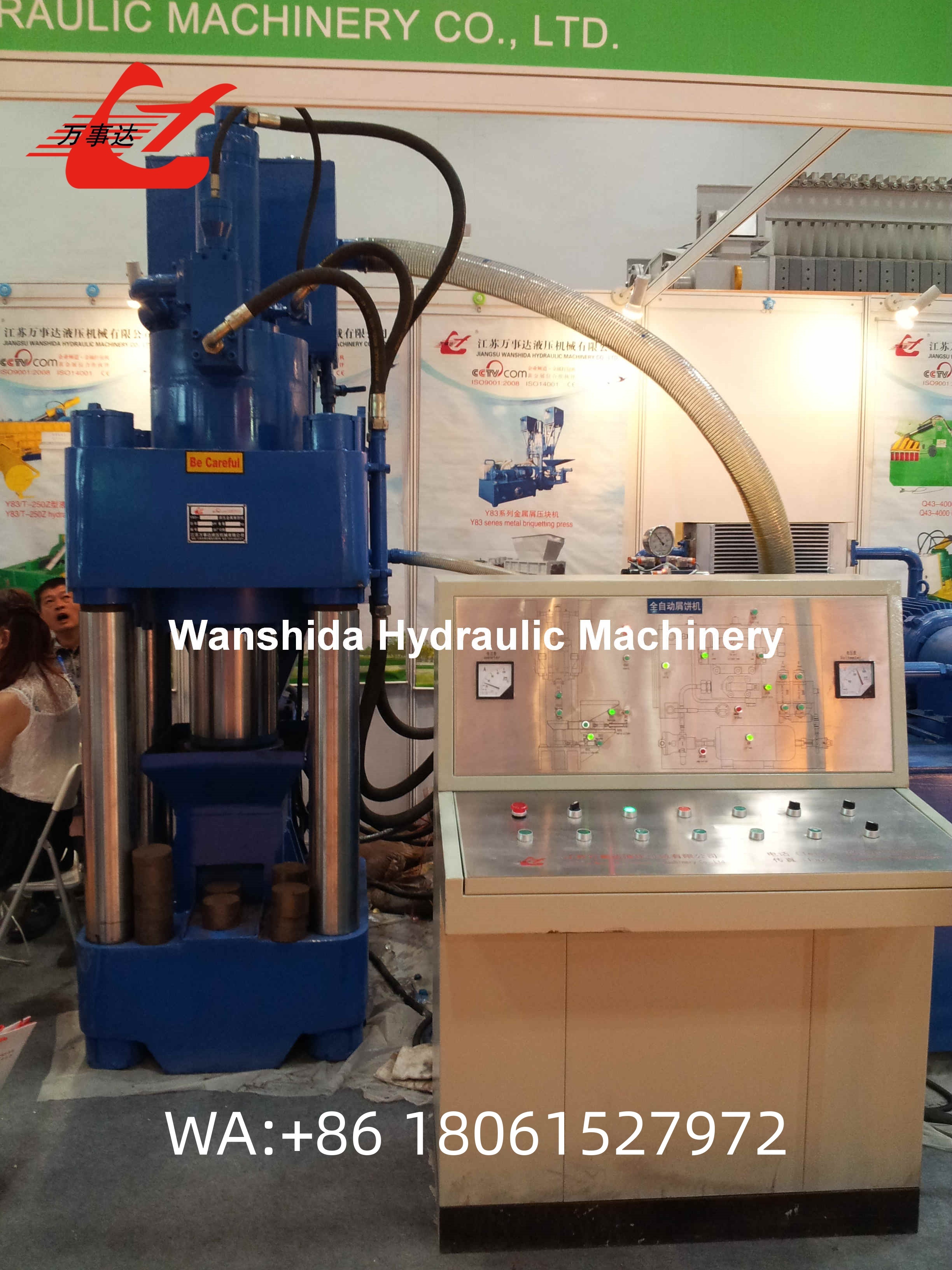
500Ton Metal Briquetting Press 30kW Hydraulic For Lead Red Brass Sawdust Recycling
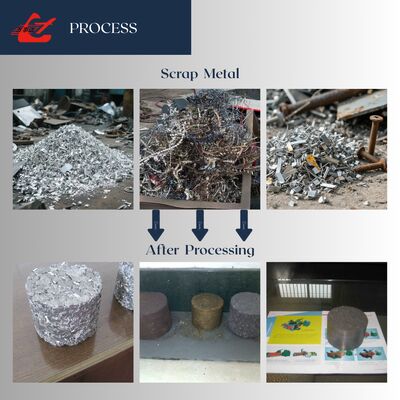
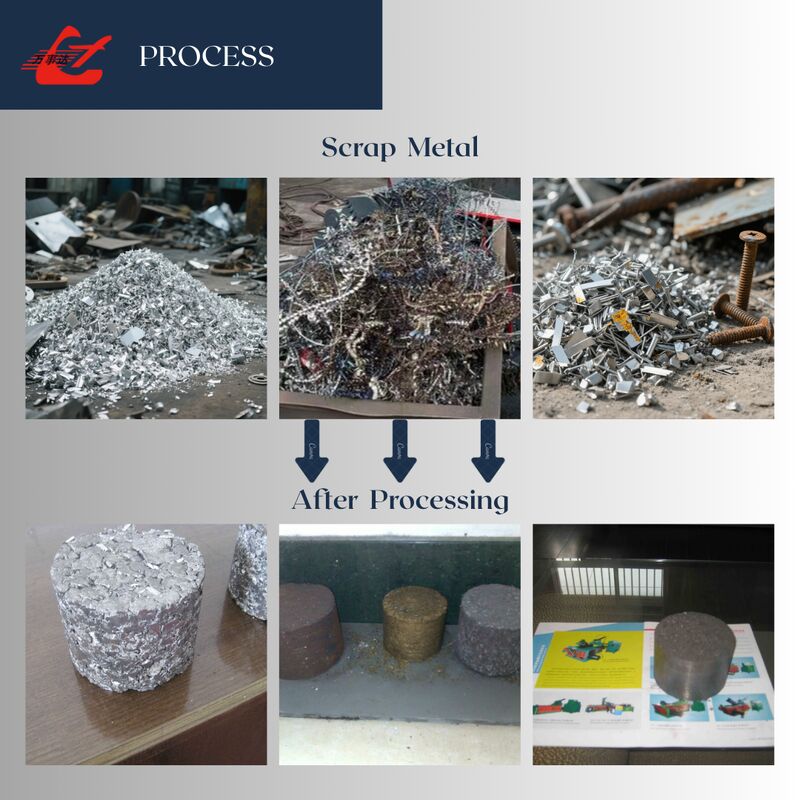
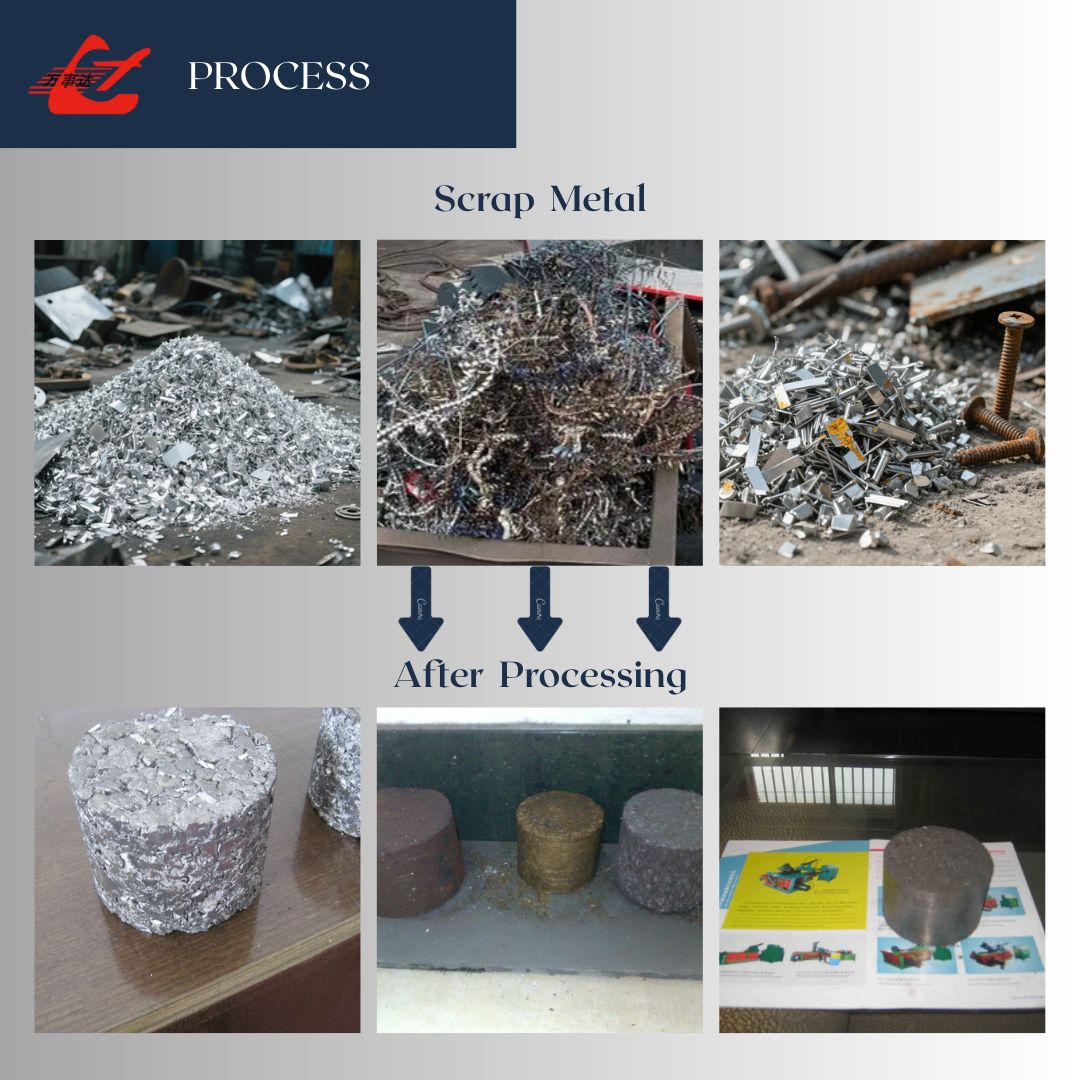
The 5000kN Hydraulic Scrap Briquetting Press is a high-pressure metal chip briquetting machine designed for compressing lead red brass sawdust, copper alloy chips, brass shavings, bronze chips, and other non-ferrous metal residues into compact cylindrical briquettes. With a strong 5000kN nominal force, Φ110×50–60mm briquette size, and an output capacity of around 1200kg/h for lead red brass sawdust, this model is suitable for recycling plants, copper alloy processing factories, brass casting workshops, non-ferrous metal recovery centers, and machining factories that need stable, high-density briquetting performance.
In many metal processing workshops, lead red brass sawdust is generated from cutting, drilling, turning, milling, and polishing processes. This material is valuable, but when it remains loose, it is difficult to store, easy to scatter, and not convenient for transportation or furnace feeding. The 5000kN scrap briquetting press helps buyers convert loose metal sawdust into dense briquettes, improving material handling efficiency and increasing the recycling value of the scrap.
This machine adopts a hydraulic drive system, offering stable pressure, smooth operation, low noise, no strong vibration, and safe performance during continuous use. The 500kN pressure on the bale helps form compact briquettes with better density and shape stability. Compared with ordinary low-pressure machines, this model is more suitable for higher-value non-ferrous metal sawdust where briquette quality, recovery rate, and remelting performance are important.
The machine can be configured with manual operation or PLC semi-automatic operation. Manual control is simple, practical, and easy to maintain, while PLC semi-automatic operation can improve production efficiency, reduce labor intensity, and make the operating process more consistent. The 30kW power system provides strong hydraulic output for high-pressure compression while maintaining reliable industrial performance.
For buyers who process lead red brass sawdust, the key concerns are usually briquette density, production capacity, installation difficulty, operation safety, and long-term equipment stability. This machine is designed to answer these concerns directly. It requires only a simple underground footing, making installation easier than many large recycling systems. The final briquettes are easier to stack, transport, sell, and return to the furnace, helping customers reduce waste, improve workshop cleanliness, and recover more value from metal residues.
Loose lead red brass sawdust and copper alloy chips often bring several practical problems to factories and recyclers.
First, loose sawdust has low bulk density. It occupies large storage space even when the actual weight is high, which increases warehouse pressure and makes material management less efficient.
Second, fine brass sawdust is easy to scatter during loading, unloading, and transportation. This can cause material loss, workplace pollution, and extra cleaning costs.
Third, loose non-ferrous metal sawdust is not ideal for direct furnace feeding. Fine particles may oxidize more easily during remelting, leading to higher burning loss and lower metal recovery.
Fourth, many scrap buyers and foundries prefer compact briquettes because they are cleaner, easier to weigh, easier to transport, and more stable during furnace charging. Loose sawdust may be sold at a lower price, while briquetted material usually has better market acceptance.
For these reasons, a high-pressure hydraulic briquetting press is an effective solution for turning valuable loose metal residues into standardized, high-density recycling material.
The 5000kN Hydraulic Scrap Briquetting Press compresses loose lead red brass sawdust into dense cylindrical briquettes through strong hydraulic force. It helps customers improve the recycling value of non-ferrous metal scrap while reducing storage and transportation problems.
Key buyer-focused advantages include:
High-pressure compression for valuable non-ferrous scrap
With 5000kN nominal force, this machine is suitable for lead red brass sawdust and other copper alloy residues that require stronger pressure to form dense briquettes.
Stable briquette shape
The final briquette size is Φ110×50–60mm, which is convenient for stacking, packing, transport, and furnace feeding.
Higher material recovery value
By converting loose brass sawdust into compact briquettes, customers can reduce scattered loss and improve the appearance and market value of the scrap.
Better remelting performance
Dense briquettes are easier to feed into the furnace than loose fine chips. This can help improve charging stability and reduce unnecessary material loss during melting.
Efficient production capacity
The machine can reach around 1200kg/h for lead red brass sawdust, making it suitable for medium to high-volume recycling and metal processing operations.
Flexible control system
Manual operation is suitable for customers who prefer simple control and lower investment. PLC semi-automatic operation is suitable for factories that want smoother production, better consistency, and lower labor intensity.
Safe and reliable hydraulic drive
The hydraulic system ensures stable operation, no strong vibration, and reliable performance for industrial production environments.
| Item | Specification |
|---|---|
| Product Name | Hydraulic Scrap Briquetting Press |
| Nominal Force | 5000 kN |
| Briquette Size | Φ110 × 50–60 mm |
| Pressure on the Bale | 500 kN |
| Power | 30 kW |
| Capacity | 1200 kg/h for lead red brass sawdust |
| Operation Mode | Manual or PLC semi-automatic operation |
| Drive System | Hydraulic drive |
| Machine Features | Stable operation, no vibration, safe and reliable |
| Foundation Requirement | Simple underground footing needed |
| Suitable Material | Lead red brass sawdust, brass chips, copper alloy shavings, bronze chips and other non-ferrous metal residues |
The 5000kN hydraulic scrap briquetting press is widely used in non-ferrous metal recycling and machining industries where valuable metal sawdust or chips need to be recovered efficiently.
It is especially suitable for:
Lead red brass processing factories
Used for compressing lead red brass sawdust into dense briquettes for easier recycling and remelting.
Copper alloy machining workshops
Suitable for CNC machining factories, turning workshops, milling plants, and metal parts manufacturers that generate brass or bronze chips.
Non-ferrous metal recycling centers
Helps recyclers upgrade loose copper alloy scrap into compact briquettes with better resale value.
Foundries and casting plants
Used for preparing metal residues before furnace charging, helping improve material handling and remelting efficiency.
Valve, pipe fitting, and hardware manufacturing plants
Suitable for factories producing brass components, copper alloy parts, sanitary fittings, and precision metal products.
Scrap collection and sorting companies
Helps reduce the volume of loose sawdust, simplify transportation, and improve storage management.
The working process of the 5000kN Hydraulic Scrap Briquetting Press is based on high-pressure hydraulic compression.
First, the operator feeds lead red brass sawdust or other suitable metal chips into the compression chamber. After feeding, the hydraulic system drives the main pressing cylinder to apply strong pressure to the loose material. Under high compression force, the sawdust is compacted into a solid cylindrical briquette with a diameter of Φ110mm and a height of 50–60mm.
No adhesive is normally required during the briquetting process. The machine relies on hydraulic pressure to form dense briquettes. For oily machining chips, part of the residual cutting fluid may be squeezed out during pressing, which helps improve material cleanliness and makes the briquettes easier to handle.
After compression is completed, the machine discharges the finished briquette. The briquettes can then be collected, stacked, packed, sold, or sent directly to the furnace for remelting. With manual or PLC semi-automatic operation available, the machine can match different production habits and labor arrangements.
When choosing a scrap briquetting press for lead red brass sawdust, buyers should consider more than only the machine price. The correct model should match the real material condition, production target, and factory layout.
1. Confirm the exact material
Lead red brass sawdust, brass chips, bronze chips, copper chips, and mixed alloy residues may have different compression performance. Material photos or samples can help engineers recommend the right configuration.
2. Check the chip size and oil content
Fine sawdust is usually easier to briquette than long curled turnings. If the material contains a high amount of cutting oil, an oil collection or drainage design may be considered.
3. Match the required capacity
This model has a reference capacity of around 1200kg/h for lead red brass sawdust. If your production volume is higher, feeding method, working shift, and automation level should be discussed before final selection.
4. Choose the proper control mode
Manual operation is simple and economical. PLC semi-automatic operation is better for customers who need more consistent production, easier operation, and reduced labor workload.
5. Confirm power supply and installation space
Before ordering, buyers should confirm local voltage, frequency, workshop space, feeding direction, discharge direction, and foundation preparation.
6. Consider long-term recycling value
For valuable non-ferrous metals, higher briquette density can improve material recovery and reduce loss. Choosing a stronger machine can bring better long-term returns for recycling operations.
Q1: What material is this 5000kN briquetting press mainly designed for?
This machine is especially suitable for lead red brass sawdust, brass chips, copper alloy shavings, bronze chips, and other non-ferrous metal residues. The actual briquetting result depends on chip size, oil content, material purity, and feeding condition.
Q2: What is the capacity of this machine?
The reference capacity is around 1200kg/h for lead red brass sawdust. Different materials may have different output performance, so it is recommended to confirm the material type and production requirement before final model selection.
Q3: Does the machine need adhesive to make briquettes?
No adhesive is normally required. The machine uses strong hydraulic pressure to compress loose metal sawdust into dense cylindrical briquettes.
Q4: Can I choose PLC semi-automatic operation?
Yes. The machine can be supplied with manual control or PLC semi-automatic operation. PLC semi-automatic operation is recommended for buyers who want smoother workflow, higher consistency, and lower labor intensity.
Q5: Is the machine difficult to install?
No. This model only requires a simple underground footing. We can provide basic installation guidance and technical support according to the customer’s workshop layout and production requirements.