
Leave a Message
We will call you back soon!
Your message must be between 20-3,000 characters!
Please check your E-mail!
More information facilitates better communication.
Submitted successfully!
We will call you back soon!
Leave a Message
We will call you back soon!
Your message must be between 20-3,000 characters!
Please check your E-mail!
| Place of Origin: | China |
|---|---|
| Brand Name: | WANSHIDA |
| Certification: | CE and ISO9001 |
| Model Number: | Y83-160 |
| Minimum Order Quantity: | 1 set |
| Price: | Negotiable |
| Packaging Details: | Seaworthy Packing |
| Delivery Time: | 45days |
| Payment Terms: | T/T |
| Supply Ability: | 1 set |
| Model: | Y83-160 | Press Box Size: | 1600×1000×800mm ( L×W×H) |
|---|---|---|---|
| Bale Size: | (400-600)×400×400mm ( L×W×H) | Cycle Length: | App 160 Sec |
| Nominal Force (kN): | 1600 | Capacity (kg/h): | 2000-3000 |
| Single Cycle Time(s: | <80 | Power (kW): | 22 |
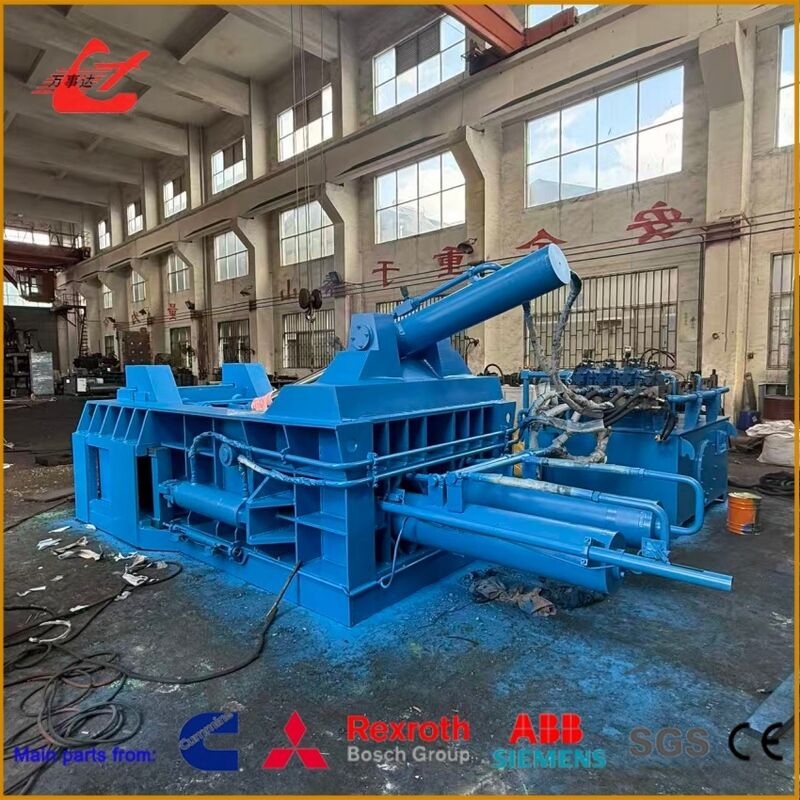
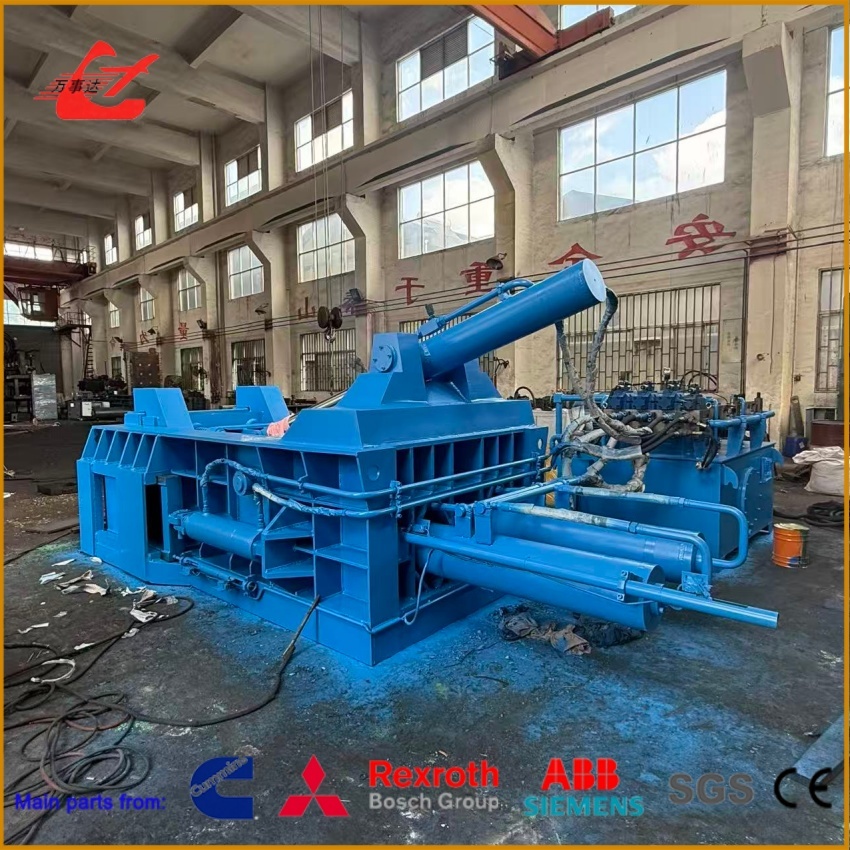
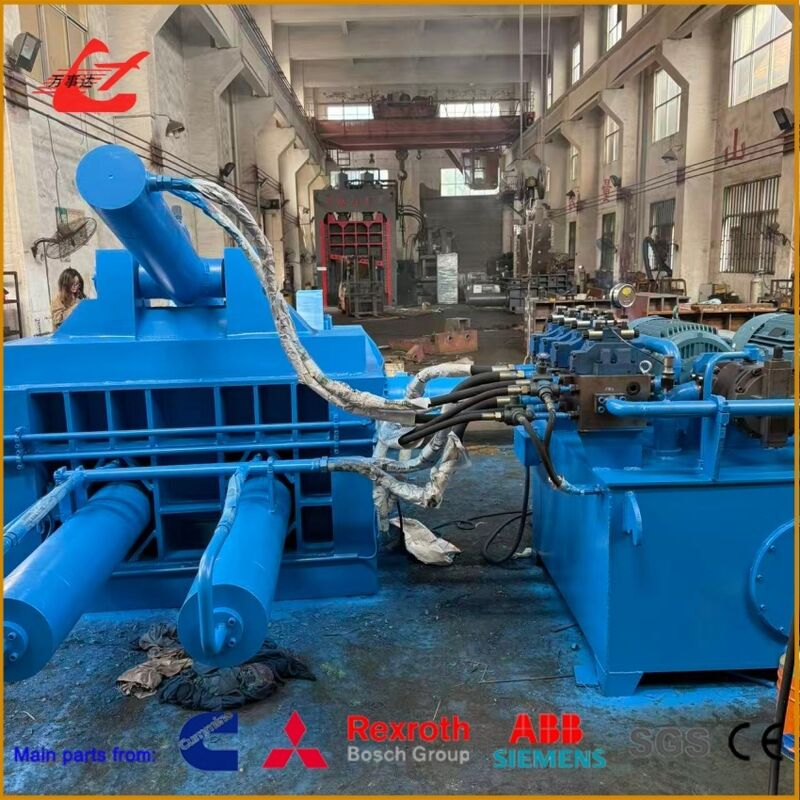
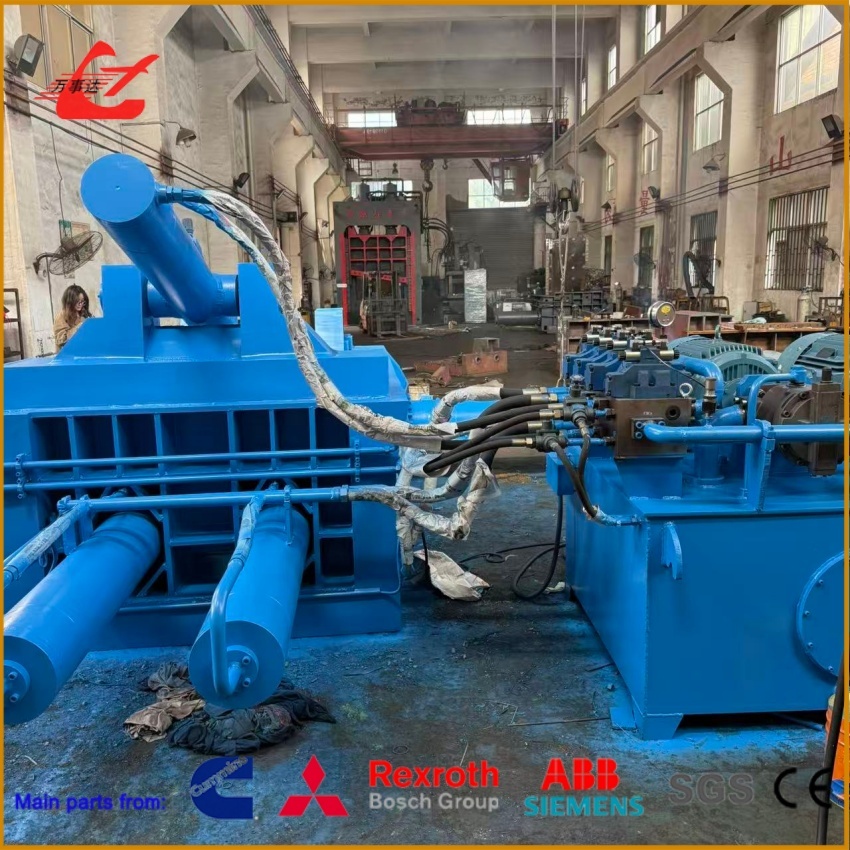
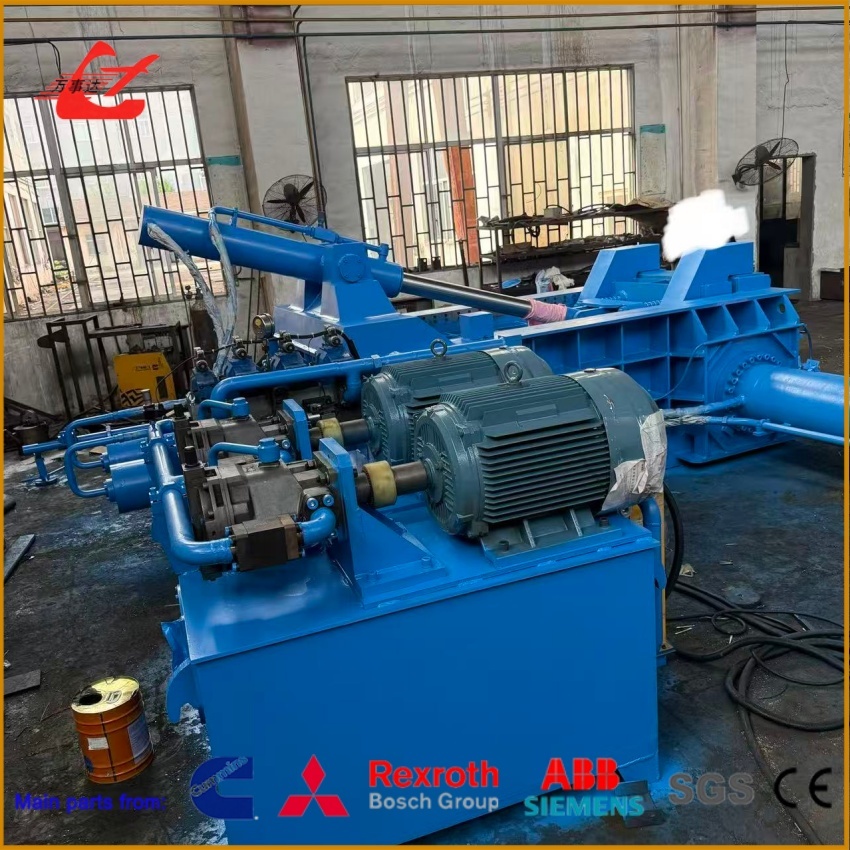
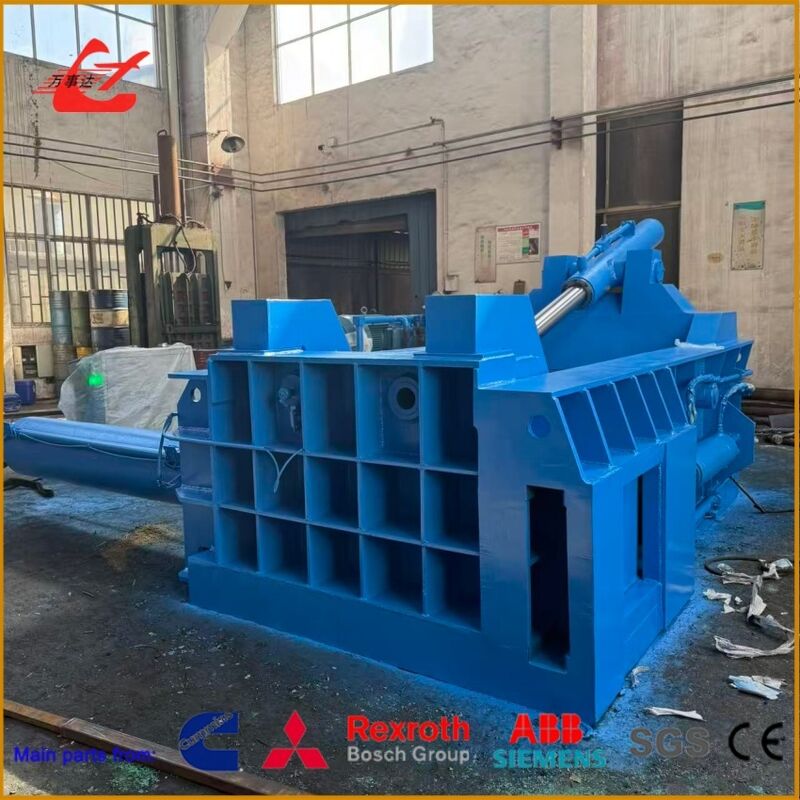
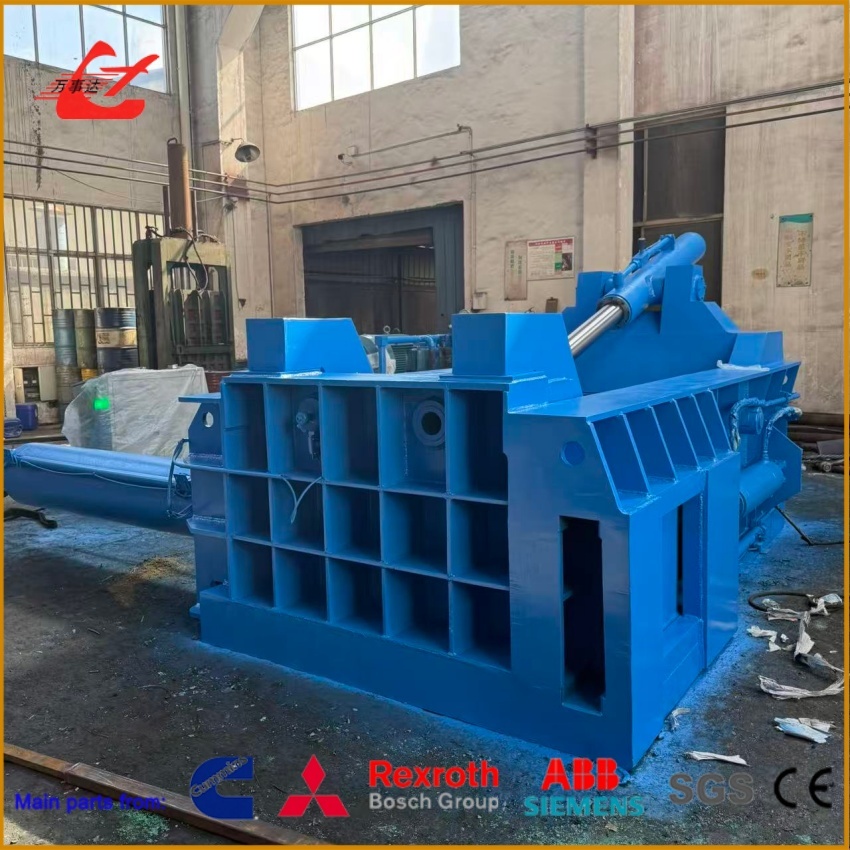
The Y83-160 turn-out metal baler is a hydraulic compression machine designed for scrap yards, metal-processing plants, recycling companies, foundries and smelting facilities.
Its main cylinder provides a nominal force of 1600 kN, equivalent to approximately 160 tons. The machine compresses loose, irregular and difficult-to-handle scrap steel, aluminum and production offcuts into denser and more uniform bales.
The press box measures 1600×1000×800 mm. The finished bale size is approximately (400–600)×400×400 mm, with a standard bale cross-section of 400×400 mm. Bale length may vary between 400 and 600 mm according to the loading quantity, material type and compression result.
The Y83-160 uses a turn-out bale-discharge system. After compression, the bale turn-out cylinder moves the finished bale out of the press box, reducing the difficulty of manually removing a heavy bale.
The hydraulic-system pressure is 25 MPa. Two 15 kW motors are specified, giving an approximate total installed power of 30 kW. The reference cycle time is approximately 160 seconds.
As a practical Y83-160 Metal Baler, 160 Ton Hydraulic Metal Baler, Turn-Out Metal Baler, Scrap Metal Baling Machine and Hydraulic Scrap Baler, the machine helps customers improve storage utilization, transportation density and the standardization of scrap delivery.
The profitability of a metal-recycling business is affected not only by scrap prices but also by transportation, storage, labor and downstream acceptance.
Many companies process substantial quantities of scrap, but loose material can still create significant hidden costs.
Steel offcuts, light aluminum scrap, stamping waste, sheet edges and profile remnants are irregular and difficult to stack.
This can cause:
Low-density metal scrap can occupy the full truck or container volume while the actual payload remains below the permitted weight.
This increases freight cost per ton, particularly for long-distance transportation and export shipments.
Loose scrap requires repeated grabbing, arranging and compacting. Small offcuts may also fall during handling, increasing material loss and cleaning work.
Steel mills, foundries and secondary-metal producers can handle sorted and uniformly compressed bales more efficiently.
Regular bales are easier to:
Using loaders or excavators to compact scrap inside a truck cannot produce bales with consistent dimensions or density.
The Y83-160 hydraulic metal baler uses a combination of main, side and top-cover cylinders to compress loose scrap from multiple directions.
Its principal hydraulic actuators include:
Scrap is loaded into the 1600×1000×800 mm press box. The top cover and side cylinder pre-compress and shape the material. The main cylinder then applies final compression to form a bale with a 400×400 mm cross-section.
After compression, the turn-out cylinder discharges the finished bale.
This process helps customers:
Hydraulic compression increases bulk density and reduces the floor space required for storage.
Uniform bales can be arranged more efficiently inside trucks and containers.
Different materials can be baled, labeled and stored separately.
Each bale can be moved as one concentrated unit instead of repeatedly handling many loose pieces.
Consistent bale dimensions support more organized weight records, inventory control and purchasing procedures.
| Item | Specification |
|---|---|
| Product Name | Turn-Out Hydraulic Metal Baler |
| Model | Y83-160 |
| Bale Discharge | Turn-out |
| Main Cylinder Model | YG250/160-600 |
| Main Cylinder Quantity | 1 pc |
| Main Cylinder Nominal Force | 1600 kN, approximately 160 tons |
| Main Cylinder Stroke | 600 mm |
| Side Cylinder Model | YG250/160-1050 |
| Side Cylinder Quantity | 1 pc |
| Side Cylinder Nominal Force | 1250 kN, approximately 125 tons |
| Side Cylinder Stroke | 1050 mm |
| Top-Cover Cylinder Model | YG160/120-1050 |
| Top-Cover Cylinder Quantity | 1 pc |
| Top-Cover Cylinder Nominal Force | 630 kN, approximately 63 tons |
| Top-Cover Cylinder Stroke | 1050 mm |
| Bale Turn-Out Cylinder Model | YG90/50-390 |
| Bale Turn-Out Cylinder Quantity | 1 pc |
| Bale Turn-Out Cylinder Nominal Force | 60 kN, approximately 6 tons |
| Bale Turn-Out Cylinder Stroke | 390 mm |
| Hydraulic-System Pressure | 25 MPa |
| Press Box Size | 1600×1000×800 mm, L×W×H |
| Bale Size | (400–600)×400×400 mm, L×W×H |
| Bale Cross-Section | 400×400 mm |
| Cycle Time | Approx. 160 seconds |
| Hydraulic Pump Model | 63YCY14-1B |
| Pump Nominal Pressure | 31.5 MPa |
| Pump Nominal Outflow | 63 ml/r |
| Hydraulic Pump Quantity | 2 sets |
| Motor Model | Y160L-6 |
| Motor Nominal Speed | 1460 rpm |
| Power per Motor | 15 kW |
| Motor Quantity | 2 sets |
| Approximate Total Installed Power | 30 kW |
| Main Application | Compression of scrap steel, aluminum and metal offcuts |
The 1600 kN figure refers to the nominal force of the main compression cylinder and is the basis for describing the machine as a 160-ton metal baler.
The forces of the side, top-cover and main cylinders should not simply be added together as one total machine force because each cylinder performs a different movement.
The approximate 160-second cycle is a reference value. Actual efficiency depends on:
The 1600 kN main cylinder is suitable for the compression of common scrap steel, light metal scrap and aluminum offcuts.
The main, side and top-cover cylinders work together to shape and compact irregular scrap.
The relatively large chamber accepts a useful volume of loose scrap and can reduce the need for excessive pre-cutting.
The regular cross-section supports efficient storage, truck loading, weighing and downstream handling.
The turn-out cylinder removes the compressed bale from the chamber and reduces manual bale-removal difficulty.
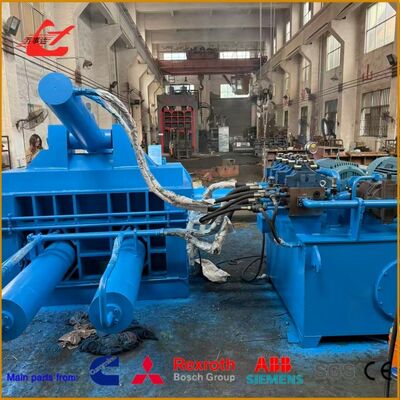
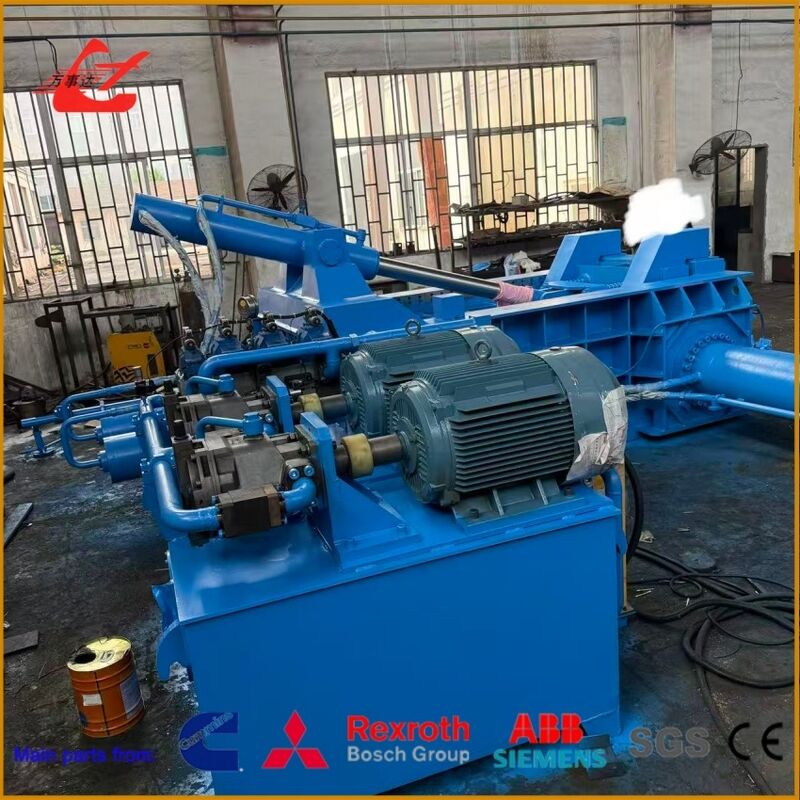
Two 63YCY14-1B pumps and two 15 kW motors provide hydraulic power, with an approximate total installed power of 30 kW.
The hydraulic system supports the coordinated movement of the compression and discharge cylinders.
Major components such as cylinders, pumps, motors and valves can be inspected through a planned maintenance program.
For compressing light scrap steel, stamping waste, sheet offcuts and fabrication scrap.
Suitable for sorted aluminum profiles, sheet offcuts, lightweight aluminum scrap and selected aluminum products.
For handling steel cut-offs, stamping waste and profile remnants generated during production.
For concentrating metal scrap from stamping, cutting and machining operations.
For producing more uniform furnace-charge bales.
Compression can improve container-space utilization and reduce loose-material problems during transport.
The baler can operate as a central compression unit within sorting, cutting, conveying and baling workflows.
Scrap should be separated by material type, with plastic, rubber, soil and other contaminants removed where possible.
Scrap steel, aluminum or production offcuts are loaded into the 1600×1000×800 mm chamber.
The loading quantity should be controlled according to material density and the required bale.
The top-cover cylinder closes and begins the initial compression of the loose material.
The side cylinder moves inward and reduces the material width while removing internal voids.
The main cylinder applies a nominal force of 1600 kN to form a bale approximately 400–600 mm long with a 400×400 mm cross-section.
After compression, the main, side and top-cover mechanisms return according to the machine’s working sequence.
The turn-out cylinder moves the finished bale out of the press box.
The bale can be transferred using a forklift, material handler, loader or other suitable equipment according to its actual weight.
Customers should identify whether the main material is:
Different materials have different strength, spring-back and original density.
Although the press box measures 1600×1000×800 mm, this does not mean that every rigid item close to these dimensions can be loaded without preparation.
Long, thick or highly rigid scrap may require cutting before baling.
The approximate 160-second cycle provides only a reference. Actual throughput also depends on loading time, bale handling and preparation for the next cycle.
Customers should provide:
The source specification provides bale dimensions but does not state a fixed bale weight.
Actual bale weight depends on material density, original shape, contamination and compression result. A reliable bale-weight estimate requires material information or a trial compression.
A 400×400 mm bale may be heavy. The site should have suitable handling equipment, such as:
The machine uses two 15 kW motors, with an approximate total installed power of 30 kW.
Customers should confirm:
The Y83-160 uses a turn-out discharge structure. Sufficient space should be reserved beside the machine for bale discharge and handling.
The main cylinder has a nominal force of 1600 kN, approximately 160 tons. The machine also includes a 1250 kN side cylinder and a 630 kN top-cover cylinder for other compression movements.
The reference bale size is (400–600)×400×400 mm, with a 400×400 mm cross-section. Actual length varies according to loading quantity and material characteristics.
The available specification does not state a fixed bale weight. Bale weight depends on the metal type, original bulk density, contamination and compression result.
The reference cycle time is approximately 160 seconds. Actual hourly output must also include material loading, bale transfer and preparation time, so a fixed quantity cannot be confirmed from cycle time alone.
The turn-out cylinder moves the compressed bale out of the chamber, reducing manual removal work and making it easier to collect the bale with a forklift or material handler.
The machine is supplied with a one-year warranty. Technical and spare-parts support is provided for manufacturing-related quality problems according to the actual situation.
After the warranty period, long-term troubleshooting guidance, maintenance recommendations and spare-parts supply remain available.
Our engineering team can assist with checks involving:
Available parts include:
Operating instructions, maintenance guidance and basic technical documents can be supplied to support installation, commissioning, daily operation and regular servicing.