Leave a Message
We will call you back soon!
Your message must be between 20-3,000 characters!
Please check your E-mail!
More information facilitates better communication.
Submitted successfully!
We will call you back soon!
Leave a Message
We will call you back soon!
Your message must be between 20-3,000 characters!
Please check your E-mail!
| Place of Origin: | China |
|---|---|
| Brand Name: | Wanshida |
| Certification: | ISO9001,CE |
| Model Number: | Q43P-1000A |
| Minimum Order Quantity: | 1SET |
| Price: | Negotiation |
| Packaging Details: | Sea worthy |
| Delivery Time: | 30days |
| Payment Terms: | L/C,T/T |
| Supply Ability: | 20sets/month |
| Blade: | Dia.300 Mm | Condition: | New |
|---|---|---|---|
| Speed: | 16 Rpm | Voltage: | 380V/custom |
| Shredder Room: | 1010×550 Mm(L×W) | Motor Power: | 22kW |
| Overall Size: | 3500×900×1600 Mm | Usage: | Crap Metal Cursher Shredder |
| Highlight: | 380V Scrap Metal Crusher,Powerful Scrap Metal Crusher,22kW Scrap Metal Crusher |
||
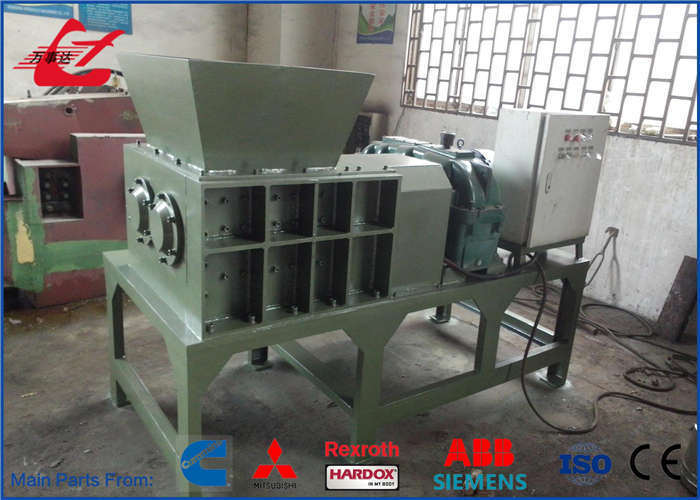
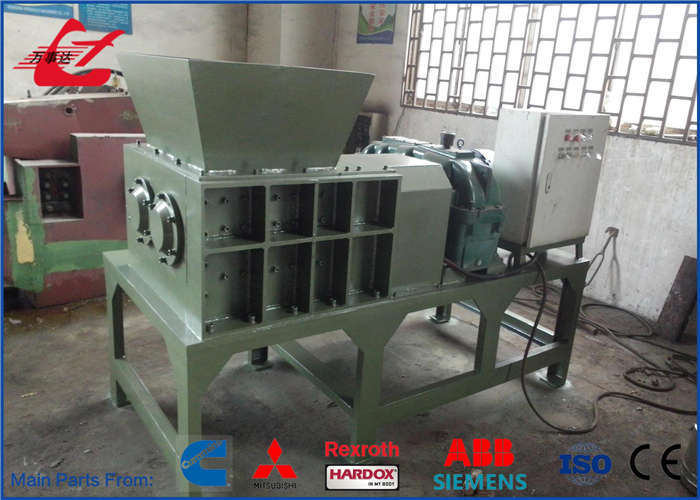
Resource-saving Automatic-Ready Metal Shredder For Reducing Manual Scrap Handling
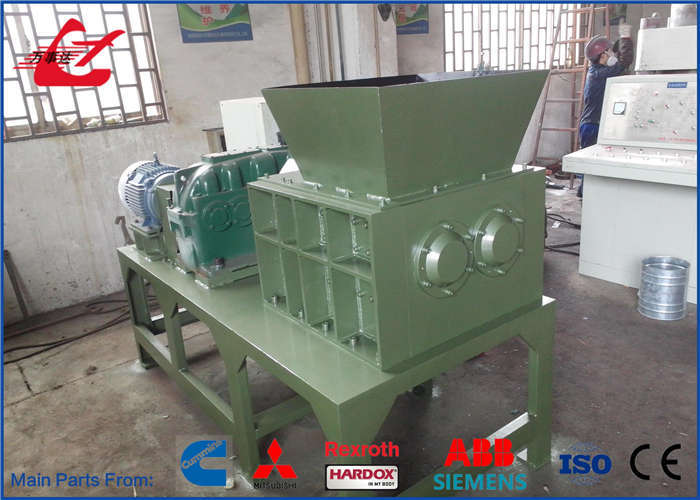
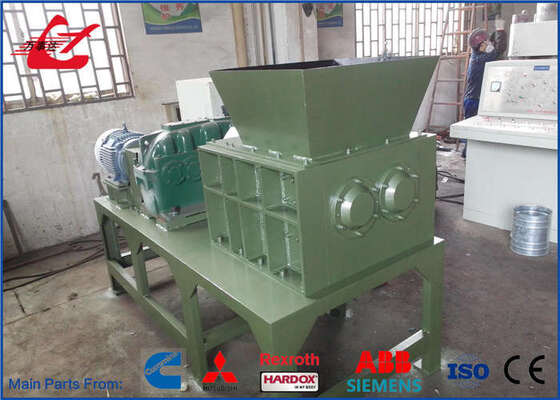
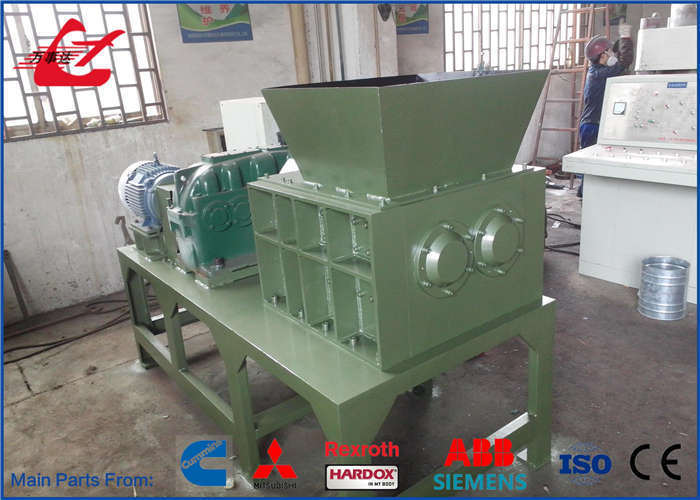
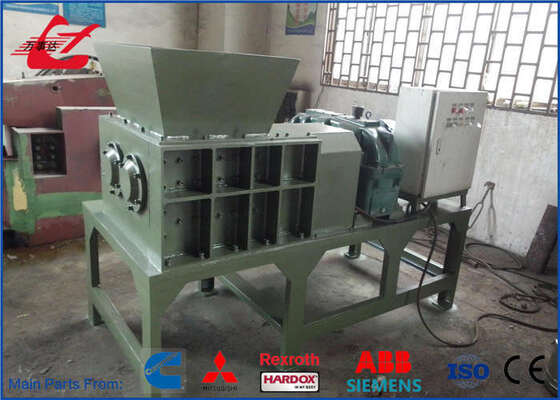
The Q43P-1000A Metal Shredder is developed for recycling facilities seeking to reduce manual handling and create a more continuous scrap-processing operation. Its 1010 × 720 mm feeding mouth can be matched with a loading or feeding conveyor, allowing suitable metal waste to enter the machine at a controlled rate.
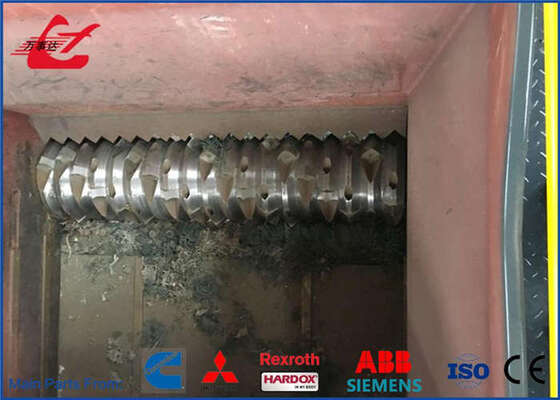
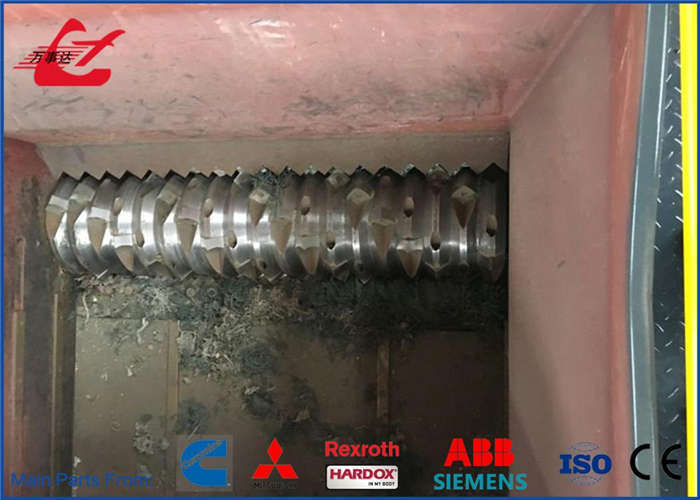
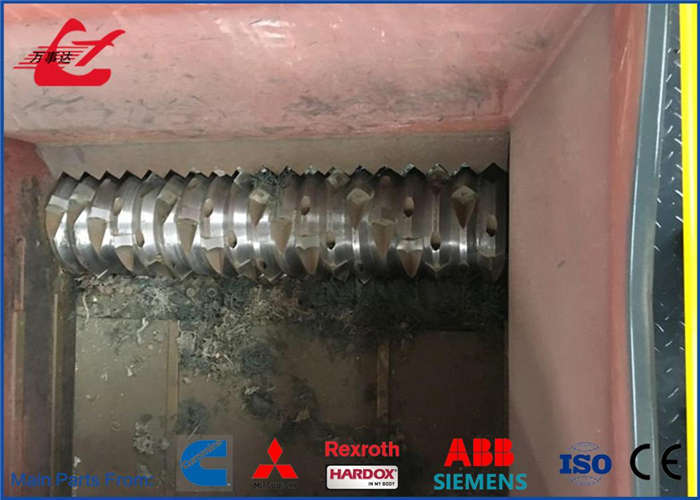
Inside the 1010 × 550 mm shredding chamber, 33 blades process the incoming scrap through low-speed pulling and shearing. The two 11 kW motors provide a combined power of 22 kW, while the shafts operate at 16 rpm. The resulting pieces are approximately 30 × 40 mm, with a reference processing capacity of 2–3 m³/h.
This configuration makes the Q43P-1000A suitable for businesses moving from labor-intensive scrap handling toward a more organized and expandable production system.
Manual scrap processing becomes increasingly inefficient as collection volume grows. Workers may need to move materials repeatedly between storage, cutting, sorting and transportation areas. Irregular scrap also makes it difficult to maintain a stable production rhythm.
These conditions can create:
The Q43P-1000A can form the central processing unit of a semi-automatic scrap-handling system. A feeding conveyor can deliver prepared material to the hopper, while a discharge conveyor transfers shredded pieces to a collection bin, sorting station or subsequent machine.
This arrangement reduces repeated material handling and helps regulate the amount of scrap entering the chamber. Controlled feeding is particularly important because excessive loading can reduce shredding efficiency, while insufficient feeding leaves equipment underutilized.
Operational benefits include:
| Item | Specification |
|---|---|
| Model | Q43P-1000A |
| Equipment Type | Dual-Shaft Metal Shredder |
| Blade Diameter | 300 mm |
| Number of Blades | 33 pcs |
| Blade Thickness | 30 mm |
| Operating Speed | 16 rpm |
| Shredding Chamber Size | 1010 × 550 mm |
| Hopper Opening Size | 1010 × 720 mm |
| Reference Capacity | 2–3 m³/h |
| Typical Output Size | Approximately 30 × 40 mm |
| Motor Power | 11 × 2 kW |
| Combined Motor Power | 22 kW |
| Overall Dimensions | 3500 × 900 × 1600 mm |
| Approximate Weight | 3,000 kg |
| Quality Standard | ISO 9001:2000 |
The Q43P-1000A can support material-handling improvement in:
Typical feedstock includes suitable light steel scrap, aluminum offcuts, thin-wall metal parts, metal packaging and compatible manufacturing leftovers.
Prepared scrap is loaded directly into the hopper or transported by a feeding conveyor. The rotating shafts capture the material and move it between the cutting blades.
The blades repeatedly pull, tear and shear the scrap until it reaches a reduced size. The processed pieces then leave through the lower discharge section.
For a semi-automatic layout, a discharge conveyor removes the processed material continuously. This prevents accumulation beneath the machine and keeps the shredding area organized.
The Q43P-1000A is suitable for buyers who want to improve both shredding performance and internal material flow. Machine capacity should be coordinated with the feeding and discharge equipment rather than evaluated independently.
Important selection factors include:
A site layout or production-flow drawing can be used to determine the appropriate conveyor dimensions and equipment positions.
Conveyors are normally selected according to the buyer’s materials and site layout. They can be supplied as optional auxiliary equipment.
Yes. It can be loaded and discharged using suitable manual or mechanical methods, provided safe operating procedures are followed.
Automation mainly improves feeding consistency and reduces idle time. Actual capacity still depends on the material’s density, dimensions, thickness and hardness.
The number depends on the feeding method, site conditions and line configuration. A conveyor-assisted system generally requires less continuous manual handling.
Yes. Buyers can provide the workshop dimensions, material-flow direction and downstream requirements for a customized equipment arrangement.