Leave a Message
We will call you back soon!
Your message must be between 20-3,000 characters!
Please check your E-mail!
More information facilitates better communication.
Submitted successfully!
We will call you back soon!
Leave a Message
We will call you back soon!
Your message must be between 20-3,000 characters!
Please check your E-mail!
| Place of Origin: | China |
|---|---|
| Brand Name: | Wanshida |
| Certification: | ISO9001,CE |
| Model Number: | Q43P-600A |
| Minimum Order Quantity: | 1SET |
| Price: | Negotiation |
| Packaging Details: | Sea worthy |
| Delivery Time: | 30days |
| Payment Terms: | L/C,T/T |
| Supply Ability: | 20sets/month |
| Model No: | Q43P-600A | Thickness: | 30 Mm |
|---|---|---|---|
| Speed: | 16 Rpm | Shredder Room: | 610×550 Mm(L×W) |
| Hopper Feeding Mouth: | 510×720 Mm(L×W) | Pieces After Shredder: | 30×30 Mm(L×W) |
| Motor Power: | 7.5 KW | Overall Size: | 2160×840×1600 Mm |
| Highlight: | Heavy Metal Scrap Shredding Machine,22kW Scrap Shredding Machine,Electric Scrap Shredding Machine |
||
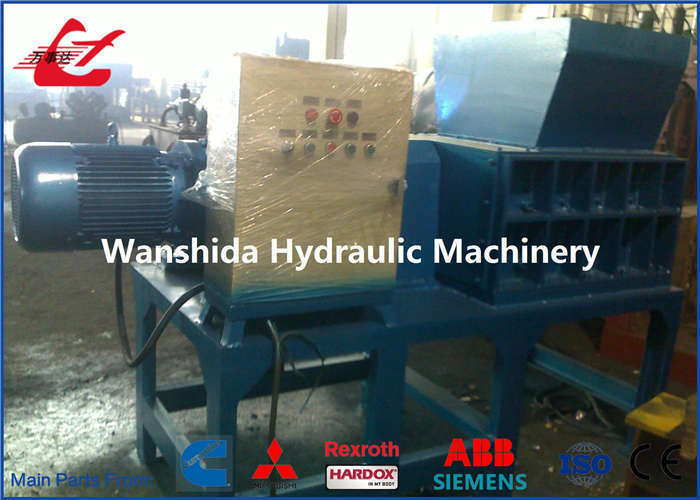
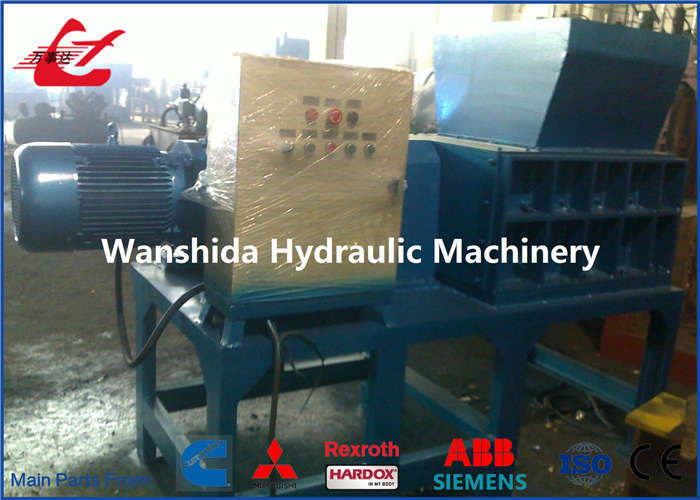
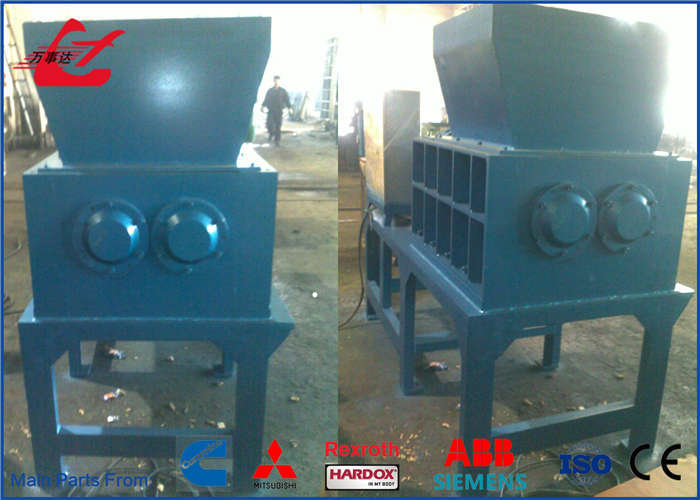
The Q43P-600A Metal Shredder enables factories to process recyclable metal directly at the point where waste is generated. Instead of allowing offcuts and rejected components to accumulate or leave the factory as low-value mixed scrap, manufacturers can shred them into controlled 30 × 30 mm pieces for classification, recovery and reuse.
The machine has 20 cutting blades with a diameter of 300 mm and thickness of 30 mm. Its 16 rpm cutting speed is designed for gradual material engagement, while the 7.5 kW motor supports an estimated throughput of 1–2 m³/h.
This model is particularly relevant to manufacturers adopting closed-loop production. Shredded material from a known source is easier to keep separated by metal grade, helping preserve its recycling value and reducing contamination before it is returned to a foundry, recycler or raw-material supplier.
Metal waste generated during manufacturing may contain clean, recyclable material with a known composition. However, its value can decrease when different grades are mixed together or when the scrap becomes contaminated during storage.
Sending untreated offcuts directly to an external waste handler also means that manufacturers lose control over an important secondary material resource. Common issues include:
The Q43P-600A allows metal-generating factories to establish a dedicated recovery station within their own facilities. Scrap from specific production lines can be collected separately and processed before different grades are mixed.
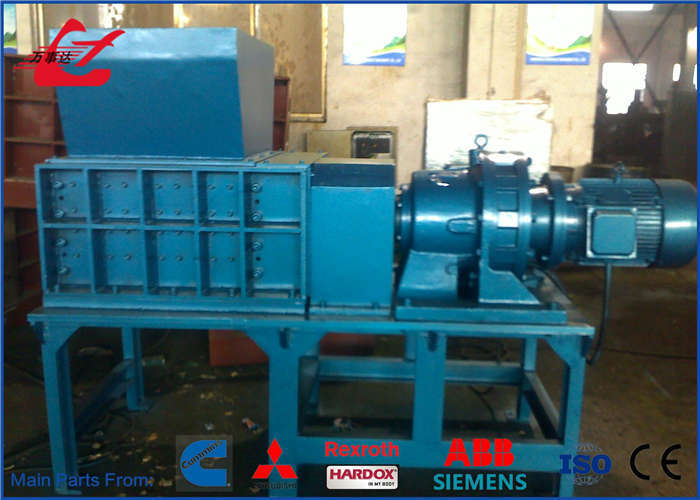
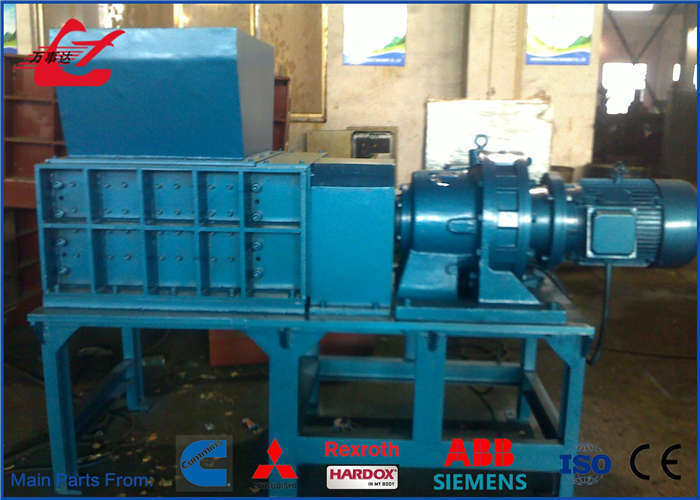
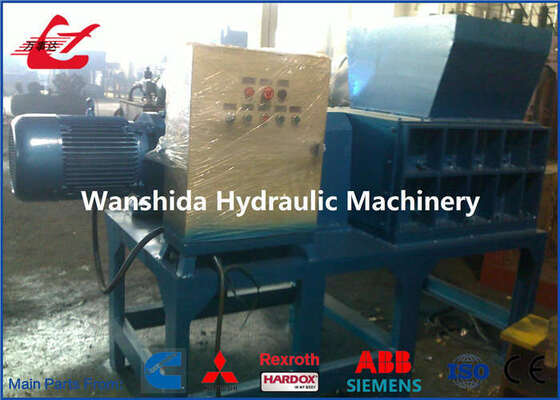
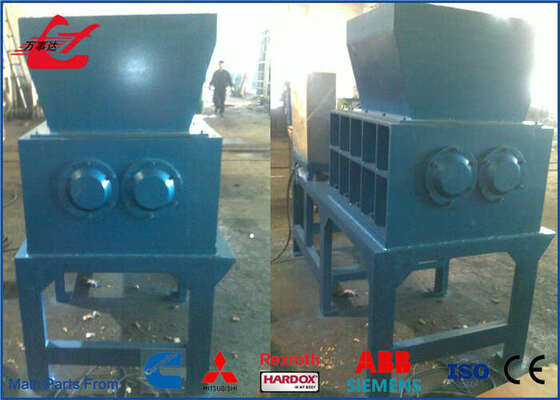
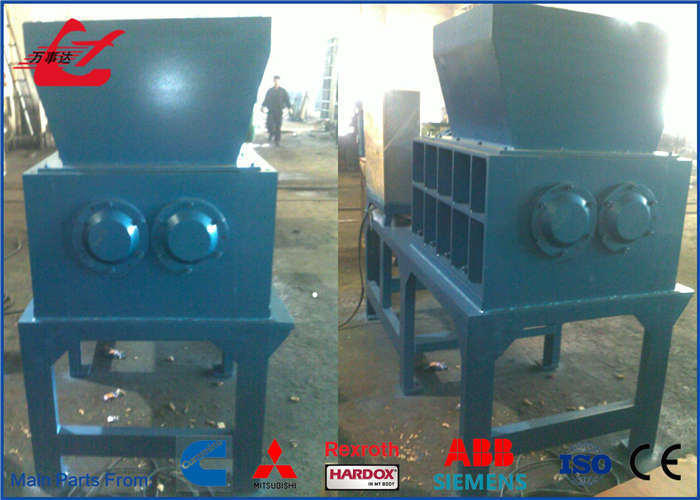
Its 510 × 720 mm hopper accepts suitable manufacturing offcuts and directs them into a 610 × 550 mm cutting chamber. The 20-blade system transforms the material into approximately 30 × 30 mm pieces that can be placed in labeled containers according to alloy, source or production batch.
This approach offers several benefits:
| Parameter | Technical Data |
|---|---|
| Model | Q43P-600A |
| Equipment Category | Metal Scrap Shredder |
| Cutting Blade Diameter | 300 mm |
| Number of Blades | 20 pcs |
| Individual Blade Thickness | 30 mm |
| Operating Speed | 16 rpm |
| Internal Cutting Area | 610 × 550 mm |
| Hopper Opening | 510 × 720 mm |
| Nominal Throughput | 1–2 m³/h |
| Typical Discharge Size | 30 × 30 mm |
| Installed Motor Power | 7.5 kW |
| Machine Dimensions | 2160 × 840 × 1600 mm |
| Approximate Weight | 2,000 kg |
The Q43P-600A can be positioned near manufacturing, maintenance or material-recovery areas. Potential users include:
Suitable feedstock may include stamping skeletons, trimmed edges, rejected thin-wall components, metal packaging and other compatible production remnants.
Collected scrap is placed into the hopper according to its material grade. Once it reaches the cutting area, the blades engage the material and apply repeated pulling and shearing actions.
The reduced pieces leave through the lower discharge area and can be directed into a grade-specific bin. By assigning separate containers to different metals, the factory can create an organized recovery workflow from production line to recycler.
For automated operation, the shredder can be combined with material handling equipment selected according to the factory layout.
This model is a strong candidate when the objective is to recover moderate quantities of clean manufacturing scrap at its source. Selection should begin with the material itself rather than capacity alone.
Buyers should provide:
Sample testing is recommended when the feedstock contains unusual alloys, complex shapes or components made from several materials.
Yes, if they fall within the machine’s processing range. To avoid cross-contamination, the chamber and collection area should be cleaned between different material grades.
This depends on the foundry’s requirements for composition, cleanliness and piece size. Buyers should confirm the required feedstock standard with their recycling or melting partner.
It can process compatible light metal offcuts, but the maximum thickness, hardness and shape must be evaluated before purchase.
Yes. Separate containers can be placed below the discharge area to classify material by alloy, production line or batch.
Yes. It can be incorporated into a customized system with feeding, discharge and collection equipment based on the site layout.